 Whatsapp


Constitutional Lawyer Gujarat HC | Writs, Article 226, PIL
Constitutional Lawyers at Bhatt & Joshi Associates – Expert Legal Services for your Constitutional law-related Requirements
Bhatt & Joshi Associates is one of the best law firms in Gujarat, Ahmedabad, providing legal services and litigation support to clients in a variety of areas of law. Among our team of experienced and skilled lawyers, we have Constitutional Lawyers who specialize in the area of Constitutional Law. In this page, we will provide an overview of our services and expertise in this area of law, as well as the importance of choosing the right Constitutional lawyer for your legal matter.
Overview of Constitutional Law
Constitutional Law refers to the body of law that governs the interpretation and application of the Constitution of India. The Constitution of India is the supreme law of the land and provides the framework for the functioning of the government, protection of fundamental rights, and distribution of powers between the Union and State governments.
Our Expertise
At Bhatt & Joshi Associates, our Constitutional Lawyers have extensive knowledge and experience in all aspects of Constitutional Law, including:
- Judicial review of administrative actions
- Judicial review of ultra vires laws
- Constitutional interpretation and analysis
- Fundamental rights protection and enforcement
- Constitutional challenges to legislation
- Advisory and opinion work on Constitutional Law matters
Our lawyers are well-versed in the provisions of the Constitution of India, as well as the relevant statutes and case law, and can provide expert legal advice and representation to clients in all types of Constitutional matters.
Importance of Choosing the Right Constitutional Lawyer
Choosing the right Constitutional lawyer is critical to the success of your legal matter. Constitutional Law is a complex and specialized area of law, and it is essential to have a lawyer with the knowledge, experience, and expertise to handle your case effectively.
At Bhatt & Joshi Associates, our Constitutional Lawyers have a track record of success in handling Constitutional Law cases at both the High Court of Gujarat and the Supreme Court of India. We understand the nuances and complexities of this area of law and can provide our clients with strategic and effective representation.
High Court of Gujarat’s Original Jurisdiction
The High Court of Gujarat is a key court of Constitutional importance, with original jurisdiction under Articles 226 and 227 of the Constitution of India. Article 226 empowers the High Court to issue writs, orders, or directions to any person or authority within its territorial jurisdiction, for the enforcement of any fundamental rights or for any other purpose. Article 227 confers upon the High Court the power of superintendence over all subordinate courts within its jurisdiction.
Landmark Judgments of Constitutional Importance in India
Constitutional law plays a crucial role in India’s legal system, and several landmark judgments have shaped and defined the country’s constitutional framework. Here are a few of the most significant judgments that highlight the importance of constitutional law in India:
Kesavananda Bharati vs. State of Kerala (1973)
The Kesavananda Bharati case is considered one of the most important judgments in India’s constitutional history. In this case, the Supreme Court established the principle of “basic structure,” which holds that certain fundamental features of the Constitution, such as democracy, secularism, and the rule of law, cannot be amended by the Parliament. The decision marked a significant shift in India’s constitutional jurisprudence and is often cited in subsequent cases.
Maneka Gandhi vs. Union of India (1978)
The Maneka Gandhi case is another important judgment that expanded the scope of fundamental rights in India. In this case, the Supreme Court held that the right to life and personal liberty under Article 21 of the Constitution included the right to travel abroad. The decision was a significant departure from earlier interpretations of Article 21 and demonstrated the Supreme Court’s commitment to protecting individual rights and freedoms.
Indira Nehru Gandhi vs. Raj Narain (1975)
The Indira Gandhi case is a landmark judgment that dealt with the limits of parliamentary power in India. In this case, the Supreme Court declared Indira Gandhi’s election to the Lok Sabha (the lower house of parliament) null and void, citing her use of government resources and officials for her campaign. The decision upheld the principle of free and fair elections and demonstrated the judiciary’s willingness to check the excesses of the executive and legislature.
Minerva Mills Ltd. vs. Union of India (1980)
The Minerva Mills case is a landmark judgment that dealt with the limits of Parliament’s power to amend the Constitution. In this case, the Supreme Court struck down several provisions of the 42nd Amendment to the Constitution, which had given Parliament sweeping powers to amend the Constitution. The decision reaffirmed the principle of the basic structure and demonstrated the judiciary’s commitment to upholding the Constitution’s integrity and stability.
Why Choose Bhatt & Joshi Associates for Constitutional lawyers?
Choosing the Right Constitutional Lawyer for Litigation Support Services in Ahmedabad
Given the importance of constitutional law in India, it is essential to choose the right constitutional lawyer for litigation support services in Ahmedabad. Bhatt & Joshi Associates is a leading law firm in Gujarat, Ahmedabad, providing legal services and litigation support to their prospective clients for their requirement of Constitutional Lawyers at Gujarat High Court.
At Bhatt & Joshi Associates, we have a team of accomplished and knowledgeable Constitutional Lawyers who exhibit traits of fact collection, legitimate research, and representation cohesively. We also have young minds with professionally experienced Constitutional Lawyers to provide room for debate and exploration. We acknowledge the importance of references, case studies, and understand the underlying business fundamentals. If you are looking for a reliable and experienced Constitutional lawyer in Gujarat, India, Bhatt & Joshi Associates could be a great choice for you. Here are some reasons why:
Experience and Expertise: Bhatt & Joshi Associates is a reputed law firm with over Several years of experience in handling legal matters related to Constitutional matters, among others. The team consists of experienced and knowledgeable lawyers who have successfully represented clients in various high-profile cases.
Personalized Approach: The firm takes a personalized approach to every case, which means that they take the time to understand your specific needs and requirements before formulating a legal strategy. They work closely with you to ensure that your case is handled in the best possible way.
Focus on Results: Bhatt & Joshi Associates is committed to achieving the best possible results for their clients. They use their legal expertise and experience to fight for your rights and interests.
Professionalism and Integrity: The firm follows the highest standards of professionalism and integrity in their work. They maintain confidentiality and transparency throughout the legal process and keep you informed at every stage of your case.
Client-Centric Services: Bhatt & Joshi Associates is known for providing client-centric services. They are easily accessible and responsive to your queries and concerns. They take pride in building long-term relationships with their clients based on trust, reliability, and mutual respect.
In conclusion, Bhatt & Joshi Associates is the best law firm in Gujarat, Ahmedabad, with a team of experienced and skilled Constitutional Lawyers who specialize in the area of Constitutional Law. Our lawyers have extensive knowledge and experience in all aspects of Constitutional Law, and can provide expert legal advice and representation to clients in all types of Constitutional matters. Choose Bhatt & Joshi Associates for your Constitutional Law needs and rest assured that your legal matter will be handled with the utmost professionalism and skill.
To be yourself in a world that is constantly trying to make you something else is the greatest accomplishment.
Get in touch with Expert Constition Lawyer in Ahmedabad
Frequently asked questions
1. Who are the best constitutional lawyers in Ahmedabad?
Bhatt & Joshi Associates is a leading constitutional law firm in Ahmedabad with experienced constitutional lawyers handling writ petitions under Articles 32, 226, 227 of Constitution of India before Gujarat High Court and Supreme Court. Practice areas: fundamental rights enforcement, Public Interest Litigation (PIL), service jurisprudence, judicial review of administrative actions, constitutional interpretation, federalism disputes, and political/electoral matters. Senior counsel for complex constitutional matters.
2. What is constitutional law in India?
Constitutional law in India is the body of law governing fundamental governance principles. Sources: (1) Constitution of India 1950 — supreme law; (2) Supreme Court rulings interpreting Constitution; (3) State Constitutions (Jammu and Kashmir was earlier); (4) Constitutional Amendments (105+ to date); (5) Basic Structure Doctrine (Kesavananda Bharati 1973). Key areas: (1) Part III Fundamental Rights (Articles 12-35); (2) Part IV Directive Principles; (3) Articles 32, 226 constitutional remedies; (4) federal structure; (5) separation of powers; (6) judicial review.
3. What is writ petition under Article 226?
Writ petition under Article 226 of Constitution is High Court's constitutional remedy enabling citizens to enforce fundamental rights and other legal rights. Types of writs: (1) Habeas Corpus — unlawful detention; (2) Mandamus — directing public authority to perform duty; (3) Certiorari — quashing illegal orders; (4) Prohibition — preventing inferior court from exceeding jurisdiction; (5) Quo Warranto — challenging unauthorised holding of public office. Wider scope than Article 32 (only fundamental rights). Bhatt & Joshi Associates files writ petitions in Gujarat HC for various matters.
4. What is the difference between Article 32 and Article 226?
Article 32 — Supreme Court constitutional remedy; only for fundamental rights enforcement; itself a fundamental right under Article 32(1); narrower scope. Article 226 — High Court constitutional remedy; for fundamental rights + other legal rights; wider scope; not itself a fundamental right but constitutional power. Both empower issuing five writs. Article 226 is the more commonly invoked remedy due to wider scope. Article 32 was described as 'heart and soul of Constitution' by Dr. Ambedkar. Bhatt & Joshi Associates files under both depending on case.
5. How to file PIL in Gujarat High Court?
Public Interest Litigation (PIL) filing in Gujarat HC: (1) draft petition with public interest grounds, facts, prayer; (2) petitioner must be public-spirited person (relaxed locus standi); (3) attach supporting documents demonstrating public interest; (4) Gujarat HC PIL rules compliance; (5) initial listing for admission; (6) bench hearing for genuine public interest; (7) advance copy to respondents; (8) hearings on merits; (9) court orders/directions. Recent Gujarat HC has emphasised checking PIL bona fides. Bhatt & Joshi Associates files genuine PILs on systemic issues.
6. Can fundamental rights be enforced through writ?
Yes. Fundamental rights under Part III of Constitution can be enforced through writ petitions: (1) Article 32 — Supreme Court direct remedy; (2) Article 226 — High Court remedy (including fundamental rights). Common fundamental rights enforcement: (1) Article 14 equality; (2) Article 19 freedoms; (3) Article 21 life and liberty; (4) Article 25 religious freedom. Writs include habeas corpus, mandamus, certiorari, prohibition, quo warranto. Time generally 6-18 months for HC writs; longer for SC. Bhatt & Joshi Associates handles fundamental rights matters.
7. What is judicial review in Indian Constitution?
Judicial review in Indian Constitution is the power of courts to examine legality of legislative and executive actions for compatibility with Constitution. Constitutional basis: (1) Article 13 — law inconsistent with fundamental rights void; (2) Article 32 and 226 — constitutional remedies; (3) Articles 245-246 — legislative competence review. Scope (post-Kesavananda Bharati 1973): (1) ordinary laws — full review; (2) constitutional amendments — limited to basic structure violation; (3) administrative actions — Wednesbury principles. Bhatt & Joshi Associates pursues judicial review of state actions.
Doctrine Of Promissory Estoppel In Administrative And Fiscal Law: A Critical Evaluation Of State Of Himachal Pradesh v. M/s Kundlas Loh Udyog (2026 INSC 534)
I. Introduction And Jurisprudential Context The intersection of administrative law, fiscal policy, a
Nari Shakti Vandan Adhiniyam (106th Constitutional Amendment): Women’s Reservation Implementation Timeline And Procedural Roadblocks (2026)
Introduction: The Constitutional Promise Of Women’s Political Representation On April 16, 2026, th
Supreme Court On Section 17A of the Prevention of Corruption Act: Split Verdict Analysis & Jurisprudential Implications (2026)
Introduction: The Legislative Intent And Constitutional Conflict Section 17A of the Prevention of Co

The War Powers Resolution Collapse: How the “Termination Doctrine” Redefines Presidential War Authority
Abstract On 1 May 2026 — sixty days after the formal Section 4(a)(1) notification of 2 March 2026
The Binding Nature of Administrative Instructions in India: A Unified Doctrinal Framework
ABSTRACT Indian governance is increasingly conducted through instructions, circulars, guidelines, an

Section 26A of the Drugs and Cosmetics Act, 1940: India’s Sharpest Drug Regulatory Instrument
ABSTRACT Section 26A of the Drugs and Cosmetics Act, 1940 empowers the Central Government to prohibi

UGC Equity Regulations 2026: Constitutional Scrutiny, the Supreme Court Stay, and Implications for Higher Education
Introduction: The Constitutional Equilibrium of Educational Equity India’s higher education framew
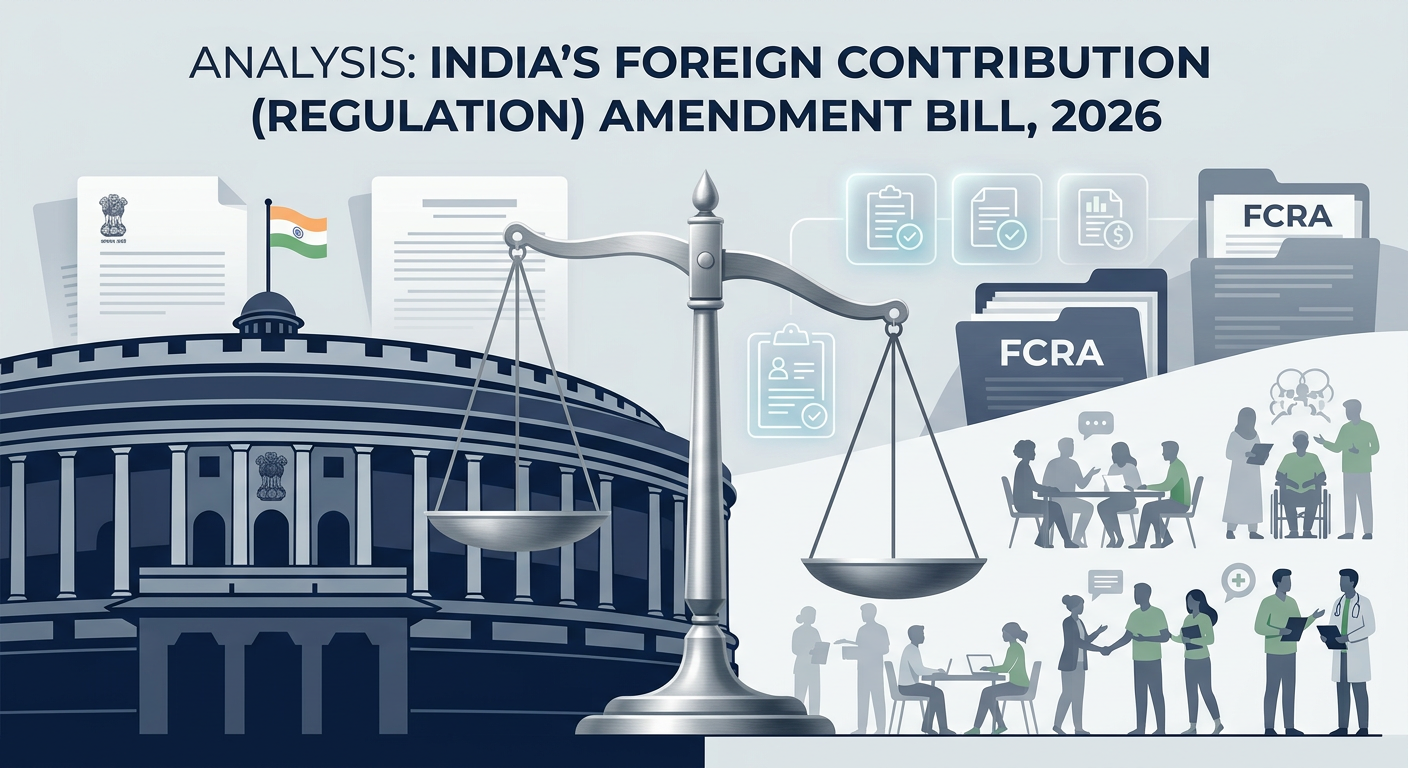
India’s Foreign Contribution (Regulation) Amendment Bill, 2026
ABSTRACT: The Foreign Contribution (Regulation) Amendment Bill, 2026, introduced in the Lok Sabha
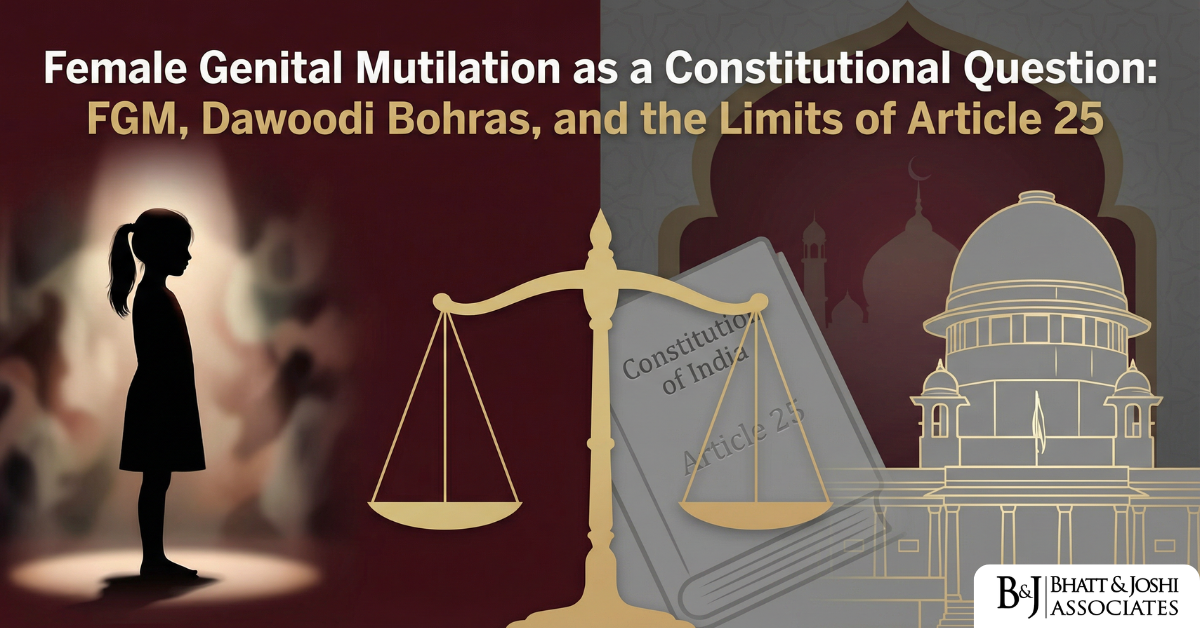
Female Genital Mutilation as a Constitutional Question: FGM, Dawoodi Bohras, and the Limits of Article 25
Introduction At the crossroads of bodily autonomy, religious freedom, and constitutional morality li
