






Road Transport Lawyer India | NHAI, Toll, BOT, MV Act
Bhatt & Joshi Associates is a leading law firm in India that provides specialized legal services to clients in the road transport and highway sector. Our team of experienced lawyers has a deep understanding of the legal and regulatory framework governing the sector and can provide effective solutions to our clients’ legal issues.
The road transport and highway sector is critical to India’s economic growth and development. The sector is heavily regulated, with various laws and regulations governing its operation. The Ministry of Road Transport and Highways (MoRTH) is the central agency responsible for the development and maintenance of national highways in India.
The regulatory framework for the road transport and highway sector in India includes the National Highways Act, 1956, the Motor Vehicles Act, 1988, and the Central Motor Vehicles Rules, 1989. These laws and regulations set out the requirements for the construction, operation, and maintenance of highways and other road transport infrastructure.
The National Highways Act, 1956, governs the development and management of national highways in India. It outlines the procedures for acquiring land for highway development and sets out the guidelines for toll collection and maintenance of highways.
The Motor Vehicles Act, 1988, governs the registration, licensing, and insurance of motor vehicles in India. It also sets out the rules for the use of public transport, the carriage of goods, and the use of highways.
At Bhatt & Joshi Associates, we offer a range of legal services to clients in the road transport and highway sector. Our services include legal advice on compliance with regulatory requirements, contractual issues, dispute resolution, and environmental and social impact assessments.
Our team of lawyers has extensive experience representing clients in a range of disputes, including contract disputes, regulatory compliance issues, and environmental and social impact assessments. We work closely with our clients to understand their legal issues and develop strategies to protect their interests.
In addition to regulatory compliance and dispute resolution services, we also offer services related to project finance, public-private partnerships (PPPs), and mergers and acquisitions. Our lawyers possess the expertise and experience necessary to guide clients through complex transactions and ensure compliance with all relevant laws and regulations.
In conclusion, at Bhatt & Joshi Associates, we provide comprehensive legal services to clients in the road transport and highway sector, including regulatory compliance, dispute resolution, and corporate advisory services. Our team of experienced lawyers has a deep understanding of the legal and regulatory framework governing the sector and can provide effective solutions to our clients’ legal issues. With our expertise and experience, we are committed to helping our clients achieve their business objectives and succeed in the highly regulated road transport and highway sector in India.
Equal justice under law is not merely a caption on the facade of the Supreme Court building, it is perhaps the most inspiring ideal of our society.
Our Publications
Get in touch with Best Commercial Court Lawyers in Ahmedabad
Frequently asked questions
1. When should I consider hiring a civil lawyer?
You should consider hiring a civil lawyer when facing legal disputes related to contracts, property, personal injury, family matters, or any non-criminal matter where you need legal advice or representation.
2. What is a civil lawyer?
A civil lawyer represents clients in non-criminal legal matters, dealing with disputes between individuals, organizations, or both, over rights, responsibilities, and liabilities.
3. Can a civil lawyer help with contract disputes?
Yes, one of the primary areas of expertise for many civil lawyers is contract law. They can assist with drafting, reviewing, and disputing the terms of contracts.
4. How do civil lawyers differ from criminal lawyers?
While both handle legal disputes, civil lawyers focus on non-criminal cases, often involving private disputes between individuals or organizations. Criminal lawyers, on the other hand, represent individuals or the state in cases involving potential criminal penalties.
5. How are damages determined in civil cases?
Damages are determined based on the actual loss suffered, potential future losses, and sometimes, punitive measures. The nature and amount depend on the specifics of the case and jurisdictional guidelines.
6. What is the usual process of a civil lawsuit?
The typical process involves the filing of a complaint, response from the other party, discovery (exchange of relevant information), negotiations, potential settlement discussions, and if unresolved, a trial. The exact process can vary by jurisdiction.
7. Can a civil lawyer assist in mediation or alternative dispute resolution?
Yes, many civil lawyers are trained in alternative dispute resolution methods like mediation and arbitration, offering solutions outside the traditional courtroom setting.
8. How long does a typical civil lawsuit last?
The duration of a civil lawsuit varies based on the case’s complexity, the court’s schedule, and the willingness of parties to settle. It can range from a few months to several years.
Fourth Schedule Acquisition Solatium under the 2013 Act: Which Applies?
Two landowners lose land to the same highway. One receives solatium at thirty per cent of market val
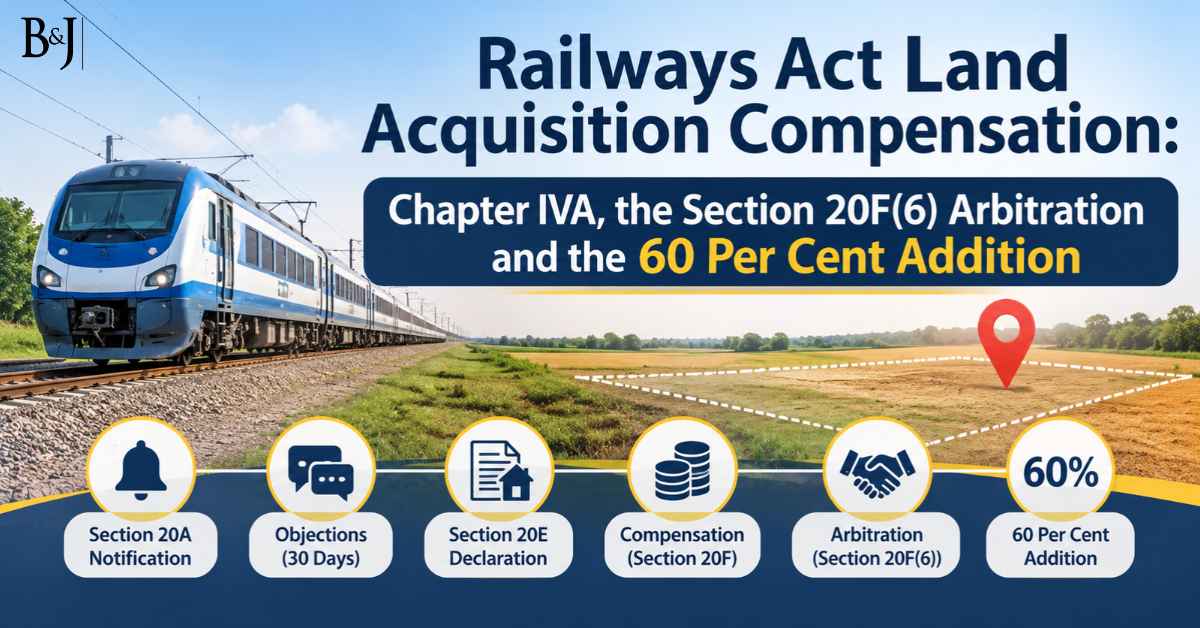
Railways Act Land Acquisition Compensation: Chapter IVA, the Section 20F(6) Arbitration and the 60 Per Cent Addition
People affected by a railway line usually assume they stand where a neighbour stood when a highway t
The Removal of Difficulties Order 2015: What It Actually Extended to Highway and Railway Acquisitions — and What It Did Not
The Removal of Difficulties Order 2015 is a two-clause instrument under the RFCTLARR Act 2013 that m
National Highways Act Arbitration: Section 3G(5), the Arbitrator the Government Appoints, and the Section 34 Challenge
If the State takes your field for a district road, you go to a court. If it takes the same field for
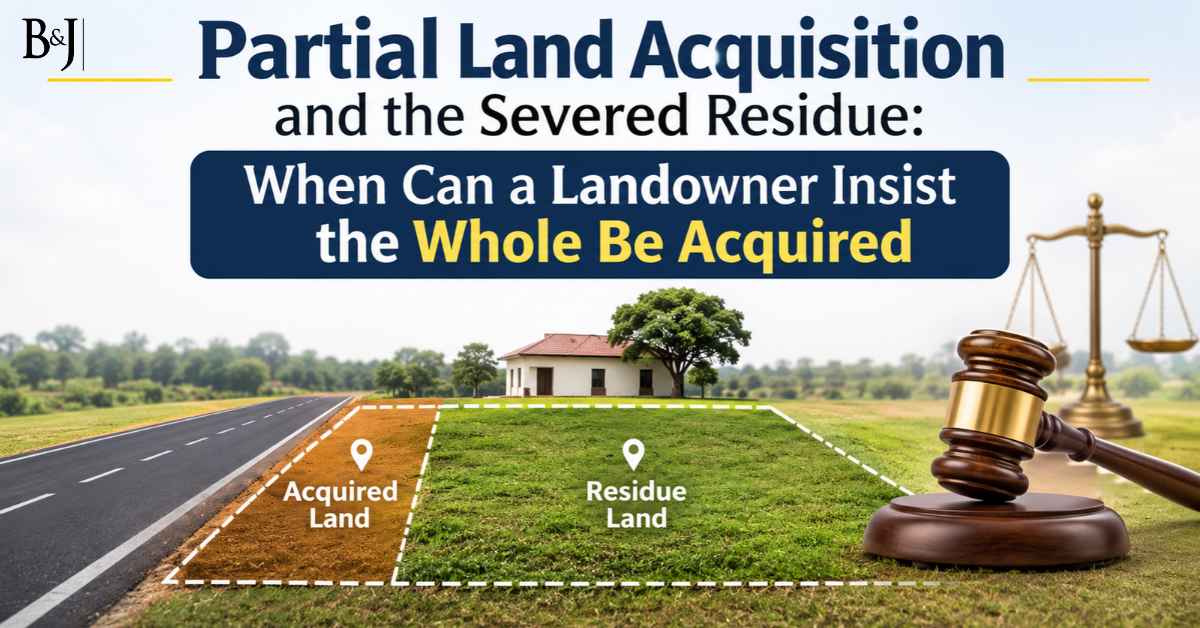
Partial Land Acquisition and the Severed Residue: When Can a Landowner Insist the Whole Be Acquired?
A partial land acquisition takes a strip and leaves the owner with what is left. Sometimes what is l
Section 18 Land Acquisition Reference: Challenging a Collector’s Compensation Award in Court
The section 18 land acquisition reference is the oldest and still the most used route to more compen
Jantri vs Market Value: How Land Acquisition Compensation Is Really Determined
The award arrives and the figure is disappointingly round. Asked how it was reached, the office says
Land Acquisition Compensation in India: The LARR Act, the National Highways Act and the Railways Act
When the State takes a person’s land, the Constitution and the statute promise something in re
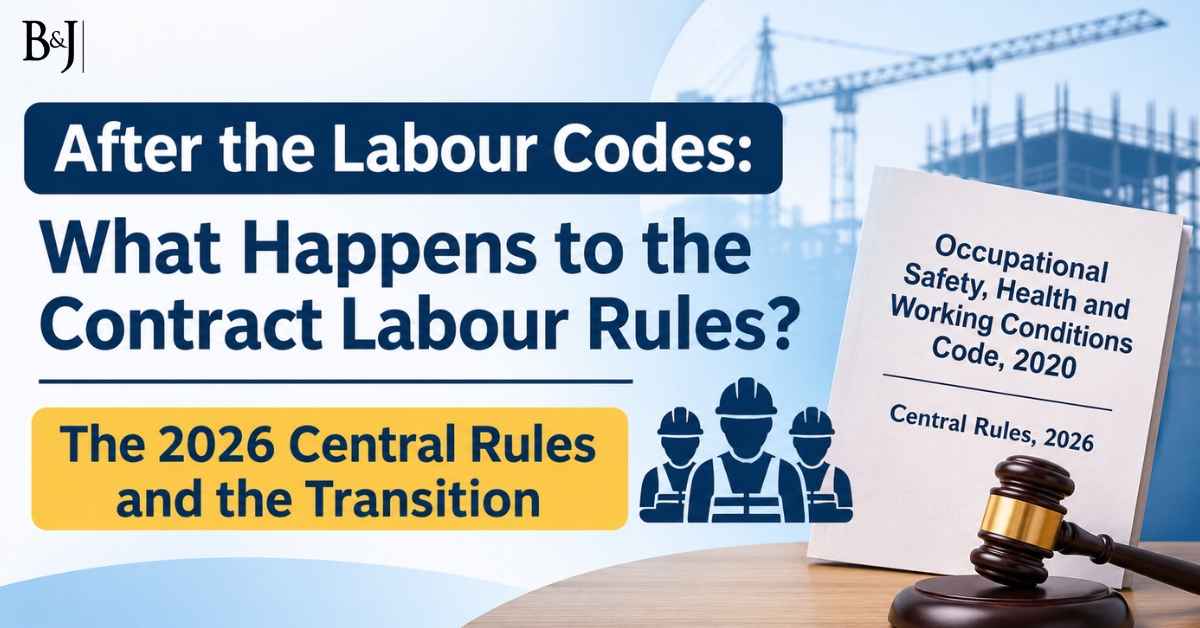
After the Labour Codes: What Happens to the Contract Labour Rules? The 2026 Central Rules and the Transition
The Labour Codes contract labour rules transition means the move from the Contract Labour (Regulatio

Whatsapp

