Whatsapp

Customs Bonded Warehouse: Section 58 Customs Act Requirements
Introduction
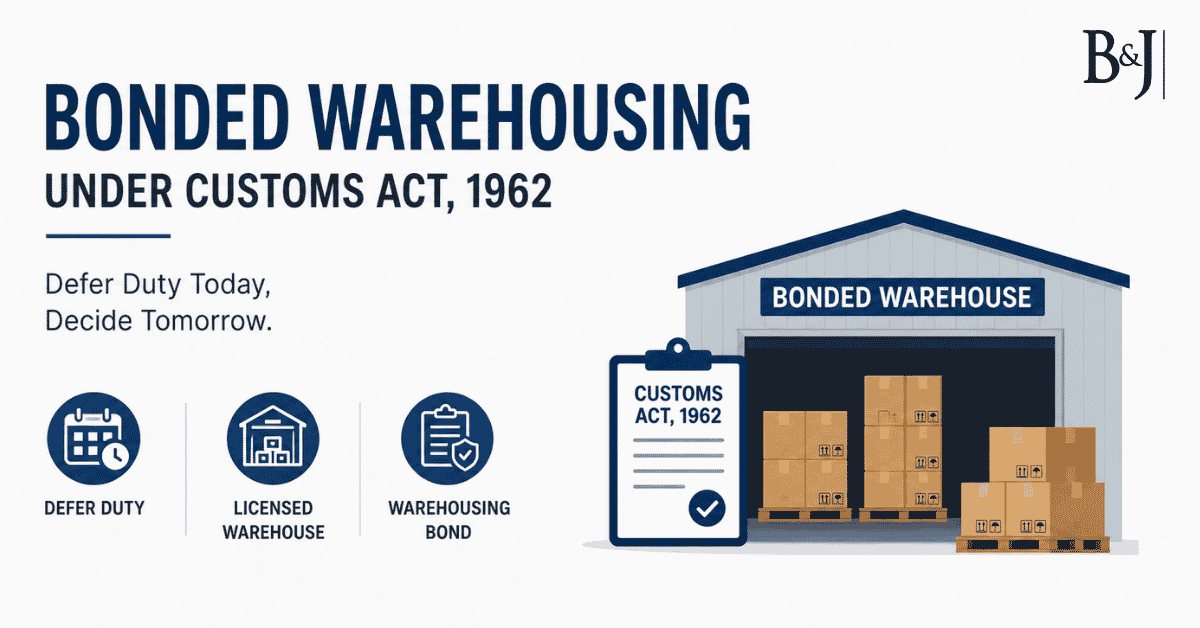
Customs bonded warehouses represent a critical component of India’s international trade infrastructure, providing a secure and regulated environment for the storage of imported goods without immediate payment of customs duties. These facilities serve as interim storage locations where goods remain under customs supervision until they are either cleared for domestic consumption or re-exported. The legal framework governing customs bonded warehouses is primarily established under Chapter IX of the Customs Act, 1962 [1], supplemented by various regulations and notifications issued by the Central Board of Indirect Taxes and Customs (CBIC).
The concept of bonded warehousing facilitates international trade by allowing importers to defer duty payments, thereby improving cash flow and providing flexibility in commercial operations. The Customs Act defines “warehouse” as a public warehouse licensed under section 57 or a private warehouse licensed under section 58 or a special warehouse licensed under section 58A, while “warehoused goods” means goods deposited in a warehouse, and “warehousing station” means a place declared as a warehousing station under the Act.
Legal Framework and Statutory Provisions
Constitutional and Legislative Basis
The power to regulate customs bonded warehouses derives from the legislative authority of Parliament under the Constitution of India. The Customs Act, 1962, provides the primary legislative framework, while the executive power is exercised through the Central Board of Indirect Taxes and Customs under the Ministry of Finance. The warehousing provisions are comprehensively covered in Sections 57 to 73A of the Act, which establish the licensing requirements, operational procedures, and regulatory oversight mechanisms.
Classification of Customs Bonded Warehouses
The Customs Act recognizes three distinct categories of bonded warehouses, each serving specific purposes and governed by different licensing provisions:
Public Warehouses: These facilities are licensed under provisions that allow the Principal Commissioner of Customs or Commissioner of Customs to license public warehouses at any warehousing station, subject to prescribed conditions, wherein dutiable goods may be deposited. Public warehouses are accessible to all importers and serve as common storage facilities for various stakeholders in the import-export trade.
Private Warehouses: The Act provides for the licensing of private warehouses wherein dutiable goods imported by or on behalf of the licensee, or any other imported goods in respect of which facilities for deposit in a public warehouse are not available, may be stored. These warehouses are typically owned and operated by individual importers or manufacturing entities for their exclusive use.
Special Warehouses: The provisions for special warehouses were introduced to accommodate specific types of goods or operations that require specialized handling or storage conditions. The Board may, by notification in the Official Gazette, specify the class of goods which shall be deposited in special warehouses.
Licensing Requirements and Procedures
Appointment and Licensing Authority
The licensing authority for bonded warehouses is vested in the Principal Commissioner of Customs or Commissioner of Customs, depending on the jurisdictional arrangement. The Private Warehouse Licensing Regulations, 2016 [2], delegate authority to ensure efficient processing of applications while maintaining regulatory oversight.
Eligibility Criteria for Private Warehouse Licensing
The Private Warehouse Licensing Regulations specify detailed eligibility criteria for obtaining a private warehouse license. An applicant must satisfy comprehensive conditions including citizenship or legal incorporation requirements, compliance undertakings, and financial guarantees through solvency certificates from scheduled banks.
The applicant must be a citizen of India or an entity incorporated or registered under any law for the time being in force in India. This requirement ensures that only Indian nationals or legally recognized Indian entities can operate bonded warehouses, aligning with national security and economic policy objectives. Additionally, applicants must submit undertakings to comply with all terms and conditions specified by the licensing authority, forming a legal commitment binding the licensee to adhere to all regulatory requirements and operational standards prescribed under customs law.
A solvency certificate from a scheduled bank must be furnished for an amount specified by the licensing authority. This financial guarantee ensures that the licensee possesses adequate financial resources to meet their obligations under the licensing arrangement and provides security to customs authorities against potential revenue loss.
Disqualification Criteria
The regulations specify circumstances under which a license cannot be granted. Persons declared insolvent or bankrupt by a competent court or tribunal are ineligible for licensing. This provision ensures that only financially stable entities are entrusted with the responsibility of operating bonded warehouses.
Individuals convicted of offenses under any law currently in force are disqualified from obtaining licenses. This measure maintains the integrity of the bonded warehouse system by excluding persons with criminal records. Similarly, persons penalized under the Customs Act, Central Excise Act, 1944, or Chapter V of the Finance Act, 1994, are ineligible for licensing, preventing individuals with a history of tax evasion or customs violations from operating bonded facilities.
Warehousing Bond and Financial Security
Execution of Warehousing Bond
The Customs Act mandates the execution of a warehousing bond by importers seeking to warehouse their goods. The importer of any goods in respect of which a bill of entry for warehousing has been presented and assessed to duty must execute a bond binding himself in a sum equal to twice the amount of the duty assessed on such goods.
This bond serves as a financial guarantee ensuring that the importer will comply with all warehousing obligations and pay the required duties and charges. The bond amount is calculated as twice the assessed duty, providing adequate security to the customs authorities against potential revenue loss.
Interest Provisions
The warehousing bond includes provisions for interest on unpaid duties. Interest is chargeable at rates not below 18 percent and not exceeding 36 percent per annum, as fixed by the Central Government through official gazette notifications. This interest mechanism incentivizes timely clearance of goods and compensates the government for deferred revenue collection.
Continuation and Transfer of Bonds
The warehousing bond continues in force notwithstanding the transfer of goods to another person or removal to another warehouse. However, when goods are transferred, the proper officer may accept a new bond from the transferee, and the original bond remains enforceable only for the reduced amount after accounting for the new bond.
Operational Procedures and Compliance Requirements
Permission for Deposit of Goods
When the conditions regarding bond execution have been satisfied, the proper officer may authorize the deposit of goods in a warehouse. This authorization is subject to the fulfillment of all procedural requirements and the execution of the necessary bonds and undertakings.
Warehousing Periods
The duration for which goods may remain in warehouses is specified in the Customs Act. The prescribed periods are: for capital goods, up to 5 years from the date of deposit, recognizing the long-term nature of capital investments; for goods other than capital goods intended for manufacture or other operations, up to 3 years, accommodating typical production cycles; and for other goods, up to 1 year, balancing storage flexibility with revenue collection requirements.
Extension and Reduction of Warehousing Periods
The Commissioner of Customs possesses discretionary power to extend or reduce warehousing periods based on the nature of goods and circumstances. For goods unlikely to deteriorate, the standard period may be extended, while for perishable goods, the period may be reduced to prevent loss or deterioration.
Control and Supervision of Warehoused Goods
Proper Officer Control
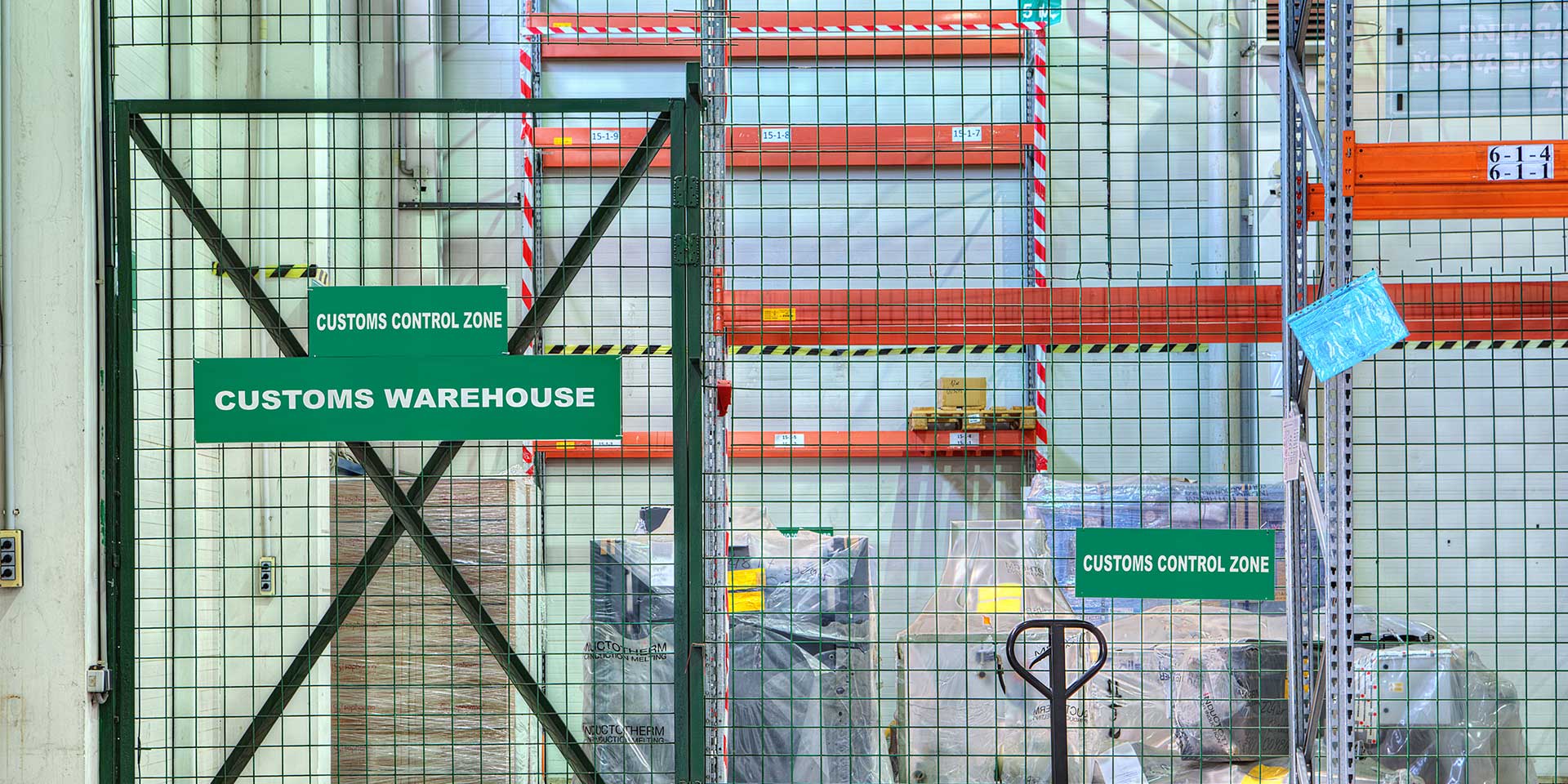
The Customs Act establishes that all warehoused goods remain under the control of the proper officer. No person shall enter a warehouse or remove any goods therefrom without the permission of the proper officer. This control mechanism ensures compliance with customs regulations and prevents unauthorized access to bonded goods.
Customs Locks and Security
The proper officer has the authority to secure warehouses with customs department locks, which cannot be removed or broken without authorization. This security measure prevents tampering and ensures the integrity of stored goods. Customs officers possess comprehensive inspection rights, including access to all parts of the warehouse and authority to examine stored goods, enabling effective monitoring of compliance and detection of any irregularities.
Owner’s Rights and Obligations
Dealing with Warehoused Goods
The Customs Act grants specific rights to owners of warehoused goods, subject to proper officer sanction and prescribed fees. These rights include inspection of goods to assess their condition and verify quantities, separation of damaged or deteriorated goods from the rest of the consignment for quality control, sorting and repackaging of goods for preservation, sale, export, or disposal to accommodate various commercial requirements, and taking samples for testing or demonstration purposes without formal entry for home consumption.
Record Maintenance Requirements
The Private Warehouse Licensing Regulations impose detailed record-keeping obligations on licensees. Licensees must maintain records of receipt, handling, storing, and removal of goods into or from the warehouse, each activity or operation taken in relation to warehoused goods, and sample drawing from warehoused goods under applicable laws. These records must be produced to the bond officer upon request and ensure traceability and accountability.
Manufacturing and Other Operations in Bonded Warehouses
Manufacturing Operations Framework
The Customs Act permits manufacturing processes and other operations within bonded warehouses, subject to the sanction of the Assistant Commissioner of Customs or Deputy Commissioner of Customs. With proper sanction and subject to prescribed conditions and fees, the owner of any warehoused goods may carry on any manufacturing process or other operations in the warehouse in relation to such goods.
Manufacture and Other Operations in Warehouse Regulations, 2019
The Manufacture and Other Operations in Warehouse Regulations, 2019 (MOOWR) [3], provide detailed procedures for conducting manufacturing activities in bonded warehouses. These regulations establish a framework for application procedures, input-output norms for raw materials and finished products (though adherence to Standard Input Output Norms is not mandatory), and specific record-keeping requirements for manufacturing operations in prescribed formats.
Waste and Refuse Management
The Act addresses the treatment of waste and refuse generated during manufacturing operations. For exported goods, import duty is remitted on the quantity of warehoused goods contained in waste or refuse arising from operations related to exported goods, provided the waste is destroyed or duty is paid. For domestic consumption, import duty is charged on the quantity of warehoused goods contained in waste or refuse arising from operations related to goods cleared for home consumption.
Clearance Procedures
Clearance for Home Consumption
The Customs Act establishes comprehensive procedures for clearing warehoused goods for domestic consumption. The requirements include presentation of a bill of entry for home consumption in the prescribed form, payment of import duty, penalties, rent, interest, and other charges, and obtaining an order for clearance from the proper officer confirming compliance with all regulatory requirements.
Clearance for Export
The Act provides for the export of warehoused goods without payment of import duty, subject to presentation of a shipping bill or bill of export in the prescribed form, payment of export duty, penalties, rent, interest, and other charges (while import duty is waived, other obligations must be fulfilled), and obtaining a clearance order from the proper officer enabling goods to be exported from the customs territory.
Recent Judicial Developments
Supreme Court Judgment in M/s Bisco Limited Case
In a significant judgment delivered on March 20, 2024, the Supreme Court in M/s Bisco Limited v. Commissioner of Customs and Central Excise [4] clarified the application of Section 71 of the Customs Act. The Court held that “Section 71 of the Customs Act, 1962 would be inapplicable to cases where imported goods were stocked outside the notified public bonded warehouse with the permission of the concerned officer.”
The Court observed that when goods are stored outside the notified bonded warehouse area but within the factory premises with proper authorization, the provisions regarding improper removal from warehouse do not apply. The bench comprising Justice B.V. Nagarathna and Justice Ujjal Bhuyan emphasized that since the imported goods were never warehoused inside the notified public bonded warehouse but were unloaded outside the notified area but within the factory premises and kept under a shed on permission granted by the Superintendent, which permission was neither cancelled nor revoked, the question of warehousing within the notified public bonded warehouse did not arise.
This judgment has significant implications for bonded warehouse operations, particularly regarding the flexibility in storage arrangements within authorized premises and the importance of proper documentation of permissions granted by customs authorities.
Penalties and Enforcement
Goods Improperly Removed from Warehouse
The Customs Act addresses various scenarios of non-compliance with warehousing provisions. Goods removed from warehouse in contravention of prescribed procedures are subject to duty demand and penalties. Goods not removed within the permitted warehousing period attract duty, interest, and penalties to encourage timely clearance. Goods taken as samples without duty payment are subject to regularization requirements to prevent misuse of sampling facilities.
Detention and Sale of Goods
The proper officer has the authority to detain and sell sufficient portions of warehoused goods to recover outstanding amounts. This enforcement mechanism ensures compliance with financial obligations and protects government revenue.
Cancellation and Return of Warehousing Bond
Bond Cancellation Procedures
The Customs Act provides for the cancellation of warehousing bonds when all goods covered by the bond have been cleared for home consumption, exported, or otherwise accounted for, and all amounts due on account of the goods have been paid, including duties, interest, penalties, and other charges. Upon satisfaction of these conditions, the proper officer must cancel the bond and return it to the person who executed it or is entitled to receive it.
Regulatory Compliance and Best Practices
Monthly Returns and Reporting
The Private Warehouse Licensing Regulations require licensees to file monthly returns with the bond officer within ten days after the close of each month. These returns must detail receipt of goods into the warehouse including quantities, descriptions, and values, storage operations and any changes in goods condition, and removal of goods from the warehouse for various purposes. This record-keeping ensures proper accounting and regulatory compliance.
Digital Signature Requirements
Modern regulations require warehouse keepers to obtain digital signatures from authorities licensed by the Controller of Certifying Authorities [5]. This requirement enhances security and authenticity of electronic documentation in line with digital governance initiatives.
Audit and Inspection Procedures
Bonded warehouses are subject to regular audits and inspections by customs authorities. The frequency and scope of these examinations are determined based on risk assessment criteria and compliance history, ensuring effective monitoring while minimizing compliance burden for compliant operators.
Recent Policy Developments
Bonded Manufacturing Scheme Enhancements
The government has introduced enhanced guidelines for the Bonded Manufacturing Scheme [6], which operates under Section 65 of the Customs Act. These guidelines provide for no geographical limitations on unit establishment, single application processes for licensing and manufacturing permissions, duty deferment on both capital goods and raw materials until clearance, complete duty remission for exported goods, and flexibility to sell up to 100% of production in the domestic market.
Digitization and Automation Initiatives
The customs administration has implemented various digitization measures to streamline bonded warehouse operations. These include electronic filing of applications and returns, digital signature requirements for documentation, online tracking of goods movement, and automated risk assessment for inspections [7].
International Best Practices and Compliance
Authorized Economic Operator Programme
The Indian Authorized Economic Operator (AEO) Programme [8], administered by CBIC since 2011, provides additional benefits to compliant bonded warehouse operators. AEO certification enhances trade facilitation while maintaining security standards, offering reduced physical examinations, priority clearance, and other trade facilitation measures.
Supply Chain Security
Bonded warehouse operators must implement supply chain security measures in line with international standards. These measures include physical security of premises, personnel background verification, documentation and record-keeping systems, and coordination with customs authorities for security incidents.
Conclusion
The legal framework governing customs bonded warehouses in India represents a sophisticated system balancing trade facilitation with revenue protection and regulatory compliance. The provisions of the Customs Act, 1962, supplemented by detailed regulations and recent judicial interpretations, create a robust foundation for bonded warehouse operations that continues to evolve to meet the changing needs of international trade.
Recent developments, including the digitization of processes, the enhanced Bonded Manufacturing Scheme, and judicial clarifications like the Bisco Limited case, demonstrate the government’s commitment to enhancing the competitiveness of Indian industry while ensuring effective customs administration. The regulatory framework provides flexibility for legitimate business operations while maintaining strict oversight to prevent revenue loss and ensure compliance.
For businesses engaged in international trade, understanding and complying with bonded warehouse regulations is essential for operational success and regulatory compliance. The complexity of these regulations necessitates careful attention to procedural requirements, documentation standards, and ongoing compliance obligations. The Supreme Court’s recent clarification provides valuable guidance on the interpretation of warehousing provisions and emphasizes the importance of proper authorization and documentation in bonded warehouse operations.
As India continues to expand its role in global trade, the bonded warehouse system will remain a critical component of the country’s trade infrastructure, requiring ongoing attention to regulatory compliance and operational excellence from all stakeholders. The framework’s continued evolution reflects the balance between facilitating legitimate trade and maintaining effective customs control in an increasingly complex global trading environment.
References
[1] Customs Act, 1962, Government of India, https://www.indiacode.nic.in/handle/123456789/2475
[2] Private Warehouse Licensing Regulations, 2016, Central Board of Indirect Taxes and Customs, https://taxguru.in/custom-duty/private-customs-bonded-warehouse.html
[3] Manufacture and Other Operations in Warehouse Regulations, 2019, Central Board of Indirect Taxes and Customs, https://www.investindia.gov.in/bonded-manufacturing
[4] M/s Bisco Limited v. Commissioner of Customs and Central Excise, 2024 LiveLaw (SC) 257, Supreme Court of India, https://www.livelaw.in/top-stories/customs-act-s-71-inapplicable-if-imported-goods-were-stocked-outside-notified-public-bonded-warehouse-with-permission-supreme-court-253354
[5] Information Technology Act, 2000 and Controller of Certifying Authorities Regulations, Government of India, https://hnallp.com/a/private-customs-bonded-warehouse
[6] Revised Guidelines of Bonded Manufacturing Scheme, Department for Promotion of Industry and Internal Trade, https://www.indiafilings.com/learn/revised-guidelines-of-bonded-manufacturing-scheme/
[7] Customs Manual, Central Board of Indirect Taxes and Customs, https://taxguru.in/custom-duty/warehousing-bonded-movement-customs-act-1962-provisional-assessment.html
[8] Authorized Economic Operator Programme Guidelines, Central Board of Indirect Taxes and Customs, https://bangalorecustoms.gov.in/wp-content/uploads/2023/11/MOOWR.pdf
[9] https://bhattandjoshiassociates.s3.ap-south-1.amazonaws.com/judgements/the_customs_act,_1962.pdf
[11] https://bhattandjoshiassociates.s3.ap-south-1.amazonaws.com/judgements/7344faqsonmanufacturing.pdf
[13] https://bhattandjoshiassociates.s3.ap-south-1.amazonaws.com/judgements/it_act_2000_updated.pdf
Authorized by Prapti Bhatt