




NCLT Lawyers | Bhatt & Joshi Associates | Ahmedabad
The National Company Law Tribunal (NCLT) is a quasi-judicial body that adjudicates on various matters relating to companies in India. NCLT was established under the Companies Act, 2013 and has primary jurisdiction over the Companies Act and the Insolvency and Bankruptcy Code, 2016 (IBC). Bhatt & Joshi Associates, a premier law firm in Gujarat, Ahmedabad, provides litigation support services to clients at the NCLT, Ahmedabad. In this article, we will discuss the overview of NCLT, its powers, and the various services offered by Bhatt & Joshi Associates at NCLT, Ahmedabad.
Understanding the National Company Law Tribunal (NCLT)
The National Company Law Tribunal(NCLT) is a quasi-judicial body established by the Ministry of Corporate Affairs under Section 408 of the Companies Act, 2013. Its primary jurisdiction covers matters and proceedings filed under the Companies Act, 2013, and the Insolvency and Bankruptcy Code, 2016. The NCLT comprises a President and several judicial and technical members appointed by the Central Government. The National Company Law Tribunal(NCLT) has eleven benches across the country, including one in Ahmedabad.
It is a specialized forum that deals with matters related to companies, such as mergers, amalgamations, winding-up, and insolvency. It has jurisdiction over companies incorporated under the Companies Act, 2013, and the Limited Liability Partnership Act, 2008.
Powers of National Company Law Tribunal (NCLT)
National Company Law Tribunal(NCLT) has the power to adjudicate on various matters related to companies, including:
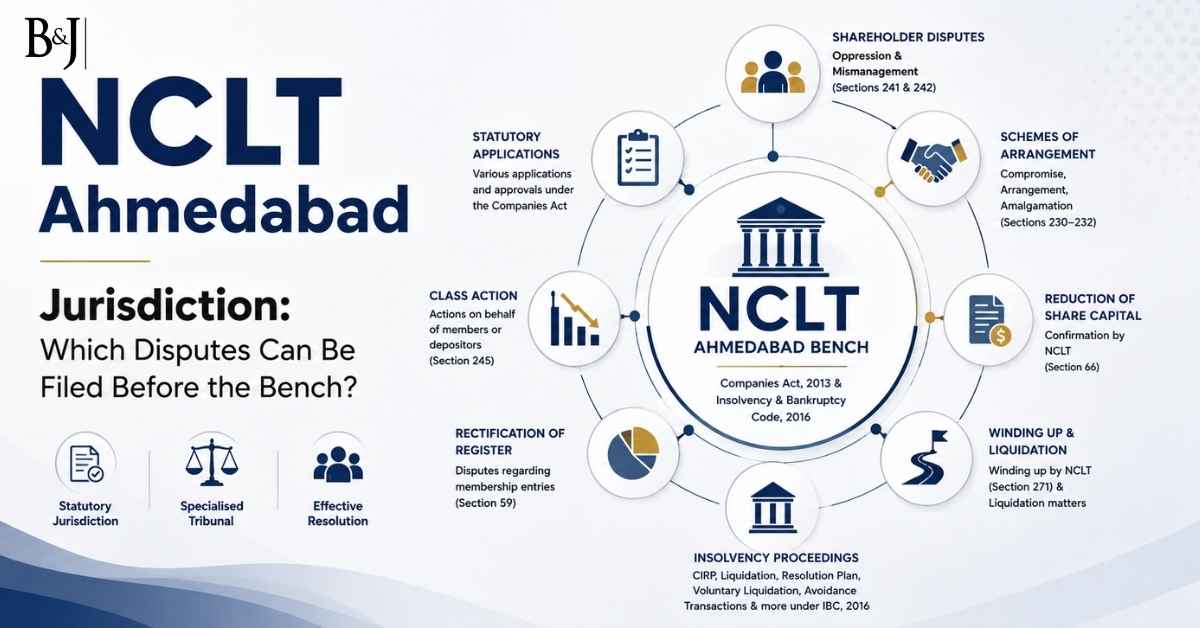
- Winding-up of companies: NCLT has the power to wind up a company if it is unable to pay its debts or if it is just and equitable to do so.
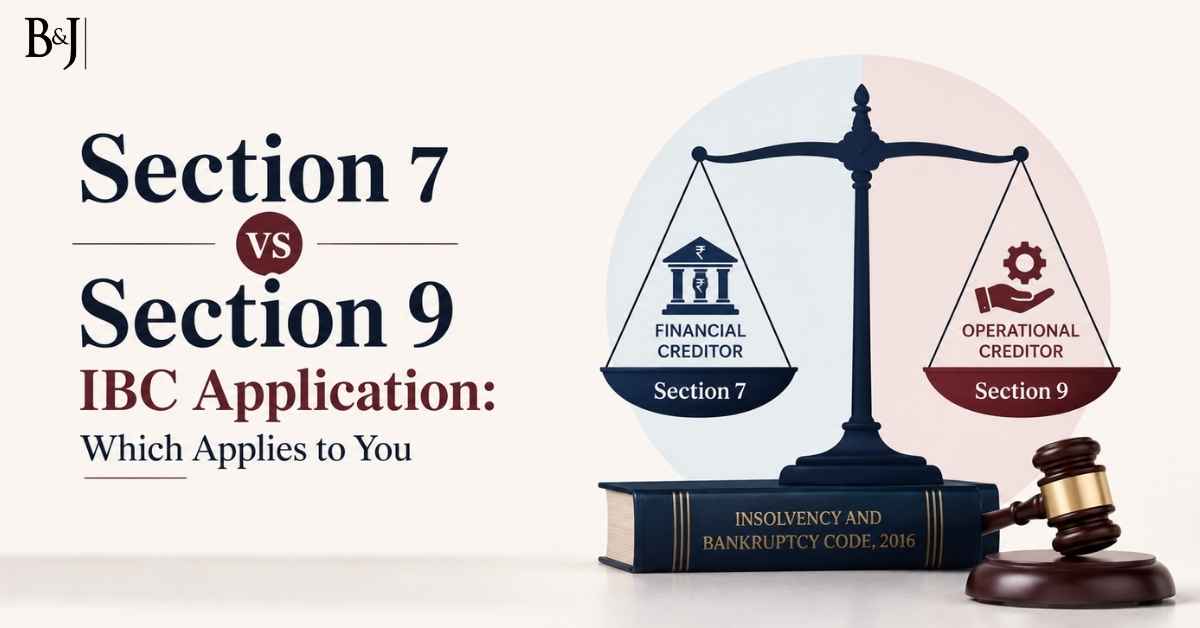
- Insolvency proceedings: NCLT has the power to initiate insolvency proceedings against a company if it defaults on its debt obligations.
- Mergers and acquisitions: NCLT has the power to approve or reject mergers and acquisitions involving companies.
- Reduction of share capital: NCLT has the power to approve the reduction of share capital of a company.
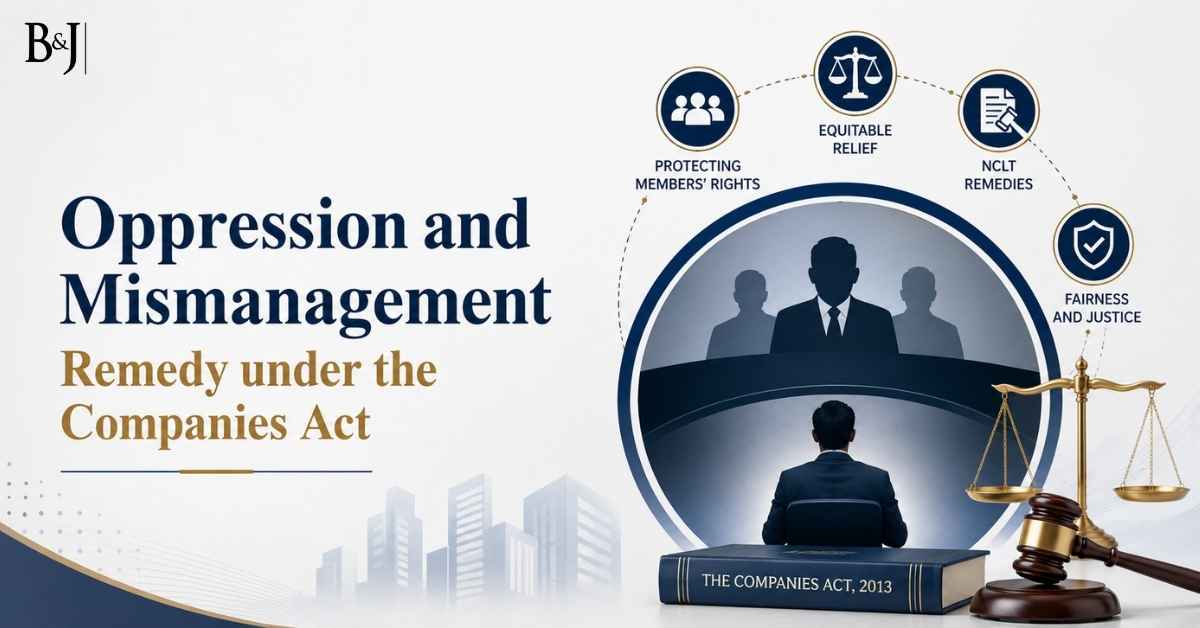
- Oppression and Mismanagement: NCLT has the power to redress grievances of members or shareholders of a company in case of oppression and mismanagement.
Bhatt & Joshi Associates’ Expertise in Corporate Disputes and Bankruptcy Proceedings
At Bhatt & Joshi Associates, we specialize in handling corporate disputes, winding up, insolvency, bankruptcy proceedings, and more. Our NCLT lawyers have an in-depth understanding of the NCLT’s jurisdiction and the laws governing it, including the Companies Act, 2013, and the Insolvency and Bankruptcy Code, 2016.
Bhatt & Joshi Associates provides a wide range of services at NCLT, Ahmedabad. Our experienced team of lawyers has expertise in the following areas:
- Insolvency and Bankruptcy Proceedings: Our lawyers provide legal services in relation to initiation of insolvency proceedings, drafting of petitions, representation before NCLT, and advising on various aspects of insolvency law.
- Winding-up Proceedings: We assist clients in initiating winding-up proceedings, representation before NCLT, and advising on the various aspects of winding-up law.
- Merger and Acquisition: Our lawyers assist clients in drafting and reviewing merger and acquisition agreements, obtaining approvals from NCLT, and advising on various legal aspects of mergers and acquisitions.
- Oppression and Mismanagement: We assist clients in filing oppression and mismanagement cases before NCLT and representing them in litigation.
- Shareholders Disputes: Our lawyers represent clients in disputes among shareholders, including disputes over shareholding, management control, and dividend distribution.
Conclusion
At Bhatt & Joshi Associates, we pride ourselves on providing best possible litigation support services to clients at the National Company Law Tribunal (NCLT) in Ahmedabad. Our team of highly experienced NCLT lawyers have a deep understanding of various areas of law, including the Companies Act, 2013, and the Insolvency and Bankruptcy Code, 2016, making us well-equipped to handle a wide range of legal corporate matters at the NCLT. With our Best NCLT Lawyers by your side, we assure you of our best efforts in the protection of your legal rights. Contact us today to learn more about our legal services at National Company Law Tribunal (NCLT), Ahmedabad.
Commerce is the great civilizer, but it can only be that as long as it is also just.
Get in touch with Best NCLT Lawyers in Ahmedabad
Frequently asked questions
1. When should I consider hiring a civil lawyer?
You should consider hiring a civil lawyer when facing legal disputes related to contracts, property, personal injury, family matters, or any non-criminal matter where you need legal advice or representation.
2. What is a civil lawyer?
A civil lawyer represents clients in non-criminal legal matters, dealing with disputes between individuals, organizations, or both, over rights, responsibilities, and liabilities.
3. Can a civil lawyer help with contract disputes?
Yes, one of the primary areas of expertise for many civil lawyers is contract law. They can assist with drafting, reviewing, and disputing the terms of contracts.
4. How do civil lawyers differ from criminal lawyers?
While both handle legal disputes, civil lawyers focus on non-criminal cases, often involving private disputes between individuals or organizations. Criminal lawyers, on the other hand, represent individuals or the state in cases involving potential criminal penalties.
5. How are damages determined in civil cases?
Damages are determined based on the actual loss suffered, potential future losses, and sometimes, punitive measures. The nature and amount depend on the specifics of the case and jurisdictional guidelines.
6. What is the usual process of a civil lawsuit?
The typical process involves the filing of a complaint, response from the other party, discovery (exchange of relevant information), negotiations, potential settlement discussions, and if unresolved, a trial. The exact process can vary by jurisdiction.
7. Can a civil lawyer assist in mediation or alternative dispute resolution?
Yes, many civil lawyers are trained in alternative dispute resolution methods like mediation and arbitration, offering solutions outside the traditional courtroom setting.
8. How long does a typical civil lawsuit last?
The duration of a civil lawsuit varies based on the case’s complexity, the court’s schedule, and the willingness of parties to settle. It can range from a few months to several years.
Oppression and Mismanagement: Section 241 Companies Act 2013
Introduction: Understanding Member Rights in Corporate Governance The recent pronouncement by the Na
NCLT’s Power to Punish for Civil Contempt: A Comprehensive Legal Analysis of Section 425 of the Companies Act, 2013
Executive Summary The power of the National Company Law Tribunal (NCLT) to punish for civil contempt
NCLT Investigative Powers in Insolvency Proceedings: A Comprehensive Legal Analysis of NCLAT’s Landmark Ruling in Max Publicity & Communication Case
Executive Summary The National Company Law Appellate Tribunal (NCLAT), in its recent landmark judgme
Compounding of Offences under the Companies Act: An Underused Compliance Tool
Introduction The Companies Act, 2013, which replaced its 1956 predecessor, introduced a more robust
Admissibility of SFIO Reports in Legal Proceedings: A Critical Analysis of Deloitte Haskins & Sells LLP v. Union of India
Introduction The National Company Law Appellate Tribunal (NCLAT) judgment dated February 28, 2025,

Impacts of Recent Amendments in the Companies Act on Corporate Governance
Introduction Corporate governance forms the backbone of any company’s functioning, ensuring acco
Interest Claims and Operational Debt under the IBC – Analyzing the NCLT’s Stand
Examining the Non-Inclusion of Unagreed Interest as Operational Debt and MSME Claims before NCLT and
Riding the Wave of Interim Moratorium: A Deep Dive into YES Bank Ltd. v. Mr. Kunal Jiwarajka
Exploring the interplay of Section 96 of the Insolvency and Bankruptcy Code, 2016 and Section 68 of
Section 169 Companies Act 2013: Step-by-Step Director Removal Procedure
Introduction In the intricate world of corporate governance, the composition of a company’s bo
Whatsapp