 Whatsapp

Timeline of the Corporate Insolvency Resolution Process (CIRP)
The CIRP timeline under the Insolvency and Bankruptcy Code, 2016 (IBC) is intended to keep insolvency proceedings moving without unnecessary delay. When a company remains in distre
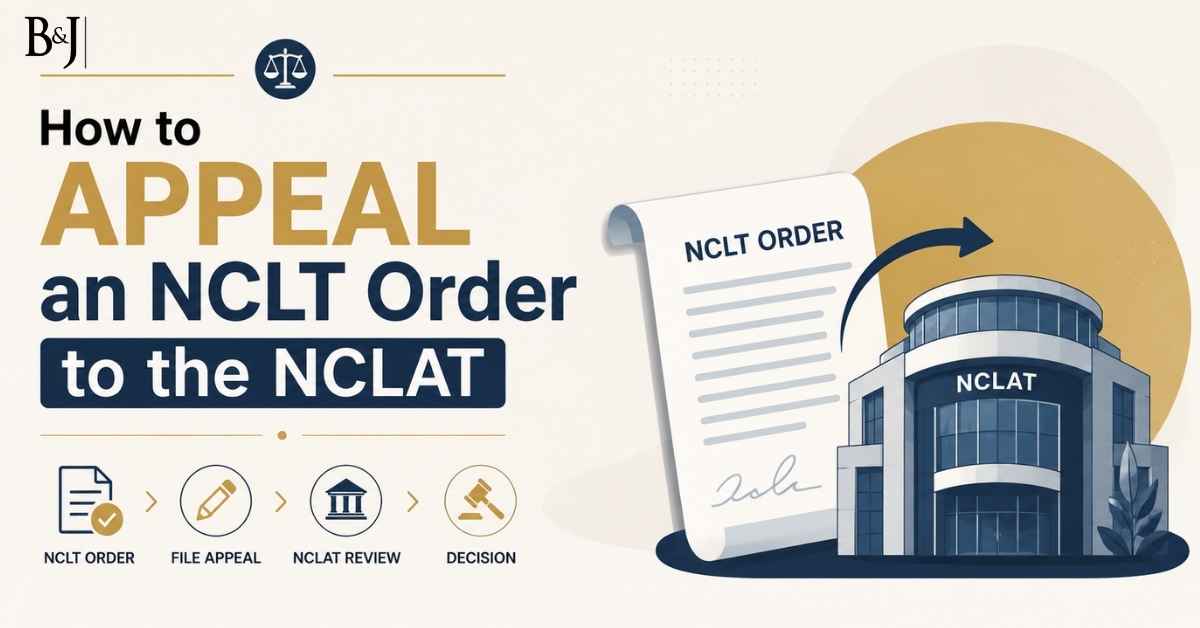
How to appeal an NCLT order to the NCLAT
An order of the National Company Law Tribunal can change control of a company overnight. An admission order under the Insolvency and Bankruptcy Code, 2016 triggers a moratorium and
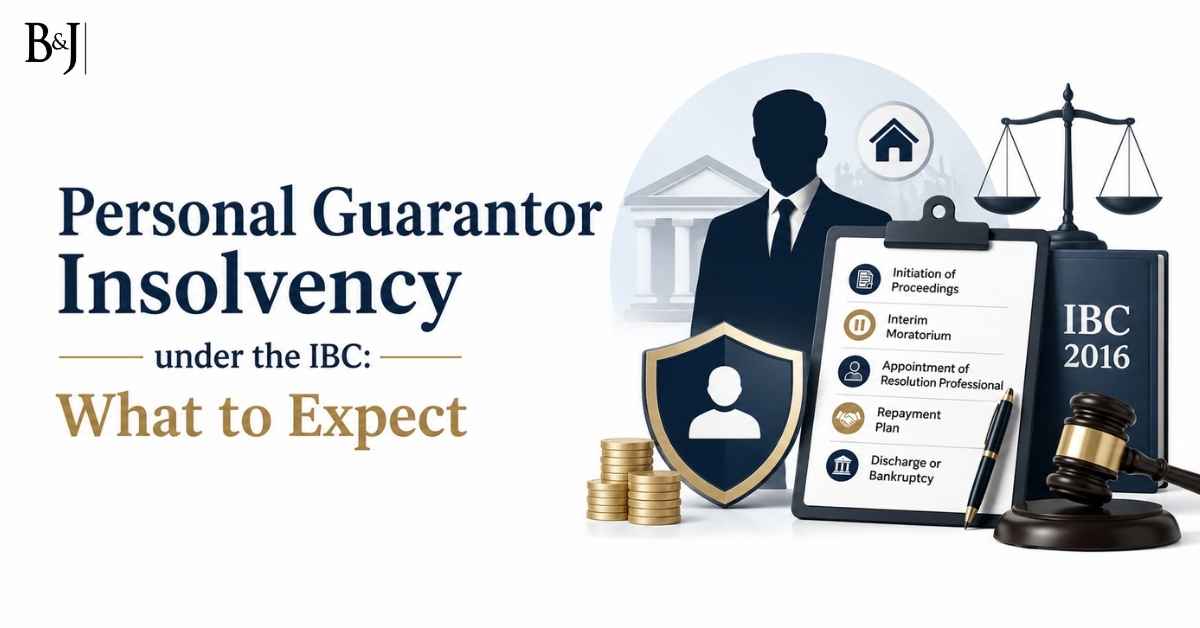
Personal Guarantor Insolvency under the IBC: What to Expect
Promoters and directors often provide personal guarantees for company loans to secure financing from creditors. Earlier, if the company defaulted, creditors generally had to pursue
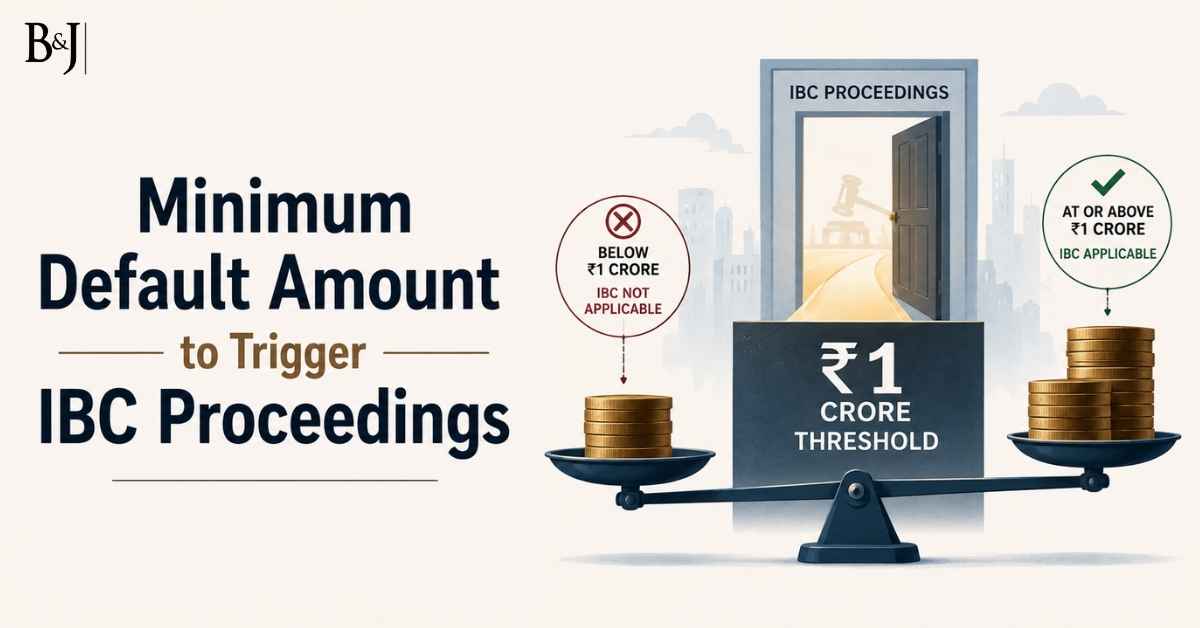
Minimum Default Amount to Trigger IBC Proceedings
The Insolvency and Bankruptcy Code, 2016 (IBC) does not apply to every unpaid debt. A minimum default amount under IBC determines whether a creditor can initiate insolvency proceed
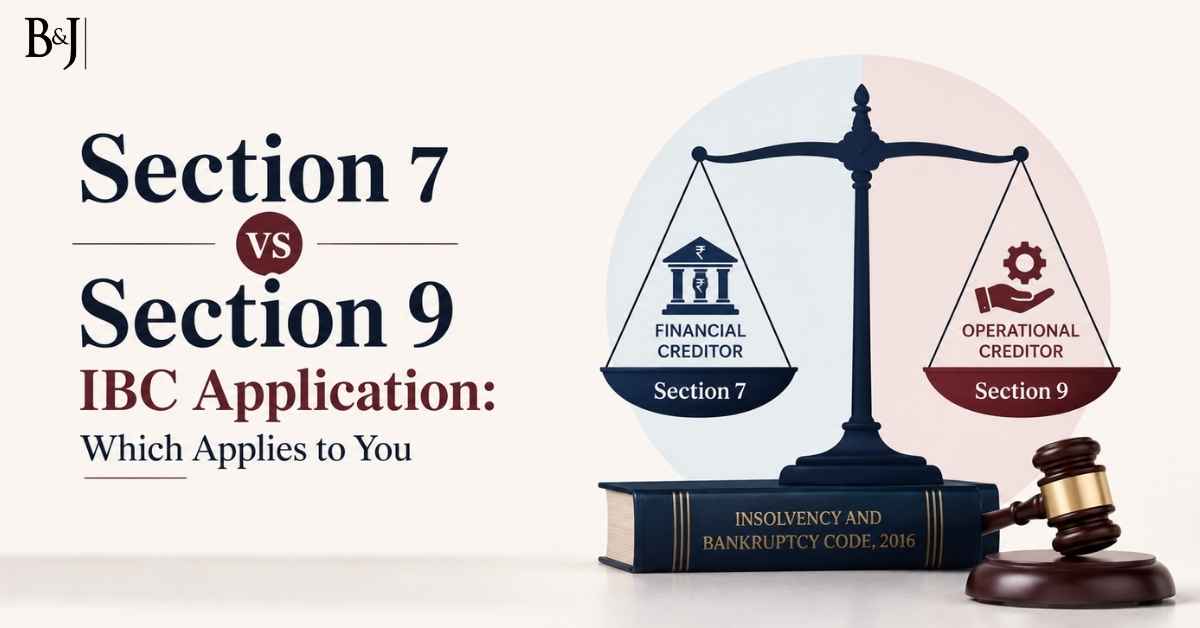
Section 7 vs Section 9 IBC application: which applies to you
When a creditor is owed money by a defaulting company, the Insolvency and Bankruptcy Code, 2016 raises a threshold question: which provision applies? Section 7 is available to a fi
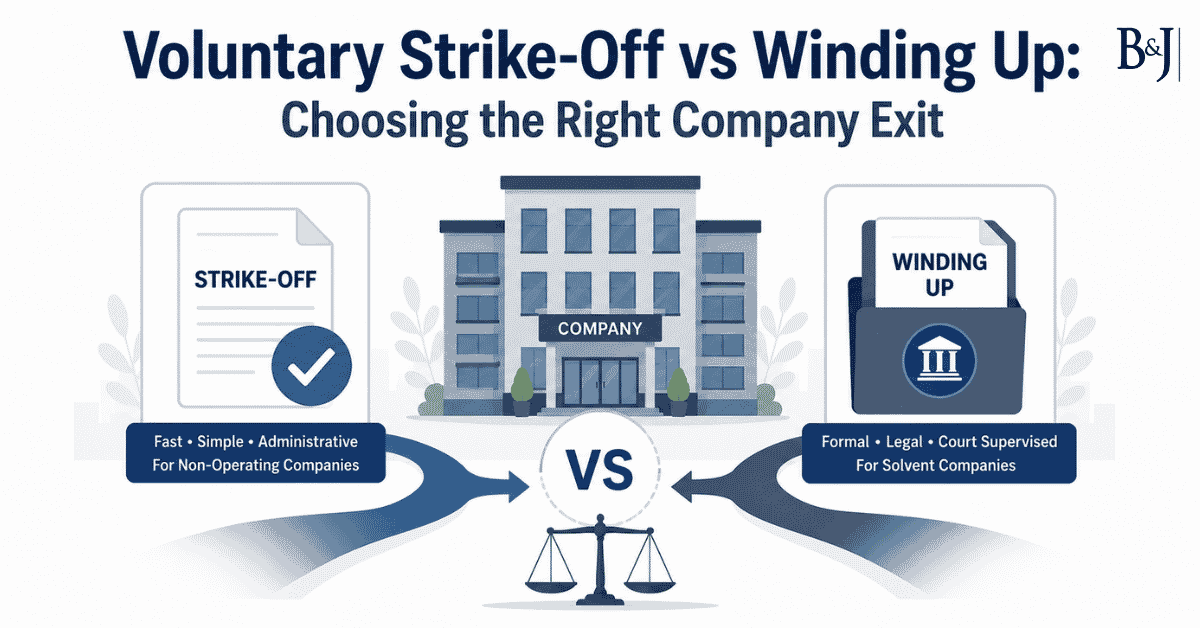
Voluntary Strike-Off vs Winding Up: Choosing the Right Company Exit
Executive Summary The decision between voluntary strike off vs winding up company exit routes under Indian corporate law is one of the most consequential choices available to the d
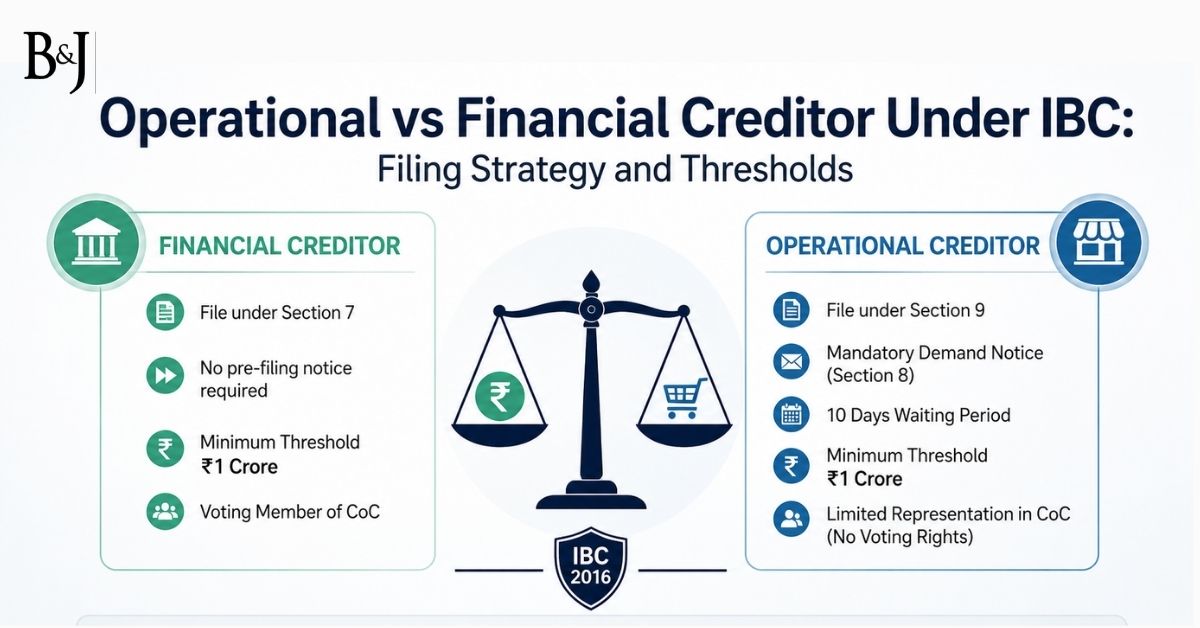
Operational vs Financial Creditor Under IBC: Filing Strategy and Thresholds
Executive Summary The distinction between an operational creditor and a financial creditor under the Insolvency and Bankruptcy Code, 2016 (“IBC” or “the Code̶
Aircel Spectrum Case: Supreme Court Rules Spectrum Cannot Enter the IBC Estate Due to Conditional Licensing
Background: A Telecom Giant’s Collapse and the Asset Question That Followed The story of Aircel Limited’s financial collapse is not unusual in the Indian telecom sector
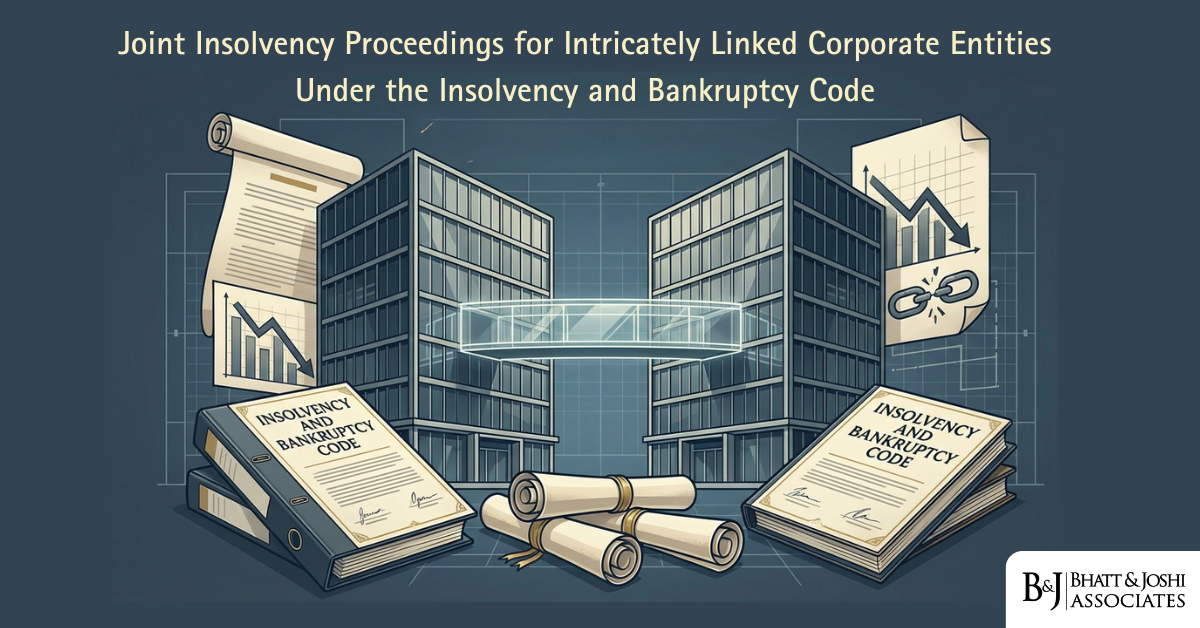
Joint Insolvency Proceedings for Intricately Linked Corporate Entities Under IBC
Introduction On February 3, 2026, the Supreme Court of India delivered a landmark judgment in Satinder Singh Bhasin v. Col. Gautam Mullick & Ors. [1], which affirmed that a sin
Personal Guarantor Liability Post-Insolvency: Supreme Court’s Expansive Interpretation
Introduction The insolvency regime for personal guarantors to corporate debtors represents one of the most contentious and rapidly evolving areas of India’s insolvency jurisp
