 Whatsapp

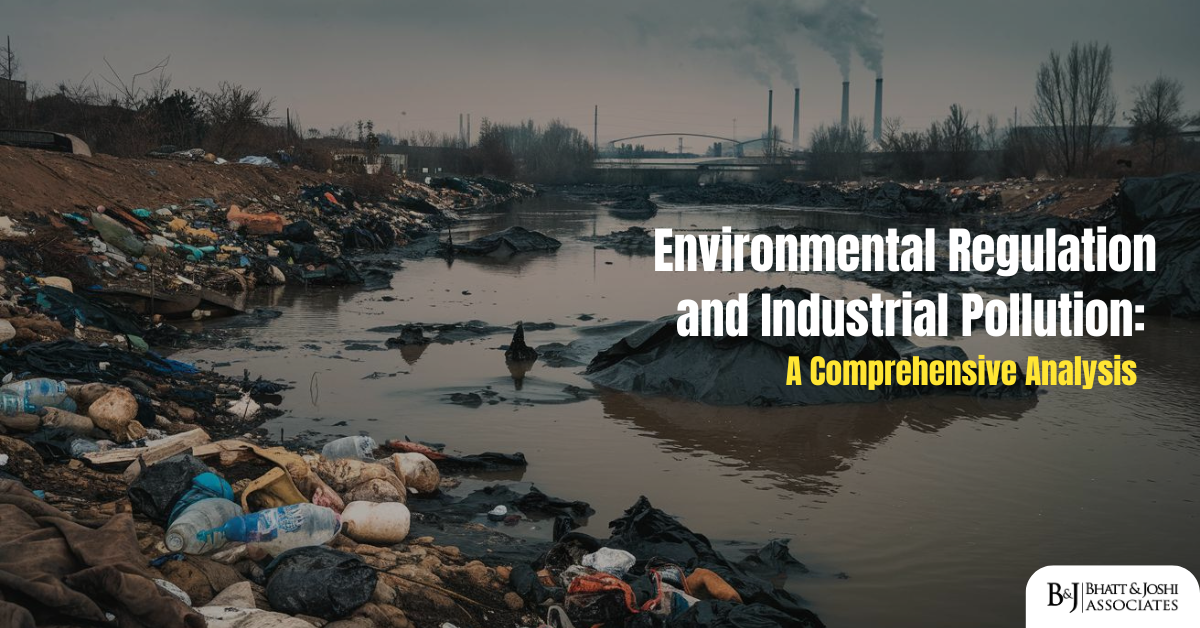
Environmental Regulation and Industrial Pollution: A Comprehensive Analysis
Introduction
Environmental regulation and industrial pollution have become critical concerns in today’s industrial landscape, particularly in relation to the textile industry and its impact on water resources. This article delves into the complex web of environmental regulation and industrial pollution laws, with a specific focus on effluent discharge from textile processing units. We will explore the legal framework that underpins environmental protection efforts, the role of regulatory bodies, and the evolving jurisprudence that shapes environmental law in India.
The Legal Framework for Environmental Protection
The cornerstone of environmental protection in India is the Environment (Protection) Act, 1986. This comprehensive legislation provides a framework for the central government to coordinate various environmental protection activities and to take measures to protect and improve the environment. Under this Act, the government has the power to set standards for emissions and discharges of environmental pollutants, regulate industrial locations, and prescribe procedures for managing hazardous substances. Specifically relevant to industrial pollution, particularly in the textile sector, is the Water (Prevention and Control of Pollution) Act, 1974. This Act established Pollution Control Boards at both the central and state levels, empowering them to set standards for water quality and effluent discharge. The Act makes it mandatory for industries to obtain consent from the respective State Pollution Control Board before establishing any outlet for the discharge of effluents into water bodies or land. In addition to these primary legislations, the legal landscape includes the Air (Prevention and Control of Pollution) Act, 1981, which addresses air pollution, and the Hazardous Wastes (Management and Handling) Rules, 1989, which regulate the handling and disposal of hazardous wastes generated by industrial processes.
Environmental Regulatory Mechanisms and Their Implementation
The implementation of environmental laws is primarily the responsibility of the Central Pollution Control Board (CPCB) and the State Pollution Control Boards (SPCBs). These bodies are tasked with monitoring industrial activities, conducting inspections, and enforcing compliance with environmental standards. One of the key regulatory mechanisms is the system of Consent to Establish (CTE) and Consent to Operate (CTO), which industries must obtain from the SPCB. These consents specify the conditions under which an industry can operate, including limits on effluent discharge, air emissions, and waste generation. For textile processing units, these consents often include specific conditions related to effluent treatment, water consumption, and the use of certain chemicals. The concept of Zero Liquid Discharge (ZLD) has gained prominence in recent years, especially in water-intensive industries like textile processing. ZLD systems are designed to eliminate liquid waste by treating and recycling wastewater, allowing industries to reuse water and recover valuable chemicals. Many SPCBs now mandate ZLD systems for certain categories of industries, particularly in water-stressed regions. Another important regulatory tool is the Environmental Impact Assessment (EIA) process, mandated under the EIA Notification, 2006. This process requires certain categories of industries to conduct a comprehensive environmental impact study before obtaining clearance for their projects. While not all textile processing units fall under the mandatory EIA category, larger units and those in environmentally sensitive areas may be required to undergo this process.
Case Law and Judicial Interventions
The judiciary has played a pivotal role in shaping environmental jurisprudence in India. Several landmark cases have established important principles and precedents in environmental law.
One of the most significant cases is M.C. Mehta v. Union of India (1987), often referred to as the Oleum Gas Leak Case. This case led to the evolution of the principle of absolute liability for industries engaged in hazardous activities. The Supreme Court held that enterprises engaged in hazardous or inherently dangerous activities owe an absolute duty to the community to ensure that no harm results from their activities. This principle has been applied in subsequent cases involving industrial pollution. In Indian Council for Enviro-Legal Action v. Union of India (1996), the Supreme Court applied the “Polluter Pays” principle, holding that the financial costs of preventing or remedying damage caused by pollution should lie with the undertakings which cause the pollution. This principle has become a cornerstone of environmental jurisprudence in India and has been applied in numerous cases involving industrial pollution. The case of Vellore Citizens Welfare Forum v. Union of India (1996) is particularly relevant to the textile industry. This case dealt with pollution caused by tanneries in Tamil Nadu. The Supreme Court applied the principles of “Sustainable Development,” “Precautionary Principle,” and “Polluter Pays” in this case. The court directed the closure of tanneries that did not have proper effluent treatment plants and ordered the creation of green belts around the industries. More recently, in M.C. Mehta v. Union of India (2017), also known as the Ganga Pollution Case, the Supreme Court issued a series of orders aimed at cleaning up the Ganga river. The court directed the closure of polluting industries along the river and ordered the implementation of ZLD systems in certain categories of industries.
Challenges in Implementation and Enforcement
Despite the robust legal framework and judicial interventions, the implementation and enforcement of environmental regulations face several challenges. One of the primary issues is the lack of adequate infrastructure and resources with the regulatory bodies. Many SPCBs are understaffed and lack the technical expertise to effectively monitor and enforce compliance.
The issue of regulatory capture, where regulatory bodies are influenced by the industries they are meant to regulate, is another significant challenge. This can lead to lax enforcement of environmental norms and delayed action against violators.
The complexity of environmental issues, particularly in the textile industry, also poses challenges. Textile processing involves a wide range of chemicals and processes, making it difficult to set uniform standards and monitor compliance effectively. The informal nature of many small-scale textile processing units further complicates enforcement efforts.
The Way Forward: Emerging Trends and Potential Solutions
As environmental concerns continue to grow, there is an increasing focus on more stringent and effective regulatory mechanisms. One emerging trend is the use of technology in environmental monitoring and enforcement. Real-time monitoring systems, satellite imagery, and data analytics are being increasingly used to track industrial pollution and ensure compliance.
There is also a growing emphasis on self-regulation and corporate environmental responsibility. Many industries, including those in the textile sector, are adopting voluntary environmental standards and certifications, such as ISO 14001, to improve their environmental performance and gain market advantage. The concept of Extended Producer Responsibility (EPR) is gaining traction, particularly in the context of waste management. While currently more prevalent in sectors like electronics and plastics, there is potential for applying EPR principles in the textile industry to address issues of waste generation and resource consumption.
The role of public participation in environmental decision-making is also being increasingly recognized. The National Green Tribunal Act, 2010, which established a specialized environmental court, has provisions for public interest litigation and has made it easier for citizens and environmental groups to seek legal remedies for environmental violations.
Conclusion: Strengthening Environmental Regulation and Industrial Pollution Control
The landscape surrounding environmental regulations and industrial pollution, especially within the textile industry, is both intricate and evolving, requiring more innovative approaches and enhanced enforcement. While India has a comprehensive legal framework for environmental protection, effective implementation and enforcement remain significant challenges. The judiciary has played a crucial role in advancing environmental jurisprudence, but there is a need for more proactive and consistent enforcement by regulatory bodies. As environmental concerns continue to grow, there is likely to be an increased focus on more stringent regulations, better enforcement mechanisms, and innovative solutions to address industrial pollution. The textile industry, given its significant environmental footprint, will need to adapt to these changing realities, investing in cleaner technologies and more sustainable practices. The path to effective environmental regulation and industrial pollution control is not without obstacles, but with concerted efforts from all stakeholders – government, industry, judiciary, and civil society – it is possible to achieve a balance between industrial growth and environmental protection. The future of environmental regulation in India will likely see a more integrated approach, combining traditional command-and-control mechanisms with market-based instruments and voluntary initiatives, all aimed at ensuring sustainable industrial development.
