 Whatsapp


Writ Petition Lawyer
As High Court lawyers, Bhatt & Joshi Associates has established a reputation for excellence in handling writ petitions. We understand that filing a writ petition can be a complex and challenging process, requiring legal expertise and knowledge of the procedural laws. Our team of Writ Lawyers has a deep understanding of the High Court rules and procedures, ensuring that your case is handled with the utmost professionalism and care.
We believe in providing personalized attention to each client, and our lawyers work closely with clients to understand their legal issues and objectives. We pride ourselves on our ability to provide prompt and effective legal solutions to clients, always keeping their interests at the forefront.
At Bhatt & Joshi Associates, we are committed to delivering the best possible outcome for our clients. Our lawyers have extensive experience in handling writ petitions, and we have a proven track record of success. We understand the importance of your case, and we work tirelessly to protect your legal rights and interests.
If you are looking for a trusted and experienced team of Writ Lawyers for your High Court writ petition, Bhatt & Joshi Associates is the right choice for you.
Understanding Writs
A writ is a formal written order issued by any authorized body, executive or judicial, directing someone to do something or stop doing something. In the context of the State of Gujarat, a writ is an order issued by the Gujarat High Court to government authorities or lower courts. The fundamental concept of writs remains the same across all High Courts. Writs include orders, warrants, directions, summons, and others.
A writ petition is an application filed before the competent Court, in this case, Gujarat High Court, requesting it to issue a specific writ. As per the Indian Constitution, Gujarat High Court holds powers under Article 226, against the decision of any court or individual lower according to their jurisdiction. A Writ petition of a civil or criminal nature can be filed by an individual or aggrieved party to a higher level of court against the order/decision of the lower court.
Circumstances for Filing Writ Petitions
Writ petitions are generally filed in contravention of rights or unjust to any individual/aggrieved. In the Context of the State of Gujarat, it is a remedial measure provided by the constitution against the law and order regulating authority in the country. They are filed when appeals made to the authorized higher authorities in the legal system are not objected to or when justice is not served.
Types of Writs
There are five types of writs that can be filed before the Gujarat High Court:
Writ of Habeas Corpus: A petition for personal liberty or release from detention filed by an Individual. On receipt of the petition against the order of the lower court or the individual under which the person is or is being detained, the court can issue a direction of release.
Writ of Mandamus: A petition to issue a command is a Writ of Mandamus. It can command any public authority or tribunal to perform an act that it is bound to perform. It can be granted against a public authority as well under certain conditions such as acted against the law, exceeded his limits of power, abused his discretionary powers, and others.
Writ of Prohibition: A petition to issue a direction or command to any local authority or court to restrict it from acting beyond its jurisdictional powers. It is popularly known as ‘stay order’ and issued with the consequences for doing any act or taking action against its reserved powers.
Writ of Certiorari: A petition to issue an order or command against the decision/order of the lower authority where found to be acting in excess of its jurisdiction. It is issued for quashing the order of any inferior court, tribunal, or Quasi-Judicial body.
Writ of Quo Warranto: A petition to issue a command to show by what warrant an authority or a public officer holds his office. It is issued when there is doubt that the officer holding the office is not eligible to hold the position.
Filing a Writ Petition
Writ petitions can be filed in the Gujarat High Court under Article 226 of the Indian Constitution. Here are the steps to file a writ petition:
- Hire a Lawyer: It is highly recommended to hire a lawyer who has expertise in writ petitions. The lawyer can help you prepare the petition and represent you in court.
- Draft the Petition: The petition should clearly state the facts and circumstances of your case. It should also mention the relief sought from the court. The petition should be drafted in accordance with the rules of the Gujarat High Court.
- Prepare the Affidavit: Along with the petition, an affidavit should be filed which should contain all the necessary details of the petitioner.
- Filing of the Petition: The petition along with the affidavit and other relevant documents should be filed in the Gujarat High Court. The petitioner should pay the court fees as per the court rules.
- Service of Notice: The petitioner should serve a copy of the petition and other relevant documents to the opposite party.
- Hearing: The High Court will examine the petition and decide whether to issue notice to the opposite party or not. If notice is issued, the opposite party will have to file a reply to the petition. The High Court may then conduct hearings and ask for evidence to be produced by both parties.
- Judgment: The High Court will deliver a judgment based on the evidence and arguments presented by both parties. The court may grant the relief sought by the petitioner or dismiss the petition.
Filing a writ petition can be a complicated process, and it is recommended to seek the advice of a lawyer. It is important to note that the court may impose costs on the petitioner if the petition is found to be frivolous or filed for an ulterior motive.
Why Choose Bhatt & Joshi Associates for writ lawyers?
If you are looking for a reliable and experienced writ lawyer in Gujarat, India, Bhatt & Joshi Associates could be a great choice for you. Here are some reasons why:
- Experience and Expertise: Bhatt & Joshi Associates is a reputed law firm with over Several years of experience in handling legal matters related to writ petitions, among others. The team consists of experienced and knowledgeable lawyers who have successfully represented clients in various high-profile cases.
- Personalized Approach: The firm takes a personalized approach to every case, which means that they take the time to understand your specific needs and requirements before formulating a legal strategy. They work closely with you to ensure that your case is handled in the best possible way.
- Focus on Results: Bhatt & Joshi Associates is committed to achieving the best possible results for their clients. They use their legal expertise and experience to fight for your rights and interests.
- Professionalism and Integrity: The firm follows the highest standards of professionalism and integrity in their work. They maintain confidentiality and transparency throughout the legal process and keep you informed at every stage of your case.
- Client-Centric Services: Bhatt & Joshi Associates is known for providing client-centric services. They are easily accessible and responsive to your queries and concerns. They take pride in building long-term relationships with their clients based on trust, reliability, and mutual respect.
In conclusion, if you are seeking legal representation for a writ petition in High Court of Gujarat, Bhatt & Joshi Associates could be a great choice for your Writ lawyers. With our experience, expertise, personalized approach, focus on results, professionalism, and client-centric services, they can provide you with effective legal solutions to protect your rights and interests.
I can’t change the direction of the wind, but I can adjust my sails to always reach my destination.
Get in touch with Best Writ Petition Lawyer in Ahmedabad
Frequently asked questions
1. What is a writ petition?
A writ petition asks a constitutional court to correct an illegal or arbitrary act of the State or a public authority, or to protect your fundamental or legal rights. It is filed in the High Court under Article 226 or in the Supreme Court under Article 32 of the Constitution.
2. What are the five types of writs?
Habeas corpus (to produce a person who is illegally detained), mandamus (to compel a public authority to perform its legal duty), certiorari (to quash an order passed without jurisdiction or in breach of natural justice), prohibition (to stop a lower court or tribunal from exceeding its jurisdiction) and quo warranto (to question a person's right to hold a public office).
3. Should I file a writ in the High Court or the Supreme Court?
Article 32 lets you go to the Supreme Court only to enforce fundamental rights. Article 226 is wider: the High Court can issue writs for fundamental rights and for any other legal right. In practice, the Supreme Court usually expects petitioners to approach the High Court first, which is often the faster and more practical route.
4. Against whom can a writ petition be filed?
Against the State and its instrumentalities, such as government departments, local bodies, statutory authorities, public sector undertakings, universities and tribunals. In limited cases a writ can also lie against a private body that performs a public duty.
5. Is there a time limit to file a writ petition?
No fixed limitation period applies, but the High Court can refuse relief if you delay without a good explanation. File as soon as possible after the order or action you want to challenge.
6. Can I file a writ if I have another remedy, such as an appeal?
Usually the High Court expects you to use an effective statutory remedy first. A writ may still be entertained where a fundamental right is being enforced, there was a breach of natural justice, the order was passed wholly without jurisdiction, or the validity of a law itself is challenged.
7. How is a writ filed and heard in the Gujarat High Court?
Civil-side writs are filed as a Special Civil Application and criminal-side writs, including habeas corpus, as a Special Criminal Application, supported by an affidavit and documents. Urgent interim relief such as a stay can be sought at the first hearing. A single judge's decision can be challenged before a Division Bench by Letters Patent Appeal, and then before the Supreme Court.
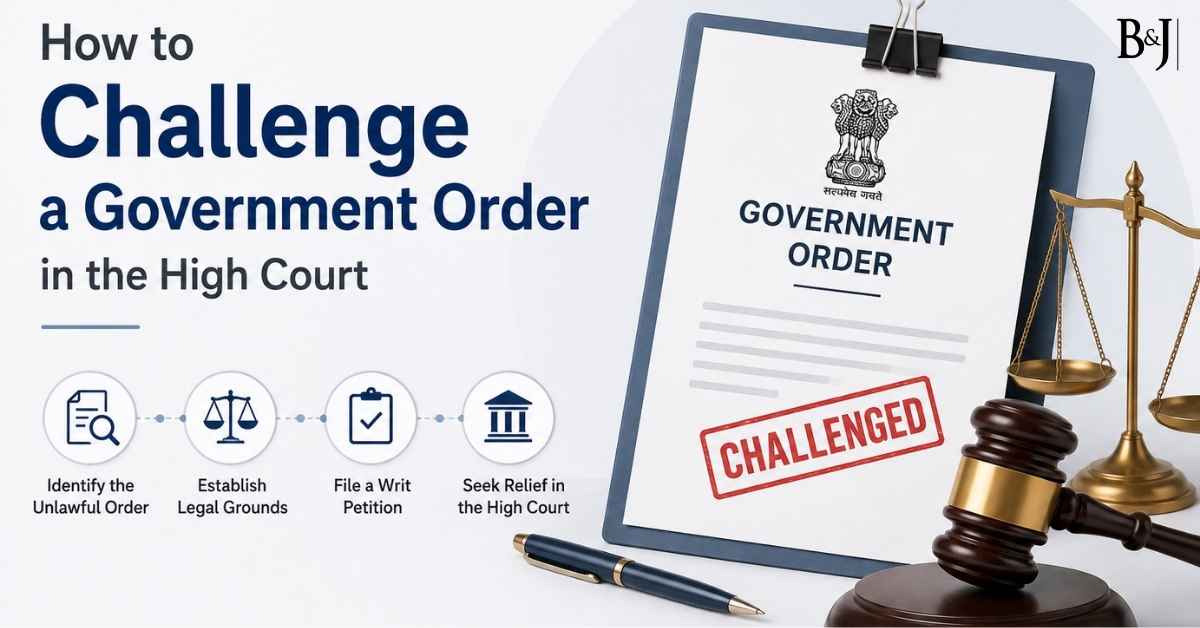
How to Challenge a Government Order in the High Court
Government decisions affect people constantly: a licence refused, a tender cancelled, a permission w
Court Fees for Filing a Writ Petition in the Gujarat High Court
Gujarat High Court court fee is an important filing requirement that petitioners should understand b
Special Civil Application vs Special Criminal Application in Gujarat HC
Anyone who has read a Gujarat High Court cause list will have seen two recurring abbreviations: SCA
Habeas Corpus Petition: Grounds and Procedure in India
Habeas corpus is the oldest and most direct of the constitutional remedies. Its Latin name — ̶
What is a Letters Patent Appeal (LPA) in the Gujarat High Court
A Letters Patent Appeal is an appeal from one part of a High Court to another. It is an intra-court