 Whatsapp

India vs Bharat: Constitutional Position Under Article 1
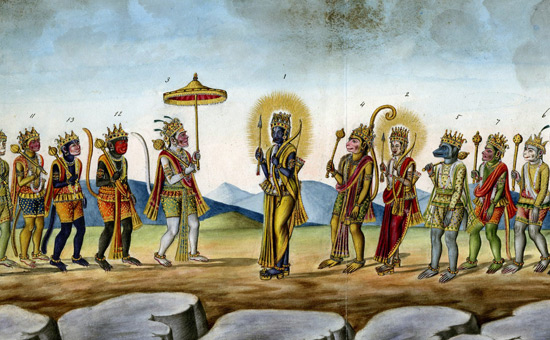
This article delves into the Vedic roots and cultural identity associated with the name “Bharat”
Introduction
In Part 1 of this series, we delved into the legal and diplomatic dimensions of renaming India as Republic of Bharat,” particularly in the context of the G20 summit invitation controversy. Building on that foundation, Part 2 will focus on the etymology and historical context of the name “Bharat.” We will explore how ancient Vedic texts deeply root this name and what it signifies in the cultural and historical narrative of the Indian subcontinent.
The nomenclature of the Indian nation represents one of the most fascinating intersections of ancient history, cultural identity, and modern constitutional law. When the Constitution of India was adopted on 26th January 1950, its opening article declared “India, that is Bharat, shall be a Union of States,” thereby recognizing both names with equal constitutional validity [1]. This dual nomenclature is not merely a linguistic formality but embodies two distinct historical narratives that have shaped one of the world’s oldest continuous civilizations. The name “Bharat” carries within it thousands of years of cultural evolution, philosophical development, and civilizational continuity extending back to the Vedic period, while “India” represents the nation’s engagement with the wider world through centuries of trade, conquest, and colonial interaction.
The contemporary relevance of this discussion emerged prominently during the G20 summit preparations when official communications referred to the nation as “Republic of Bharat,” sparking widespread public discourse about the country’s official nomenclature and its deeper significance. This debate transcends mere semantics, touching upon fundamental questions of national identity, cultural heritage, and the relationship between ancient civilization and modern statehood. Understanding the roots of the name “Bharat” requires an examination of Vedic literature, ancient Sanskrit texts, epic narratives, and the constitutional framework that governs the modern Indian state.
The Vedic Origins and Ancient Textual References
The earliest references to the term “Bharat” or “Bharata” can be traced to the Rigveda, the oldest of the four Vedas and one of humanity’s most ancient religious texts, composed approximately between 1500-1200 BCE. The Rigveda mentions the Bharata tribe as one of the prominent tribal confederations that inhabited the northwestern region of the Indian subcontinent during the Vedic period [2]. The Bharatas were particularly significant as they were associated with several important Rigvedic hymns and are believed to have played a central role in the composition and preservation of Vedic literature.
One of the most significant historical events mentioned in the Rigveda involving the Bharatas is the Battle of the Ten Kings, described in the seventh mandala of the text. This battle, which pitted King Sudas of the Bharata tribe against a confederation of ten rival kings, represents a crucial moment in early Indian history. The victory of the Bharatas in this conflict established their dominance in the region and contributed to the prominence of their name in subsequent historical and literary traditions. The Rigvedic references to the Bharatas are not merely historical footnotes but represent the foundation upon which the cultural and civilizational identity associated with the name “Bharat” was built.
Beyond the Rigveda, the term “Bharata” appears extensively in later Vedic and post-Vedic literature. The Aitareya Brahmana, one of the prose texts explaining the Rigveda, contains detailed narratives about Bharata Daushanti, a king from whom the dynasty derives its name. These texts describe how the land came to be known as “Bharatavarsha,” literally meaning “the land of Bharata.” The Vishnu Purana, composed several centuries later, provides a geographic definition of Bharatavarsha, describing it as the land lying north of the ocean and south of the snowy mountains, where the descendants of Bharata dwell [3].
The Mahabharata and the Legend of King Bharata
The Mahabharata, one of the two great Sanskrit epics of ancient India, serves as perhaps the most significant source for understanding the cultural and historical dimensions of the name “Bharat.” Composed over several centuries, with its final form taking shape around 400 CE, the Mahabharata contains approximately 100,000 verses, making it one of the longest epic poems in world literature. The very title “Mahabharata” translates to “the great tale of the Bharatas,” indicating the centrality of the Bharata lineage to the epic’s narrative structure.
The Mahabharata presents King Bharata as a chakravartin, or universal monarch, who unified numerous kingdoms under his rule. According to the epic’s genealogical accounts found in the Adi Parva, Bharata was the son of King Dushyanta of the Puru dynasty and Shakuntala, a forest nymph. The romantic tale of Dushyanta and Shakuntala, later immortalized in Kalidasa’s classical Sanskrit play “Abhijnanasakuntalam,” forms an important part of Indian literary tradition. King Bharata is described as a righteous ruler who performed numerous yajnas and expanded his kingdom to encompass the entire subcontinent, leading to the land being named “Bharatavarsha” in his honor.
The Mahabharata’s central narrative revolves around the conflict between the Kauravas and Pandavas, both descended from the Bharata lineage through King Bharata’s great-grandson, Kuru. The epic thus traces the genealogy of its protagonists back to the legendary King Bharata, establishing a direct connection between the name and the cultural, ethical, and philosophical traditions embodied in the text. The Kurukshetra War, described in the Mahabharata, and the philosophical discourse of the Bhagavad Gita embedded within it, represent the culmination of the Bharata tradition’s ethical and spiritual teachings.
The significance of the Mahabharata in establishing “Bharat” as a cultural and civilizational identifier cannot be overstated. The epic has shaped Indian cultural consciousness for over two millennia, influencing art, literature, philosophy, law, and social customs. When people invoke the name “Bharat,” they are not merely referring to a geographical entity but are calling upon this rich tapestry of cultural memory, ethical teachings, and civilizational achievement embodied in the Mahabharata tradition.
Etymology and Linguistic Analysis
The etymology of the word “Bharata” or “Bharat” has been subject to extensive scholarly analysis. In classical Sanskrit, the term “Bharata” is derived from the verbal root “bhr,” which carries meanings related to bearing, maintaining, supporting, or cherishing. Consequently, “Bharata” has been interpreted by various scholars and traditional commentators as meaning “the cherished one,” “the maintained,” or “one who is supported.” Some interpretations also connect it to the concept of “Bharana” (sustenance) or “Bharati” (speech or knowledge), linking the name to ideas of sustenance, learning, and cultural preservation.
The term “Bharatavarsha” combines “Bharata” with “varsha,” which in ancient Indian geographical terminology referred to a continent or major land division. Ancient Indian cosmography divided the known world into several varshas, with Bharatavarsha being the southern-most division of the great continent Jambudvipa. This geographical conceptualization appears in numerous Puranic texts and demonstrates how “Bharat” evolved from being associated with a tribal group and dynastic lineage to representing an entire geographic and cultural region.
The transition from “Bharata” to the modern Hindi “Bharat” involves standard phonetic changes in the evolution of Sanskrit into modern Indo-Aryan languages. The retroflex “t” and final “a” in Sanskrit “Bharata” have been preserved in the modern form, maintaining a direct linguistic continuity between the ancient and contemporary usage. This linguistic continuity is significant because it demonstrates that “Bharat” is not a modern construction or recent nationalist invention but represents an unbroken chain of linguistic and cultural transmission spanning thousands of years.
The Evolution and Colonial Origins of the Term “India”
In contrast to the indigenous origins of “Bharat,” the term “India” has a distinctly external origin, arising from the way foreign civilizations perceived and designated the Indian subcontinent. The etymology of “India” traces back to the Indus River, known in Sanskrit as “Sindhu.” The ancient Persians, who had extensive contact with the northwestern regions of the Indian subcontinent, adapted “Sindhu” into “Hindu,” referring both to the river and the land beyond it. This usage appears in Old Persian inscriptions from the Achaemenid period, particularly in the Behistun Inscription of Darius I, which mentions “Hidush” as one of the provinces of the Persian Empire [4].
The ancient Greeks, who learned of the Indian subcontinent through Persian sources and through the conquests of Alexander the Great, further modified “Hindu” into “Indos,” from which the Latin “India” was derived. Greek historians such as Herodotus, Megasthenes, and later Strabo wrote extensively about “India,” disseminating knowledge about the region throughout the Greco-Roman world. Megasthenes, who served as an ambassador to the Mauryan court around 300 BCE, wrote the “Indica,” a detailed account of Indian society, culture, and politics that became a primary source of information about India for subsequent Greek and Roman writers.
During the medieval period, Arab traders and scholars referred to the region as “Al-Hind,” maintaining the Persian-derived terminology. The term gained even wider currency during the European Age of Discovery, when Portuguese, Dutch, French, and British explorers, traders, and colonizers used “India” to refer to the entire subcontinent. The establishment of British colonial rule formalized “India” as the official designation for the colonial territory, which at its greatest extent included present-day India, Pakistan, Bangladesh, and Myanmar.
The British colonial usage of “India” was not merely a neutral geographical descriptor but was embedded in colonial administrative structures, legal frameworks, and ideological constructs. The Government of India Act 1858, following the suppression of the 1857 uprising, transferred governance of India from the East India Company to the British Crown, establishing the British Raj. Subsequent legislative acts, including the Government of India Acts of 1909, 1919, and 1935, continued to use “India” as the official designation, embedding the term in modern administrative and legal vocabulary [5].
Constitutional Recognition and Legal Framework
The constitutional status of both “India” and “Bharat” is established in Article 1 of the Constitution of India, which states: “India, that is Bharat, shall be a Union of States.” This formulation, adopted by the Constituent Assembly after considerable debate, reflects a deliberate decision to recognize both names as equally valid and official. The debates in the Constituent Assembly reveal that this dual nomenclature was not accidental but represented a conscious effort to honor both the nation’s ancient civilizational identity and its modern engagement with the international community.
During the Constituent Assembly debates, several members proposed that “Bharat” should be the sole official name of the new republic. Prominent members argued that retaining “India” represented a continuation of colonial linguistic and cultural domination, and that adopting “Bharat” exclusively would signify a complete break from the colonial past and an affirmation of indigenous identity. However, others contended that “India” had gained international recognition and that changing the name entirely might create confusion in diplomatic and commercial relations. The compromise solution of recognizing both names equally satisfied both perspectives [6].
The constitutional validity of using either name has been upheld consistently in Indian jurisprudence. Both “India” and “Bharat” appear interchangeably in official government documents, judicial pronouncements, legislative acts, and diplomatic communications. The Government of India has the authority to use either designation in different contexts depending on the audience, purpose, and linguistic considerations. For instance, Hindi-language official communications typically use “Bharat,” while English-language documents more commonly use “India,” though both practices have exceptions.
The question of whether the name could be changed through constitutional amendment has been discussed in legal and political circles. Any such change would require amending Article 1 of the Constitution, which falls within the power of Parliament under Article 368. However, such an amendment might be subject to judicial review under the basic structure doctrine established in the landmark case of Kesavananda Bharati v. State of Kerala (1973), which holds that certain fundamental features of the Constitution cannot be altered even through constitutional amendments [7]. Whether the country’s name constitutes part of the basic structure remains an open question that would likely be determined by the Supreme Court if such an amendment were ever proposed.
Cultural and Symbolic Dimensions
Beyond its legal and historical dimensions, the name “Bharat” carries profound cultural and symbolic significance that resonates deeply with large sections of Indian society. For many Indians, “Bharat” represents a connection to an unbroken civilizational continuity that extends back thousands of years, linking contemporary citizens to the Vedic seers, epic heroes, and classical philosophers who shaped Indian thought and culture. This sense of civilizational continuity provides a source of cultural pride and national identity that transcends regional, linguistic, and religious differences.
The name “Bharat” appears prominently in the national anthem, “Jana Gana Mana,” composed by Rabindranath Tagore and adopted as the national anthem in 1950. The anthem’s first line, “Jana gana mana adhinayaka jaya he Bharata bhagya vidhata,” invokes “Bharat” as the recipient of divine grace and national devotion. Similarly, the national song “Vande Mataram,” composed by Bankim Chandra Chatterjee, refers to the motherland as “Bharat Mata” (Mother India/Bharat), personifying the nation as a divine maternal figure worthy of reverence and sacrifice [8].
The concept of “Bharat Mata” (Mother India) emerged as a powerful symbol during the Indian independence movement, representing the nation as a unified entity despite its internal diversity. This personification drew upon ancient Indian traditions of venerating the land as sacred, combined with modern nationalist ideology. The image of Bharat Mata appeared in political art, literature, and revolutionary discourse, inspiring countless freedom fighters in their struggle against colonial rule. This symbolic usage demonstrates how “Bharat” functions not merely as a name but as an emotionally resonant symbol that evokes patriotic sentiment and cultural identity.
Regional, Linguistic, and Religious Perspectives
The name “Bharat” holds varying significance across India’s diverse linguistic and cultural regions. In Hindi and other North Indian languages derived from Sanskrit, “Bharat” is the natural and commonly used term for the nation. South Indian classical languages like Tamil, Telugu, Kannada, and Malayalam have their own terms for the country, though “Bharat” or its Dravidian adaptations are widely understood and used in official contexts. Tamil tradition, for instance, refers to the entire subcontinent as “Bharata Kandam,” showing the penetration of the Sanskrit-derived terminology even into non-Indo-Aryan linguistic traditions.
Different religious communities in India relate to the name “Bharat” in various ways. For Hindus, the name carries direct religious and mythological significance, being deeply embedded in sacred texts, epic literature, and devotional practices. The Puranas, which are central to Hindu religious tradition, extensively discuss Bharatavarsha as a sacred geography where dharma can be practiced and moksha attained. Jain and Buddhist traditions, while having their own cosmological terminologies, also recognize the concept of Bharatavarsha and the historical region’s significance in their religious histories [9].
For India’s Muslim community, which constitutes a substantial portion of the population, the historical term “Hindustan” has often been more commonly used, particularly in Urdu literature and discourse. However, “Bharat” is equally accepted as the name of the nation, and Indian Muslims have made significant contributions to the articulation of Indian nationalism using the terminology of “Bharat” and “Bharatiya” identity. Similarly, Christian, Sikh, and other religious communities have embraced “Bharat” as representing an inclusive national identity that transcends religious boundaries while acknowledging the nation’s ancient cultural roots.
Contemporary Debates and Political Dimensions
The question of officially adopting “Bharat” as the sole name of the country, or giving it primacy over “India,” has periodically emerged in political discourse, particularly in recent decades. Proponents of emphasizing “Bharat” argue that it represents an assertion of indigenous identity and a rejection of colonial nomenclature. They contend that continuing to use “India” as the primary designation in international forums and official communications perpetuates a colonial mindset and fails to adequately recognize the nation’s pre-colonial civilizational identity.
Critics of exclusively adopting “Bharat” point to several practical and symbolic concerns. They argue that “India” has gained widespread international recognition and that changing it could create confusion in diplomatic, commercial, and cultural exchanges. Additionally, some critics suggest that overemphasizing Sanskrit-derived terminology might alienate non-Hindu communities or regions with distinct linguistic traditions. They advocate for the current constitutional arrangement, which recognizes both names equally, as representing an inclusive approach that honors diverse perspectives on national identity.
The debate intensified during the preparations for the G20 summit when official invitations referred to the “President of Bharat” rather than the “President of India,” leading to widespread speculation about a potential official name change. Government sources clarified that both names are constitutionally valid and that the choice of terminology depends on context and linguistic considerations. Nevertheless, the incident highlighted the emotional and political significance attached to the country’s nomenclature and the divergent views within Indian society regarding this issue.
International Recognition and Diplomatic Practice
In international forums and diplomatic practice, “India” remains the predominantly used designation, primarily due to historical precedent and widespread recognition. India is a founding member of the United Nations, and all UN documentation refers to the country as “India.” Similarly, in bilateral treaties, multilateral agreements, and international organizations, “India” is the standard designation. This usage reflects not only colonial legacy but also the practical need for consistency in international legal instruments and diplomatic communications.
However, there has been growing usage of “Bharat” in certain international contexts, particularly in cultural and sporting events. When India hosts international conferences or cultural festivals, organizers often prominently feature “Bharat” alongside “India” in branding and communications. At the Olympics and other international sporting competitions, while the official designation remains “India,” cultural presentations and national symbolism often emphasize “Bharat” and “Bharatiya” identity.
Several other nations have successfully changed their names in international usage, providing potential precedents. Ceylon became Sri Lanka in 1972, Burma became Myanmar in 1989, and Rhodesia became Zimbabwe in 1980, among other examples. Each case involved domestic constitutional changes followed by notification to the United Nations and other international bodies. If India were to officially adopt “Bharat” as its sole designation or request that “Bharat” be used in international forums, similar procedures would need to be followed, though the practical and diplomatic implications would require careful consideration.
Conclusion
The dual nomenclature of “India” and “Bharat” represents more than a simple matter of terminology; it embodies the complex historical journey of one of the world’s oldest continuous civilizations. “Bharat” connects the modern nation-state to its Vedic roots, epic traditions, and millennia of cultural evolution, serving as a powerful symbol of civilizational continuity and indigenous identity. The name appears in the earliest Vedic texts, figures prominently in epic literature, and has been recognized in the constitutional framework that governs the modern republic.
Simultaneously, “India” represents the nation’s engagement with the wider world over centuries of trade, cultural exchange, and ultimately colonial encounter. While its origins lie in external perception rather than indigenous self-identification, “India” has become embedded in modern administrative, legal, and diplomatic structures, and carries its own historical significance as the name under which the nation achieved independence and established itself as a sovereign republic.
The Constitution’s recognition of both names in Article 1 reflects a mature understanding that national identity need not be monolithic or singular. Instead, it acknowledges that a nation as diverse and ancient as India/Bharat can encompass multiple layers of identity, historical memory, and cultural significance. Whether one prefers “India” or “Bharat” often reflects different perspectives on history, culture, and national priorities, but both names ultimately refer to the same civilizational entity that has evolved continuously for thousands of years.
As India navigates the challenges and opportunities of the twenty-first century, the question of its name will likely continue to generate discussion and debate. What remains constant, however, is the remarkable civilizational heritage that both names represent and the constitutional framework that recognizes the validity and significance of both. Whether called India or Bharat, the nation’s identity is rooted in its ancient past while remaining dynamically engaged with its contemporary present and future aspirations.
References
[1] The Constitution of India, Article 1.
[3] Vishnu Purana, Book II, Chapter 3. Translation available through Sacred Texts Archive: https://www.sacred-texts.com/hin/vp/index.htm
[4] British Museum. “The Behistun Inscription.”
[5] Government of India Act 1935. UK Parliament Archives. Available at: https://www.legislation.gov.uk/ukpga/Geo5and1Edw8/26/2/contents
[6] Constituent Assembly Debates, Volume 1 (1946-47).
[7] Kesavananda Bharati v. State of Kerala, AIR 1973 SC 1461. Available at: https://indiankanoon.org/doc/257876/
[8] National Portal of India. “National Symbols.” Available at: https://www.india.gov.in/india-glance/national-symbols
[9] Basham, A. L. (1954). “The Wonder That Was India.” Published by Grove Press. Available through scholarly databases.

Advocate Aaditya Bhatt
Senior Standing Counsel Income Tax Department, Advocate Gujarat High Court. Aaditya combines his technical and legal expertise to deliver strategic counsel in litigation, constitutional, and regulatory matters. He represents clients before High Courts and Tribunals with a technology-driven approach.
