Whatsapp

Video Conferencing in Indian Courts: Legal Framework, Judicial Interpretation, and Procedural Safeguards
Introduction
The technological revolution of the twenty-first century has fundamentally transformed how legal proceedings are conducted across jurisdictions worldwide. Video conferencing has emerged as a critical tool in the administration of justice, particularly in circumstances where physical presence becomes impractical or impossible. This technology enables participants in legal proceedings to appear before courts virtually, transcending geographical barriers while maintaining the essential requirements of fair trial and due process. The concept of video conferencing in judicial proceedings refers to the conduct of hearings through transmitted audio and video signals, allowing individuals at remote locations to participate in real-time as though they were physically present in the courtroom. The adoption of video conferencing in Indian courts represents a significant shift from traditional procedural requirements that mandated physical presence. This technological integration has become particularly relevant in an era where courts face mounting case backlogs, witnesses reside in distant locations, and circumstances such as health emergencies or security threats prevent physical attendance. The Indian judiciary has progressively embraced this technology, recognizing its potential to expedite proceedings while safeguarding the rights of all parties involved.
Components and Technical Infrastructure of Video Conferencing Systems
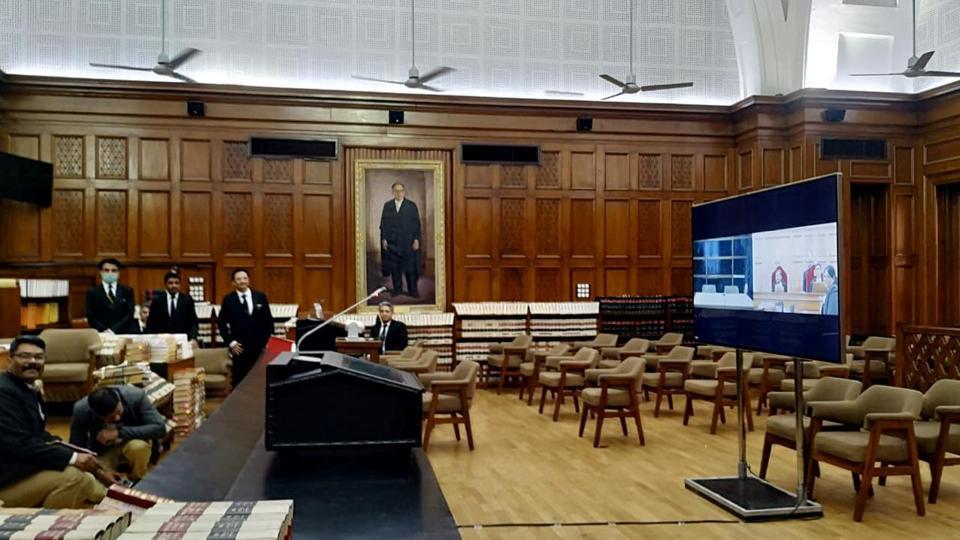
Modern video conferencing systems employed in judicial proceedings comprise several essential technical components that work in tandem to facilitate seamless virtual hearings. The transmission system forms the backbone of video conferencing technology, enabling the transfer of audio and video data between remote locations. High-quality cameras and microphones capture visual and audio information from participants, ensuring that facial expressions, body language, and verbal testimony are accurately transmitted and received.
The CODEC, an acronym for coder-decoder, serves a crucial function in video conferencing systems by encoding video and audio data for transmission and subsequently decoding it at the receiving end. This compression and decompression process is essential for managing bandwidth limitations and ensuring smooth transmission without significant delays or quality degradation. Advanced courtroom systems incorporate sophisticated features including remote controls with zooming, panning, and tilting capabilities, allowing judges and court personnel to focus on specific participants or exhibits as needed.
Split-window display technology represents another significant advancement in courtroom video conferencing. This feature enables courts to display multiple participants on a single screen simultaneously, creating a virtual courtroom environment where judges can observe the accused, witnesses, legal representatives, and other parties concurrently. Some cutting-edge systems employ camera tracking technology that follows participants wearing specialized badges, enabling more dynamic and natural interactions during proceedings. As with most technological innovations, these systems continue to evolve, becoming increasingly refined and accessible with time.
Constitutional and Statutory Framework Governing Video Conferencing in Indian Courts
The Indian legal framework governing video conferencing in judicial proceedings draws from multiple statutory provisions that have been interpreted progressively by courts to accommodate technological advancements. Section 273 of the Code of Criminal Procedure, 1973, constitutes a fundamental provision regarding the recording of evidence. This section mandates that all evidence taken during trial or other proceedings shall be recorded in the presence of the accused, or when personal attendance is dispensed with, in the presence of their pleader. The section specifically provides enhanced protections for vulnerable witnesses, particularly women below eighteen years who have allegedly been subjected to sexual offenses, allowing courts to take measures ensuring such witnesses are not directly confronted by the accused while preserving the right of cross-examination.
Gujarat introduced a significant amendment to Section 273 through the Gujarat Act 31 of 2017, which came into effect on September 8, 2017. This amendment explicitly incorporates video conferencing into the procedural framework by adding provision for recording evidence through Electronic Video Linkage when the court directs so on its own motion or upon application in the interests of justice. This legislative intervention represents a formal recognition of video conferencing as a legitimate mode of conducting judicial proceedings within the state.
Section 285(3) of the Code of Criminal Procedure addresses the examination of witnesses located in countries or places outside India. When the Central Government has established arrangements with foreign governments for taking evidence in criminal matters, the commission shall be issued in prescribed forms and transmitted through designated authorities as notified by the Central Government. This provision facilitates international cooperation in evidence collection and provides a statutory basis for cross-border video conferencing in criminal proceedings.
The Indian Evidence Act, 1872, though enacted in a pre-digital era, has been interpreted to accommodate electronic evidence. Section 3 of the Act defines evidence to include all statements which courts permit or require to be made before them by witnesses relating to matters of fact under inquiry, termed oral evidence, and all documents including electronic records produced for court inspection, termed documentary evidence. This inclusive definition has enabled courts to recognize video-recorded testimony and evidence transmitted through video conferencing as admissible in judicial proceedings.
Judicial Evolution: Landmark Judgments Shaping Video Conferencing Jurisprudence
The Indian judiciary has played a pivotal role in legitimizing and regulating video conferencing in legal proceedings through several landmark judgments that have progressively interpreted statutory provisions to accommodate technological advancements. The Supreme Court in National Textile Workers’ Union v. P.R. Ramakrishnan emphasized the need for law to evolve with changing social values, observing that if law fails to respond to societal needs, it will either stifle growth or be cast away by a vigorous society.[1]
The Salem Advocate Bar Association, Tamil Nadu v. Union of India case marked one of the earliest judicial recognitions of electronic media in evidence recording. The Supreme Court, while interpreting Order 18 of the Civil Procedure Code, 1908, concerning hearing of suits and examination of witnesses, held that the term “mechanically” indicates that evidence can be recorded with electronic media assistance including audio or audio-visual apparatus. This interpretation opened pathways for technological integration in civil proceedings.
The watershed moment for video conferencing in criminal proceedings came with the Supreme Court judgment in State of Maharashtra v. Dr. Praful B. Desai, delivered in 2003.[2] This case directly addressed the validity of video conferencing in criminal trials and upheld its constitutional permissibility. The Court held that recording evidence through video conferencing constitutes a procedure established by law as required under Article 21 of the Constitution. Significantly, the Court interpreted Section 273 of the Criminal Procedure Code to contemplate constructive presence rather than mandatory actual physical presence, thereby expanding the scope of permissible modes of participation in criminal proceedings. The judgment clarified that presence as used in Section 273 is not restricted to actual physical presence, and evidence can include electronic records, encompassing video conferencing technology.
Building upon this foundation, the Supreme Court in Sakshi and Others v. Union of India in 2004 reaffirmed the permissibility of recording evidence through video conferencing in relation to Section 273 of the Criminal Procedure Code.[3] This judgment reinforced the legitimacy of virtual participation in criminal proceedings while emphasizing the need for appropriate safeguards.
In Krishna Veni Nagam v. Harish Nagam, the Supreme Court addressed video conferencing in matrimonial proceedings, recognizing the practical difficulties faced by parties residing in different jurisdictions.[4] The Court observed that where both parties face genuine difficulties and no place is mutually convenient, video conferencing technology should be utilized. The judgment noted that video conferencing facilities are now available in every district across India, and High Courts should issue administrative instructions regulating its use for specific case categories, particularly matrimonial cases where one party resides outside the court’s jurisdiction. The Court emphasized that whenever parties request video conferencing, proceedings should be conducted through this medium, obviating the need for physical appearance.
The case of Kalyan Chandra Sarkar v. Rajesh Ranjan and Others in 2005 acknowledged the possibility of video conferencing trials in exceptional circumstances.[5] While recognizing that the Criminal Procedure Code normally requires accused persons to be physically present during trial, the Court stated that in peculiar circumstances, procedures must be evolved that protect the administration of justice without contravening the rights accorded to accused persons under the Criminal Procedure Code.
Comprehensive Safeguards for Video Conferencing Indian courts Proceedings
Indian courts have consistently emphasized that while video conferencing offers significant advantages, its implementation must be accompanied by robust safeguards ensuring the integrity of judicial proceedings and protection of parties’ rights. The Karnataka High Court in 2003 established comprehensive safeguards for audio-video link evidence recording in light of Civil Procedure Code amendments.[6] These safeguards include requirements for witnesses to file identification affidavits verified before notaries or judges, confirming that the person appearing on screen is indeed the stated witness. The person examining witnesses must similarly file identification affidavits before commencing examination.
Witnesses must be examined during Indian court working hours, with oaths administered through the medium according to established legal requirements. Courts are directed to refuse pleas of inconvenience based on time differences between India and foreign locations where witnesses are situated. Before witness examination, complete sets of pleadings, written statements, and relevant documents must be transmitted to witnesses for their familiarity, with acknowledgments filed before courts. Judges are required to record material observations regarding witness demeanor while on screen and note objections raised during testimony recording for decision during arguments.
After evidence recording, transcripts must be sent to witnesses for signature verification in the presence of notary publics, after which they become part of the official record. Visual recordings must be maintained at both transmission and reception points. Witnesses must be alone during video conferences, with notaries certifying this requirement. Courts retain discretion to impose additional conditions based on specific factual circumstances, and applicants requesting video conferencing facilities bear responsibility for expenses and arrangements.
The Supreme Court in State of Maharashtra v. Dr. Praful B. Desai emphasized the necessity of official supervision during overseas evidence recording. The judgment mandated that officers must be deputed either from India or from Indian consulates or embassies in countries where evidence is recorded. These officers must remain present throughout evidence recording and ensure no other persons are present in rooms where witnesses testify, thereby preventing coaching, tutoring, or prompting of witnesses.
The Calcutta High Court in Amitabh Bagchi v. Ena Bagchi provided an elaborative framework of safeguards for virtual proceedings.[7] Beyond identification requirements and oath administration, the Court specified that witness examination should proceed without interruption, avoiding unnecessary adjournments while respecting court or commissioner discretion. For non-party witnesses, complete sets of pleadings, written statements, and disclosed documents should be transmitted for their acquaintance. Courts or commissioners must record remarks regarding witness demeanor and note objections either manually or mechanically. Depositions in question-answer or narrative forms must be signed before magistrates or notary publics as expeditiously as possible.
The judgment also contemplated adoption of digital signature modes for immediate post-deposition authentication. Courts retain jurisdiction over perjury not only regarding witnesses who gave false evidence but also persons who induced such testimony. The Calcutta High Court emphasized that courts are empowered to impose necessary conditions for specific proceedings, recognizing that procedural requirements may vary based on case-specific circumstances.
Circumstances Warranting Video Conferencing in Criminal Proceedings
Courts have recognized several legitimate circumstances that may warrant permission for accused persons, witnesses, or other participants to appear through video conferencing rather than physically attending court proceedings. Threats to life or personal safety constitute a primary justification, particularly in cases involving organized crime, terrorism, or situations where witness or accused safety cannot be adequately guaranteed through conventional security measures. The nature and credibility of threats are carefully evaluated before courts exercise discretion to permit virtual participation.
Significant financial constraints or unexpected expenses that make physical travel impractical or impossible represent another recognized ground. Courts consider whether requiring physical presence would impose disproportionate economic hardship on parties, particularly when balanced against the interests of justice and expeditious disposal of proceedings. Procedural delays and time constraints that would be exacerbated by requiring physical presence are also weighed, especially in cases where witnesses reside in distant locations and securing their physical attendance would cause unreasonable delays affecting overall case disposition.
Employment obligations that create impossibility of physical attendance during court hours are evaluated sympathetically, particularly where professionals or employed individuals face genuine difficulties in obtaining extended leave from work responsibilities. Health constraints, including medical conditions that prevent travel or court attendance, disabilities that make physical presence burdensome, or situations involving vulnerable witnesses who may suffer trauma from direct courtroom confrontation, are given serious consideration. Family circumstances, including caregiving responsibilities for dependent children, elderly parents, or family members with special needs, may also constitute valid grounds for video conferencing permission when these responsibilities cannot be temporarily delegated or arranged otherwise.
Regulatory Framework and Administrative Guidelines
Beyond judicial pronouncements, Indian courts have developed administrative guidelines governing video conferencing implementation. The Supreme Court of India issued comprehensive guidelines establishing minimum technical requirements for video conferencing systems, preparatory arrangements for overseas and remote locations, and procedural protocols for conducting virtual hearings. These guidelines ensure uniformity in video conferencing practices across different courts and jurisdictions.
The Gujarat High Court and Delhi High Court have issued their own guidelines aligned with Supreme Court directives, adapting general principles to specific regional requirements and available infrastructure. These guidelines address technical specifications including minimum bandwidth requirements, audio-visual quality standards, recording and archiving protocols, and backup arrangements for technical failures. They also establish administrative responsibilities for court staff in coordinating video conferencing sessions, verifying participant identities, maintaining records, and ensuring proceedings are conducted in accordance with applicable procedural requirements.
Challenges and Future Directions
While video conferencing has become an established component of Indian judicial proceedings, several challenges remain. Technical infrastructure limitations in rural and remote areas continue to affect accessibility and quality of virtual hearings. Internet connectivity issues, power supply irregularities, and inadequate technical support in smaller court complexes create practical obstacles to widespread video conferencing adoption. Concerns regarding digital literacy among court users, particularly elderly litigants and witnesses unfamiliar with technology, require ongoing attention and support mechanisms.
Privacy and data security concerns assume heightened importance as sensitive legal proceedings are conducted through digital platforms vulnerable to unauthorized access or interception. Courts and technology providers must continually upgrade security protocols to prevent breaches that could compromise confidential information or interfere with fair proceedings. The authenticity and integrity of video-recorded evidence require robust verification mechanisms preventing manipulation or tampering.
Despite these challenges, video conferencing represents an irreversible evolution in judicial administration. The COVID-19 pandemic dramatically accelerated adoption of virtual hearing technologies, demonstrating their viability even in complex litigation. Post-pandemic, courts continue utilizing video conferencing for appropriate case categories while returning to physical hearings where necessary. The future likely involves hybrid models combining physical and virtual proceedings based on case-specific requirements, participant circumstances, and technological capabilities.
Conclusion
Video conferencing in Indian courts has evolved from an experimental innovation to an established procedural mechanism supported by statutory provisions, judicial precedents, and administrative guidelines. The Indian judiciary has demonstrated remarkable adaptability in interpreting existing legal frameworks to accommodate technological advancements while maintaining fundamental principles of fair trial and due process. The progressive interpretation of Section 273 of the Criminal Procedure Code to permit constructive rather than only physical presence, recognition of electronic records as admissible evidence, and establishment of comprehensive safeguards protecting the integrity of virtual proceedings reflect a balanced approach harmonizing technological efficiency with procedural justice.
The landmark judgments of the Supreme Court, particularly State of Maharashtra v. Dr. Praful B. Desai and Krishna Veni Nagam v. Harish Nagam, have established firm constitutional and statutory foundations for video conferencing across criminal and civil proceedings. State-level legislative interventions, such as Gujarat’s amendment explicitly incorporating Electronic Video Linkage into Section 273, demonstrate institutional commitment to integrating technology into legal processes. The elaborate safeguards developed by various High Courts ensure that virtual participation does not compromise witness credibility assessment, cross-examination rights, or overall fairness of proceedings.
As Indian courts continue managing enormous case backlogs while addressing geographical barriers to access to justice, video conferencing will remain an indispensable tool. The technology facilitates expeditious disposal of cases, reduces costs for litigants and witnesses, protects vulnerable participants from potentially traumatizing courtroom confrontations, and enables international cooperation in evidence collection. The continuing evolution of video conferencing technologies promises even greater capabilities, requiring ongoing judicial and legislative attention to ensure legal frameworks remain current and effective.
References
[1] National Textile Workers’ Union v. P.R. Ramakrishnan, (1983) 1 SCC 228.
[2] State of Maharashtra v. Dr. Praful B. Desai, (2003) 4 SCC 601.
[3] Sakshi v. Union of India, AIR 2004 SC 3566.
[4] Krishna Veni Nagam v. Harish Nagam, (2017) 4 SCC 150.
[5] Kalyan Chandra Sarkar v. Rajesh Ranjan, AIR 2005 SC 972.
[6] Karnataka High Court Guidelines on Audio-Video Link (2003). Referenced in State of Maharashtra v. Dr. Praful B. Desai.
[7] Amitabh Bagchi v. Ena Bagchi, AIR 2005 Cal 11.
[8] The Code of Criminal Procedure, 1973, Section 273.
[9] Gujarat Amendment Act 31 of 2017 to Code of Criminal Procedure. Available at: https://www.prsindia.org/
Edited and Authorized By – Vishal Davda