Whatsapp

Mamlatdar & Deputy Collector Powers Under Gujarat Revenue Code
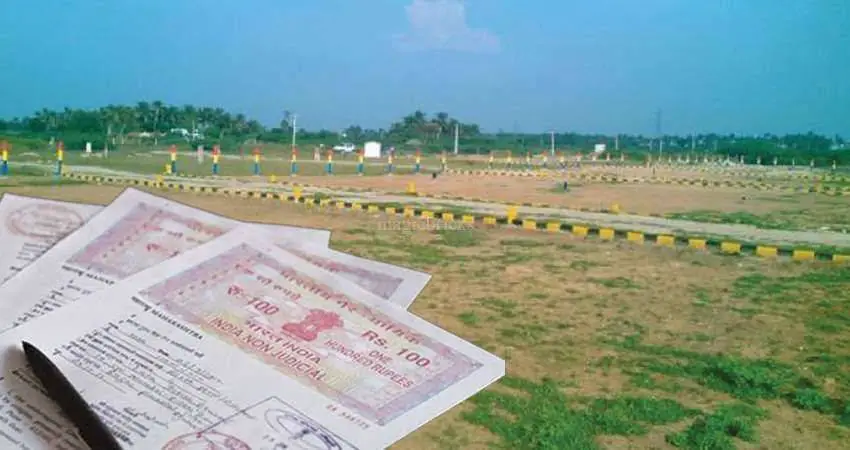
Role of the Mamlatdar and Collector in Revenue Administration
Introduction
The land revenue administration in Gujarat represents a structured hierarchical system with deep historical roots dating back to the colonial era. At the heart of land revenue administration framework stand two pivotal offices the Mamlatdar and the Collector whose roles extend far beyond mere revenue collection to encompass judicial functions, dispute resolution, and implementation of government policies at the grassroots level. The Gujarat Land Revenue Code, 1879 [1], continues to govern these offices, having undergone numerous amendments to adapt to contemporary administrative needs while retaining its fundamental structure.
These revenue officials function as the crucial link between the state government and landholders, exercising both administrative and quasi-judicial powers that significantly impact property rights, land transactions, and revenue matters across Gujarat. Understanding their roles, powers, and limitations is essential for anyone dealing with land-related matters in the state, whether they are legal practitioners, landowners, or government officials.
Historical and Legislative Framework
The Gujarat Land Revenue Code, 1879, originally enacted as the Bombay Land Revenue Code, forms the statutory foundation for revenue administration in Gujarat [1]. This legislation has withstood the test of time, evolving through multiple amendments to address changing administrative and socio-economic realities. The Code was adapted for Gujarat following the reorganization of states in 1960 and has been modified significantly through amendments, most notably through Gujarat Acts of 1964, 1965, 1972, and subsequent years.
The legislative framework establishes a clear hierarchy of revenue officers, with the State Government exercising chief controlling authority in all matters connected with land revenue. The Code provides for the appointment, powers, duties, and jurisdictions of various revenue officers including the Collector, Deputy Collectors, Mamlatdars, and their subordinates. This structured approach ensures uniformity in revenue administration while allowing flexibility for local circumstances.
The Mamlatdars’ Courts Act, 1906 [2], complements the Land Revenue Code by conferring specific judicial powers upon Mamlatdars to adjudicate certain categories of disputes. This dual role—as both administrative officers and judicial authorities—makes these positions unique within the Indian administrative system.
The Office of the Mamlatdar
Appointment and Constitutional Position
The Mamlatdar serves as the chief officer entrusted with local revenue administration of a taluka. According to the Gujarat Land Revenue Code, the State Government appoints Mamlatdars, establishing them as officers with both executive and judicial responsibilities within their territorial jurisdiction [1]. The Code also provides for Additional Mamlatdars to be appointed as deemed necessary by the State Government, with these additional officers exercising powers in a taluka or part thereof as directed by the government.
The position of Mamlatdar represents a critical juncture in the revenue administration hierarchy. While subordinate to the Collector in most matters, the Mamlatdar exercises independent judicial authority in specific categories of cases, particularly those arising under the Mamlatdars’ Courts Act, 1906. This independence is subject to revisional powers vested in the Collector but ensures that the Mamlatdar can function as an effective first-tier adjudicator in revenue disputes.
Administrative Responsibilities
The administrative functions of a Mamlatdar encompass a wide range of duties related to land records, revenue collection, and implementation of government schemes. The Mamlatdar oversees the maintenance and updating of land records, ensuring accuracy in documentation of ownership, cultivation status, and other relevant particulars. This responsibility includes supervising the work of Talatis (village accountants) and ensuring timely mutation of land records following transfers or succession.
Revenue collection constitutes another primary administrative function. The Mamlatdar ensures timely collection of land revenue within the taluka, implementing recovery procedures when necessary, and maintaining accounts of all revenue receipts. This function extends to supervision of the entire revenue collection machinery at the taluka level, including monitoring of subordinate revenue officials.
The Mamlatdar also plays a crucial role in implementing various government schemes related to land, agriculture, and rural development. This includes processing applications for land conversion, granting permissions for various land uses, and overseeing programs for land distribution and consolidation. Additionally, Mamlatdars maintain lists of small holders exempt from land revenue payment, as mandated by amendments introduced in 1972 [1].
Judicial and Quasi-Judicial Powers
The judicial authority of a Mamlatdar derives primarily from two sources: the Gujarat Land Revenue Code, 1879, and the Mamlatdars’ Courts Act, 1906. Under the Revenue Code, the Mamlatdar conducts inquiries and passes orders on various matters including land disputes, boundary questions, and claims concerning land revenue. These proceedings are deemed judicial proceedings, with the Mamlatdar bound to follow principles of natural justice.
The Mamlatdars’ Courts Act, 1906, confers specific powers to adjudicate possession disputes, grant injunctions, and decide questions of possession arising from interference with water rights, pathways, or land use [2]. The jurisdiction of Mamlatdar’s Court extends to suits filed within six months from the date when cause of action arose, emphasizing the summary nature of these proceedings. Gujarat High Court judgments have consistently held that proceedings under the Mamlatdars’ Courts Act are judicial in nature, with parties entitled to natural justice and proper hearing before any adverse orders are passed [3].
In the landmark case of Beleview Associations v. Ambalal Hirabhai Prajapati (2005), the Gujarat High Court clarified the nature of Mamlatdar’s Court, holding that although described as a court, it functions with limited jurisdiction specifically conferred by statute [3]. The court emphasized that Mamlatdars must strictly adhere to procedural requirements, including proper service of notice, opportunity of hearing, and reasoned decisions.
Limitations and Accountability
The powers of a Mamlatdar, though extensive, are subject to several limitations. Decisions made by Mamlatdars are subject to appeal to superior revenue officers, typically the Deputy Collector or Collector, depending on the nature of the case. The Collector possesses revisional powers under various provisions, allowing examination of records and proceedings to ensure legality and propriety of decisions.
Furthermore, judicial review by civil courts remains available for decisions involving questions of title or where jurisdiction has been exceeded. The Gujarat High Court, in multiple judgments, has held that while revenue authorities decide questions of possession and fiscal liability, determination of title remains with civil courts [4]. This jurisdictional limitation ensures that fundamental property rights are not conclusively determined by revenue authorities without recourse to regular courts.
The Office of the Collector
Appointment and Constitutional Status
The Collector, appointed by the State Government for each district, stands at the apex of district revenue administration in Gujarat. The position combines various functions—revenue administration, general administration, and magisterial duties—making it one of the most important administrative offices in the district. The Gujarat Land Revenue Code empowers the Collector to exercise throughout the district all powers and discharge all duties conferred by the Code or any other law, subject to instructions from the State Government [1].
The Code also provides for Additional Collectors to be appointed as necessary, with these officers exercising powers of the Collector in the district or part thereof as directed by the State Government. Significantly, Additional Collectors are not subordinate to the District Collector except in matters specifically designated by the government, ensuring efficient distribution of administrative workload.
Supervisory and Administrative Functions
The Collector’s supervisory role extends over all subordinate revenue administration officers within the district, including Mamlatdars, Deputy Collectors, and village-level functionaries. This supervisory authority encompasses monitoring of revenue collection, maintenance of land records, and implementation of revenue laws and government policies. The Collector reviews decisions of subordinate officers, provides administrative guidance, and ensures uniformity in application of laws and rules.
In administrative matters, the Collector implements state and central government policies at the district level. This includes overseeing development programs, coordinating between various departments, and ensuring effective governance. The Collector also manages land acquisition proceedings for public purposes, exercising powers under the Land Acquisition Act and related legislation.
The Collector’s role in maintaining and updating land records is supervisory in nature. While actual record-keeping is done at lower levels, the Collector prescribes formats, issues instructions, and ensures that records are properly maintained throughout the district. This includes overseeing the mutation process, ensuring timely updating of records, and resolving disputes about record entries.
Appellate and Revisional Authority
As the first appellate authority for decisions made by Mamlatdars and other subordinate revenue administration officers, the Collector plays a crucial judicial role. Appeals lie to the Collector from orders passed by Mamlatdars in various matters including assessment of land revenue, disputes about land use, and questions of possession [1]. The appellate jurisdiction requires the Collector to examine both questions of fact and law, ensuring that subordinate officers have acted legally and properly.
Beyond appellate powers, the Collector possesses extensive revisional jurisdiction. Under the Gujarat Land Revenue Code, the Collector may call for and examine records of any inquiry or proceedings of subordinate revenue officers to satisfy himself regarding legality and propriety of decisions and regularity of proceedings [1]. This suo motu revisional power enables the Collector to correct errors and ensure justice even when no appeal has been filed.
The Gujarat High Court has emphasized that while exercising appellate or revisional jurisdiction, the Collector must apply an independent judicial mind and not act mechanically on reports of subordinate officers [4]. The court has also held that principles of natural justice must be observed, requiring notice to affected parties and opportunity for hearing before any adverse orders are passed in revision.
Emergency and Special Powers
The Gujarat Land Revenue Code vests the Collector with emergency powers to address situations requiring immediate intervention. These include powers to prevent unauthorized occupation of land, take possession of forfeited holdings, and implement recovery procedures for land revenue arrears. The Collector may also attach and manage villages or holdings where defaults have occurred, appointing managers and supervising revenue collection during such periods.
Additionally, the Collector exercises powers regarding conversion of agricultural land to non-agricultural purposes, a critical function given Gujarat’s rapid urbanization and industrialization. These powers are exercised subject to rules framed under the Code and must balance developmental needs with agricultural land preservation.
Judicial Interpretation and Case Law
Principles of Natural Justice in Revenue Proceedings
Courts have consistently held that revenue administration officers, including Mamlatdars and Collectors, must observe principles of natural justice in their proceedings. In matters affecting rights and liabilities of parties, adequate notice must be given, parties must have opportunity to present their case, and decisions must be reasoned and based on evidence. The absence of proper notice or hearing has been held to vitiate revenue proceedings, with courts exercising jurisdiction to set aside such orders [4].
The Gujarat High Court has clarified that even in summary proceedings under the Mamlatdars’ Courts Act, basic procedural safeguards cannot be dispensed with. In several cases, the court has remanded matters where Mamlatdars proceeded without proper inquiry into jurisdictional facts or without giving adequate hearing to parties [5].
Mutation and Revenue Records
A consistent line of judicial authority establishes that mutation in revenue records is primarily for fiscal purposes and does not confer or take away title to property. Revenue entries merely indicate who is liable for land revenue and do not constitute conclusive evidence of ownership. Courts have held that while revenue authorities can decide questions of possession for fiscal purposes, title determination remains within the exclusive domain of civil courts [4].
This principle has important practical implications. A person whose name appears in revenue records cannot claim indefeasible title based solely on such entry, nor can a person be denied title merely because revenue records are in another’s name. Civil courts, in suits for declaration of title or injunction, must examine independent evidence of ownership rather than relying solely on revenue entries.
Limitation of Jurisdiction
Courts have repeatedly emphasized that revenue authorities function within the limits prescribed by statute. The Collector and subordinate revenue officers cannot arrogate jurisdiction beyond what is conferred by law. When revenue authorities exceed jurisdiction or act without legal authority, their orders are liable to be set aside in judicial review.
In Collector, Rajkot v. Bavabhai Karshanbhai Patel (2002), the Gujarat High Court addressed the issue of subordinate revenue officers challenging orders of superior authorities [6]. The court held that the Collector, Deputy Collector, or Mamlatdar cannot challenge orders passed by the Principal Secretary exercising appellate or revisional powers, as these orders represent decisions of the State Government itself. This judgment reinforced the hierarchical structure of revenue administration and the principle of administrative discipline.
Rights and Remedies of Landholders
Judicial decisions have recognized various rights of landholders in revenue proceedings. These include the right to be heard before any adverse order affecting land rights, the right to appeal against decisions of revenue authorities, and the right to approach civil courts for determination of title. Courts have also held that revenue authorities cannot deprive persons of vested rights without following due process, and any attempt to do so would be liable to judicial correction.
The Gujarat High Court has held that while revenue authorities have wide powers, these must be exercised reasonably and in accordance with law. Arbitrary or discriminatory exercise of power is subject to judicial review under Article 226 of the Constitution. This provides an important check on revenue administration, ensuring accountability and adherence to rule of law.
Interrelationship Between Mamlatdar and Collector
Hierarchical Structure and Coordination
The Mamlatdar reports directly to the Collector, creating a seamless flow of information and decision-making within the district revenue administration. This hierarchical relationship ensures that the Collector remains informed about revenue matters at the taluka level and can provide necessary guidance and supervision. Regular reporting by Mamlatdars enables the Collector to monitor revenue collection, land record maintenance, and disposal of cases.
The Collector provides administrative and legal guidance to Mamlatdars, ensuring uniformity in application of laws and implementation of policies. This includes issuing standing orders, clarifying legal issues, and supervising performance of Mamlatdars. The Collector may also transfer cases between Mamlatdars or withdraw cases to his own file when circumstances require such intervention.
Checks and Balances
The appellate and revisional jurisdiction of the Collector over Mamlatdar’s decisions creates an important system of checks and balances. This ensures that decisions at the taluka level are subject to review, promoting accountability and legal correctness. The Collector’s power to call for and examine records enables correction of errors even when no appeal has been filed, serving as a safeguard against miscarriage of justice.
However, this hierarchical relationship does not entirely subordinate the Mamlatdar to the Collector. In matters where the Mamlatdar exercises independent judicial authority, particularly under the Mamlatdars’ Courts Act, the Collector’s power is limited to revision rather than superintendence. This preserves the quasi-judicial independence of Mamlatdars while maintaining overall supervisory control of the Collector.
Delegation and Distribution of Work
The Gujarat Land Revenue Code enables delegation of powers by the Collector to subordinate officers, including Mamlatdars. This delegation mechanism allows efficient distribution of workload and ensures that routine matters are disposed of at appropriate levels. The Collector may assign specific duties to Mamlatdars or reserve certain categories of cases for personal disposal.
The Code also provides for transfer of proceedings between revenue officers, enabling the Collector to ensure that cases are heard by appropriate authorities. This flexibility in administration allows the revenue system to adapt to varying circumstances and workloads while maintaining coherence and uniformity.
Contemporary Relevance and Challenges
Modernization and Digitization
Gujarat’s revenue administration has been undergoing significant modernization through digitization of land records and online service delivery. The introduction of systems like AnyROR (Any Record of Rights) has enabled online access to land records, reducing the need for physical interaction with revenue offices. This digital transformation has implications for the traditional roles of Mamlatdars and Collectors, requiring adaptation to new technologies while maintaining the core functions of revenue administration.
The digitization of records has enhanced transparency and reduced opportunities for manipulation of land records. However, it has also created new challenges related to data security, authentication of digital records, and training of revenue officials in use of technology. Mamlatdars and Collectors must now possess not only legal and administrative skills but also technical competence to manage digital systems effectively.
Land Conversion and Urbanization
Rapid urbanization in Gujarat has significantly increased the workload of revenue authorities related to land conversion from agricultural to non-agricultural use. The Collector’s role in sanctioning such conversions has become increasingly important, requiring balancing of developmental needs with agricultural land preservation. This function involves application of complex rules and often requires coordination with multiple departments including urban development, environment, and agriculture.
The growing demand for land conversion has also led to increased litigation, with landholders challenging delays or refusals of conversion permissions. Revenue authorities must navigate between facilitating development and ensuring compliance with land use regulations, a task requiring careful judgment and thorough knowledge of applicable laws.
Dispute Resolution and Access to Justice
Despite the availability of civil courts for determination of title, revenue authorities continue to be the first point of contact for most land-related disputes. The Mamlatdar’s Court, with its summary procedures and focus on possession, provides quicker relief compared to regular civil litigation. However, the effectiveness of this forum depends on proper functioning of the system, including timely disposal of cases and proper application of law.
The burden of cases before Mamlatdars and Collectors has increased significantly with population growth and increased land transactions. This has led to delays in disposal and sometimes compromised quality of decisions. Addressing this challenge requires not only more resources but also systemic reforms to streamline procedures and enhance capacity of revenue officials.
Conclusion
The offices of Mamlatdar and Collector remain central to land revenue administration in Gujarat, performing functions that extend far beyond revenue collection to encompass dispute resolution, implementation of land reforms, and protection of landholder rights. The Gujarat Land Revenue Code, 1879, despite its colonial origins, continues to provide a workable framework for these functions, having been adapted through amendments to address contemporary needs.
The hierarchical relationship between Mamlatdar and Collector creates an effective system of revenue administration while maintaining checks and balances. The quasi-judicial powers vested in these officers enable quick resolution of possession disputes and implementation of revenue laws, though subject to appellate and revisional oversight. Judicial interpretation has refined the scope and limits of these powers, ensuring that revenue administration functions within constitutional bounds and respects principles of natural justice.
As Gujarat continues to develop economically and urbanize rapidly, the roles of Mamlatdar and Collector will continue to evolve. Digital transformation, increasing complexity of land transactions, and growing demand for land conversion require these offices to adapt while maintaining their core functions. The challenge for Gujarat’s revenue administration is to balance tradition with innovation, ensuring efficient service delivery while protecting the rights of all stakeholders in land matters.
Understanding the legal framework governing offices of Mamlatdar and Collector, as established by the Gujarat Land Revenue Code and interpreted by courts, remains essential for effective functioning of revenue administration and protection of landholder rights. Legal practitioners, landowners, and government officials must remain cognizant of the powers, procedures, and limitations of revenue authorities to ensure proper compliance with law and effective resolution of disputes.
References
[1] The Gujarat Land Revenue Code, 1879 (Bombay Act No. V of 1879). Available at: https://revenuedepartment.gujarat.gov.in/downloads/act_BLRC_1879_n.pdf
[2] The Mamlatdars’ Courts Act, 1906 (Bombay Act No. 2 of 1906). Available at: https://indiankanoon.org/doc/110763739/
[3] Beleview Associations v. Ambalal Hirabhai Prajapati And Ors., Gujarat High Court (2005). Available at: https://indiankanoon.org/search/?formInput=mamlatdar+act+doctypes:gujarat
[4] Gujarat Land Revenue Code: Key Provisions and Judicial Interpretations. Narendra Madhu Associates. Available at: https://nma.legal/gujarat-land-revenue-code-key-provisions-and-judicial-interpretations/
[5] Hasmukhbhai Ishwarbhai Patel v. Dy. Collector and Prant Officer, Gandhinagar, Gujarat High Court (2018). Available at: https://www.casemine.com/judgement/in/640281c968effb79be0684d1
[6] Collector, Rajkot v. Bavabhai Karshanbhai Patel, Gujarat High Court (2002). Available at: https://www.casemine.com/judgement/in/56e1263e607dba389661de45
[7] The Gujarat Tenancy and Agricultural Land Act, 1948. Available at: https://www.indiacode.nic.in/bitstream/123456789/3208/2/tenancyandagriculturalland.pdf
[8] The Bombay Land Revenue Code, 1879 (as adopted in Gujarat). Available at: https://indiankanoon.org/doc/23526241/
[9] Various judgments on Mamlatdar Courts Act. Available at: https://indiankanoon.org/search/?formInput=mamlatdar+courts+act+doctypes:gujarat