GIFT City & IFSC Legal Services
The Gujarat International Finance Tec-City (GIFT City), home to India’s first and only International Financial Services Centre (IFSC), has emerged as the country’s gateway for cross-border finance, fund management, aircraft and ship leasing, bullion trading, and offshore banking. Since the establishment of the International Financial Services Centres Authority (IFSCA) under the IFSCA Act, 2019 as the unified regulator, the regulatory landscape at GIFT has matured rapidly — and so has the volume of substantive legal work originating there.
Bhatt & Joshi Associates advises domestic and international clients on the full spectrum of GIFT City and IFSC matters — from initial unit setup, regulatory licensing under IFSCA frameworks, and Section 80LA tax holiday structuring, through to enforcement defence, regulatory writ petitions before the Gujarat High Court, and dispute resolution under IFSC arbitration mechanisms.
Why a Gujarat-Based Firm Matters for GIFT City Mandates
Most national law firms advising on GIFT City matters are headquartered in Mumbai, Delhi, or Bengaluru. They can — and do — advise capably on the regulatory frameworks issued by the IFSCA. But certain categories of GIFT City work are structurally better handled by counsel based in Gujarat. There are three reasons.
Constitutional Writ Jurisdiction
Writ petitions challenging IFSCA orders, show-cause notices, penalties, or licence cancellations must be filed before the Gujarat High Court — the only court with territorial writ jurisdiction over a regulator headquartered in Gandhinagar. This is a Gujarat-only forum.
Geographic Proximity
In-person hearings, document inspections, IFSCA submissions, registrar interactions, and physical attendance at GIFT-based courts and tribunals can be handled the same day from our Sola office. National firms must fly counsel in.
State-Law Interface
Gujarat stamp duty, state-level incentives, SEZ-related approvals, GIDC interfaces, and Gujarat-specific labour and tax laws often govern the on-ground reality of operating a GIFT unit. Local counsel reads these instinctively.
Our GIFT City & IFSC Practice Areas
Our GIFT-IFSC practice is organised around twelve substantive verticals, each combining regulatory advisory with transactional and contentious capability. Click through to the dedicated practice page for detailed guidance, or contact us for a confidential consultation.
IFSCA Enforcement & Writ Remedies
Defence against IFSCA show-cause notices, adjudication proceedings, and writ petitions before the Gujarat High Court challenging regulatory action.
IFSCA Enforcement & Writ Remedies
Defence against IFSCA show-cause notices, adjudication proceedings, and writ petitions before the Gujarat High Court challenging regulatory action.
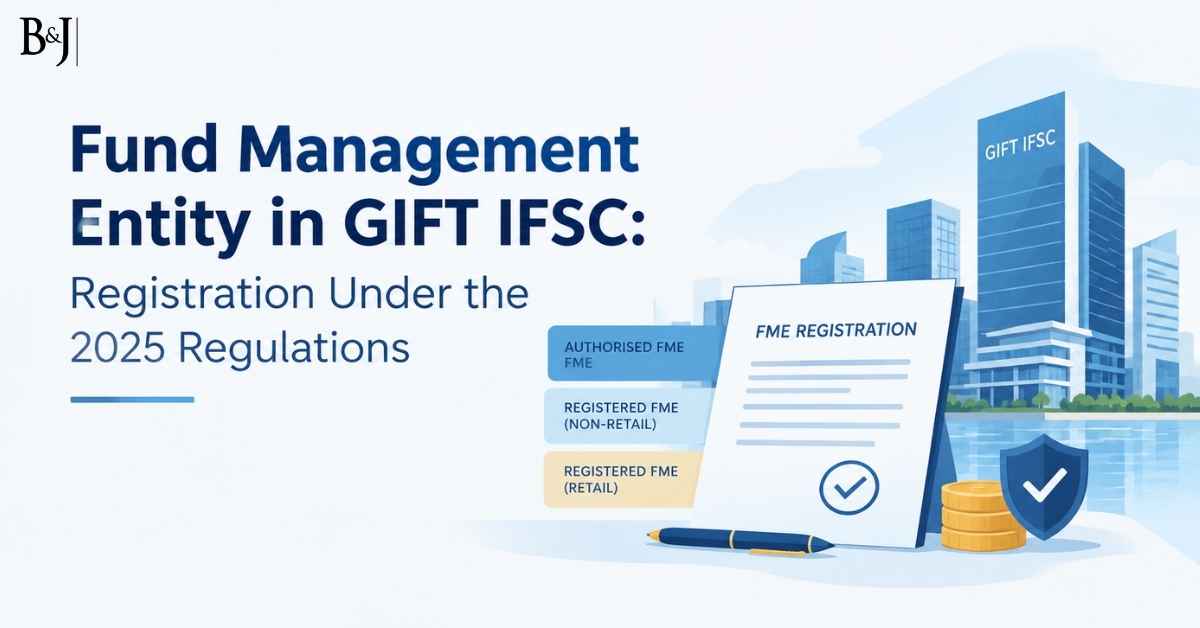
FME Licensing — IFSCA Fund Management Regulations 2025
Authorised, Registered Non-Retail, and Registered Retail Fund Management Entity registrations; PPM filings; ongoing compliance.
FME Licensing — IFSCA Fund Management Regulations 2025
Authorised, Registered Non-Retail, and Registered Retail Fund Management Entity registrations; PPM filings; ongoing compliance.
Section 80LA Tax Holiday Advisory
Eligibility structuring under Section 80LA of the Income-tax Act, 1961, planning the 10-out-of-15-year deduction window, and CBDT compliance.
Section 80LA Tax Holiday Advisory
Eligibility structuring under Section 80LA of the Income-tax Act, 1961, planning the 10-out-of-15-year deduction window, and CBDT compliance.
Aircraft Leasing & Financing
Operating-lease and finance-lease structures under the IFSCA Aircraft Lease Framework, NOF compliance, and cross-border lease documentation.
Aircraft Leasing & Financing
Operating-lease and finance-lease structures under the IFSCA Aircraft Lease Framework, NOF compliance, and cross-border lease documentation.
Ship Leasing & Maritime Finance
Ship-leasing entity registration under the IFSCA Ship Lease Regulations, vessel acquisition structures, and maritime financing arrangements.
Ship Leasing & Maritime Finance
Ship-leasing entity registration under the IFSCA Ship Lease Regulations, vessel acquisition structures, and maritime financing arrangements.
SEZ–DTA Tax & GST Interface
Cross-border supply structuring, IGST and GST refund matters, SEZ exit and de-notification advice, and DTA-IFSC transaction planning.
SEZ–DTA Tax & GST Interface
Cross-border supply structuring, IGST and GST refund matters, SEZ exit and de-notification advice, and DTA-IFSC transaction planning.
IFSC Dispute Resolution & Arbitration
Arbitration seat planning, India International Arbitration Centre proceedings, and enforcement of awards through Gujarat courts.
IFSC Dispute Resolution & Arbitration
Arbitration seat planning, India International Arbitration Centre proceedings, and enforcement of awards through Gujarat courts.
Family Offices & Variable Capital Companies
Family Investment Fund structures, VCC umbrella and sub-fund formation, and intergenerational wealth-planning vehicles within IFSC.
Family Offices & Variable Capital Companies
Family Investment Fund structures, VCC umbrella and sub-fund formation, and intergenerational wealth-planning vehicles within IFSC.
Foreign University Units
IFSCA approvals for offshore campuses of foreign universities, faculty employment frameworks, and academic-regulator interfaces.
Foreign University Units
IFSCA approvals for offshore campuses of foreign universities, faculty employment frameworks, and academic-regulator interfaces.
Employment & Labour Law in IFSC
Employment contracts under deemed-foreign-jurisdiction status, PF and ESI exemptions, expatriate employment, and social security planning.
Employment & Labour Law in IFSC
Employment contracts under deemed-foreign-jurisdiction status, PF and ESI exemptions, expatriate employment, and social security planning.
Stamp Duty & Gujarat State Incentives
Gujarat-specific stamp duty exemptions for IFSC instruments, state subsidy applications, and incentive policy benefit claims.
Stamp Duty & Gujarat State Incentives
Gujarat-specific stamp duty exemptions for IFSC instruments, state subsidy applications, and incentive policy benefit claims.
Company Setup & IFSCA Registration
End-to-end unit incorporation, IFSCA registration, sector-specific licensing, and post-incorporation compliance management.
Company Setup & IFSCA Registration
End-to-end unit incorporation, IFSCA registration, sector-specific licensing, and post-incorporation compliance management.
The IFSCA Regulatory Framework: A Brief Overview
Prior to October 2020, financial services activity within GIFT IFSC was regulated by a patchwork of sectoral regulators — the Reserve Bank of India for banking, SEBI for capital markets, IRDAI for insurance, and PFRDA for pensions — each acting under separate enabling statutes adapted for IFSC application. This fragmented architecture created regulatory friction and slowed the development of the centre.
The International Financial Services Centres Authority Act, 2019 created a single, dedicated, unified regulator for all financial products, services, and institutions within IFSCs in India. Headquartered in Gandhinagar and operational from October 1, 2020, the IFSCA today exercises the powers and functions previously vested in the four sectoral regulators, in respect of any financial activity within an IFSC.
Key IFSCA Regulations
The IFSCA has issued — and continues to issue — sector-specific regulations governing financial services within GIFT IFSC. The principal frameworks include:
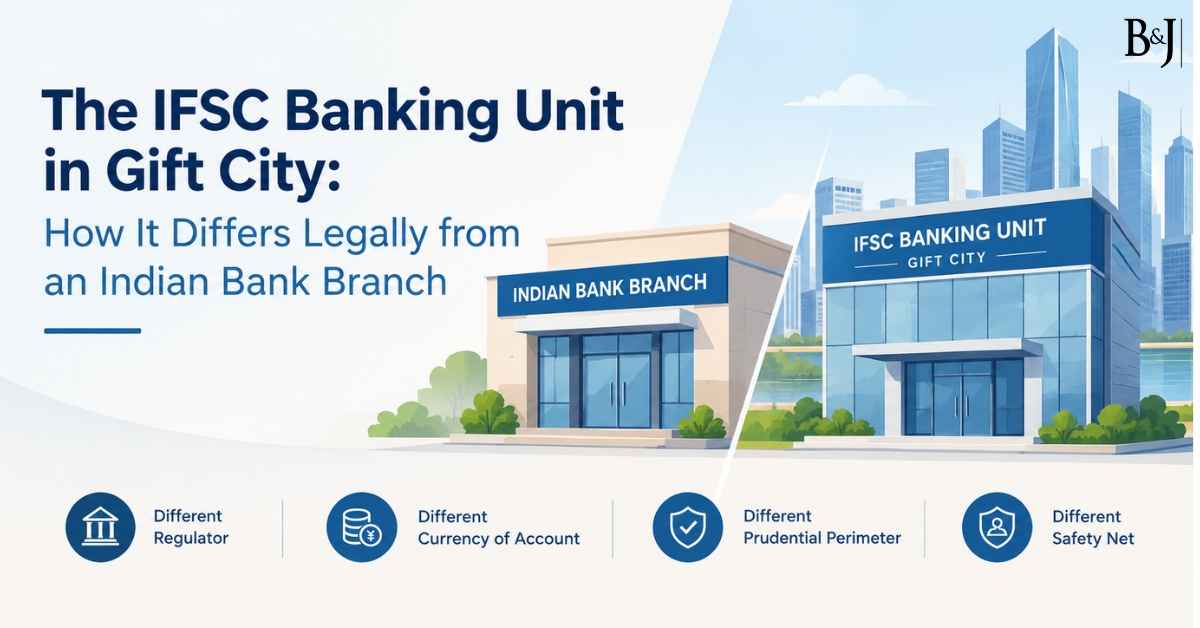
- IFSCA (Banking) Regulations, 2020 — governing IFSC Banking Units (IBUs), foreign banks, and Indian banks operating in IFSC.
- IFSCA (Fund Management) Regulations, 2025 — the unified framework for Fund Management Entities (FMEs), replacing the earlier 2022 regulations.
- IFSCA (Capital Market Intermediaries) Regulations, 2021 — governing brokers, clearing members, custodians, and depository participants.
- IFSCA (Insurance) Regulations, 2021 — for IFSC Insurance Offices and intermediaries.
- IFSCA (Bullion Exchange) Regulations, 2020 — governing the India International Bullion Exchange.
- IFSCA (Finance Company) Regulations, 2021 — covering finance companies, including aircraft and ship leasing entities.
- IFSCA (International Trade Financing Services Platform) Regulations, 2021 — for the ITFS platform.
Each of these frameworks is supported by detailed circulars, master directions, and clarifications issued from time to time. Effective practice in this area requires not only knowledge of the parent regulations but also tracking the rolling stream of IFSCA notifications.
Section 80LA: The Tax Holiday That Drives the Centre
For most clients, the single most important commercial driver for choosing GIFT IFSC over a traditional Indian setup is the tax holiday under Section 80LA of the Income-tax Act, 1961. Understanding its current scope — and what is and is not yet enacted — is fundamental.
The Current Position
Under the existing statutory framework, a Unit of an IFSC that earns income from prescribed financial services activities is entitled to a deduction equal to 100% of such income for any 10 consecutive assessment years out of the first 15 assessment years, beginning with the year in which the IFSCA registration or other applicable permission is obtained. The Unit may choose its own commencement year for the holiday window, allowing strategic alignment with anticipated profitability.
Eligibility requires, among other things, that the Unit be located within an IFSC, hold the requisite IFSCA registration or licence, and generate income from prescribed activities — including capital market intermediation, banking, insurance, fund management, leasing, treasury operations, and bullion trading.
Important — Proposed but Not Yet Enacted: Public discourse and certain advisory commentary refer to a proposed extension of the Section 80LA holiday from 10-out-of-15 years to 20-out-of-25 years, accompanied by a 15% concessional tax rate on certain qualifying income. Clients should treat any such proposal as under consideration, not enacted, until formally notified through the Finance Act and CBDT instructions. Tax structuring decisions should be based on the law as currently in force, with contingency planning for legislative change.
Practical Structuring Considerations
The Section 80LA deduction interacts with several other provisions of the Income-tax Act — including MAT under Section 115JB, AMT under Section 115JC, transfer pricing under Sections 92 to 92F, and GAAR under Chapter X-A. Effective tax planning at the entity-formation stage is essential to ensure the holiday is fully realised and does not generate unintended consequences elsewhere in the group structure.
Gujarat High Court Writ Jurisdiction Over IFSCA: An Underappreciated Advantage
The IFSCA, as a creature of statute headquartered in Gandhinagar, is amenable to writ jurisdiction under Article 226 of the Constitution before the Gujarat High Court. This is significant because writ jurisdiction provides a constitutional remedy parallel to — and frequently faster than — statutory appellate routes.
In our experience, the situations in which writ proceedings become important include:
- Challenges to show-cause notices issued without jurisdiction or in violation of natural justice.
- Challenges to licence cancellation or suspension orders where the consequences are commercially severe and time-sensitive.
- Challenges to regulations or circulars on grounds of ultra vires or constitutional invalidity.
- Refund and rebate claims where statutory remedies are exhausted, illusory, or unavailable.
- Directions matters compelling the IFSCA to decide pending applications within a reasonable time.
Because writ proceedings are constitutional, they require counsel familiar both with administrative and constitutional law principles and with the specific procedural practice of the Gujarat High Court. Our firm regularly appears before the Gujarat High Court across our practice areas and is well placed to handle IFSCA-related writ matters.
Who We Advise?
Our GIFT-IFSC client base spans the full range of participants in the centre:
- Indian and foreign asset managers seeking FME registration to operate funds, family offices, and Variable Capital Companies.
- Banks and non-banking financial companies establishing IBUs and finance company subsidiaries within IFSC.
- Aircraft and ship lessors structuring lease portfolios under the IFSCA Finance Company and Aircraft Lease frameworks.
- Indian corporates using GIFT IFSC for centralised treasury, External Commercial Borrowing, and group financing functions.
- Foreign universities exploring the IFSCA pathway for setting up offshore campuses with Indian-currency operations.
- High-net-worth individuals and families structuring family investment funds, VCC sub-funds, and remittance-based wealth vehicles.
- Existing GIFT units facing IFSCA enforcement, licence renewal disputes, or operational compliance challenges.
Change will not come if we wait for some other person or some other time. We are the ones we’ve been waiting for. We are the change that we seek.
Get in touch with Best Civil Lawyer in Ahmedabad
Frequently asked questions
1. What is GIFT City and how is it different from a regular SEZ?
The Gujarat International Finance Tec-City (GIFT City), located in Gandhinagar, Gujarat, hosts India's first International Financial Services Centre. While it is set up as a Multi-Services Special Economic Zone, the IFSC component within GIFT enjoys a distinct regulatory architecture: it is treated as a deemed foreign jurisdiction for many purposes, transactions are denominated in foreign currency (primarily US Dollars), and the entire financial services activity within IFSC is regulated by a single unified regulator — the IFSCA — rather than the four sectoral regulators (RBI, SEBI, IRDAI, PFRDA) that govern domestic Indian financial markets.
2. What is IFSCA and what does it regulate?
The International Financial Services Centres Authority (IFSCA) is the unified regulator for all financial products, financial services, and financial institutions within International Financial Services Centres in India. Established under the IFSCA Act, 2019 and operational from October 1, 2020, the IFSCA exercises the powers previously vested in the RBI, SEBI, IRDAI, and PFRDA in respect of financial services activity within IFSC. It is headquartered in Gandhinagar.
CDSCO’s Dual Role as Regulator and Prosecutor: Structural Conflict of Interest and Reform Proposals
ABSTRACT The Central Drugs Standard Control Organisation (CDSCO) occupies an unusual institutional p
Strict Liability Offences Under the Drugs and Cosmetics Act, 1940: Are India’s Courts Adequately Enforcing Them?
ABSTRACT The Drugs and Cosmetics Act, 1940 creates strict liability offences for the manufacture and
Section 33P of the Drugs and Cosmetics Act: India’s Unused Instrument for Uniform Drug Law Enforcement
ABSTRACT Section 33P of the Drugs and Cosmetics Act, 1940 empowers the Central Government to give bi
The Drug Inspector as the Sole Prosecution Authority: Why Police Cannot File FIRs Under Chapter IV of the Drugs and Cosmetics Act, 1940
ABSTRACT The Supreme Court’s landmark ruling in Union of India v. Ashok Kumar Sharma, (2021) 1
The Binding Nature of Administrative Instructions in India: A Unified Doctrinal Framework
ABSTRACT Indian governance is increasingly conducted through instructions, circulars, guidelines, an
Compounding of Offences Under the Drugs and Cosmetics Act: The 2025 Rules and Their Interface with Prosecution
ABSTRACT The Drugs and Cosmetics (Compounding of Offences) Rules, 2025, notified on April 24, 2025 u
Can CDSCO Ignore Its Own Prosecution Guidelines? Legal Validity and Article 14 Challenge Explained
ABSTRACT The DCC and CDSCO prosecution guidelines are not legally binding as a matter of positive la
Section 26A of the Drugs and Cosmetics Act, 1940: India’s Sharpest Drug Regulatory Instrument
ABSTRACT Section 26A of the Drugs and Cosmetics Act, 1940 empowers the Central Government to prohibi
The Mandatory Procedure for a Drug Inspector’s Complaint Under the Drugs and Cosmetics Act, 1940
ABSTRACT The Drugs and Cosmetics Act, 1940 establishes a unique prosecution architecture: criminal p
Whatsapp