Whatsapp

Basic Export Planning in India: Regulatory Framework and Compliance Requirements
Introduction
Export planning forms the foundation of international trade operations for businesses seeking to expand their reach beyond domestic borders. Effective export planning in India operates within a carefully structured legal framework designed to facilitate trade while ensuring compliance with national interests and international obligations. The fundamental principle governing Indian exports is that trade shall remain free unless specifically regulated through prohibitions, restrictions, or exclusive trading arrangements. This approach reflects India’s commitment to liberalizing trade while maintaining necessary controls for strategic, security, and economic reasons.
The regulatory architecture for exports in India has evolved significantly since independence, moving from restrictive controls to a more liberalized regime that encourages global competitiveness. Understanding this framework is essential for exporters to navigate the complex requirements of documentation, classification, and compliance that define modern export operations.
Legislative Foundation
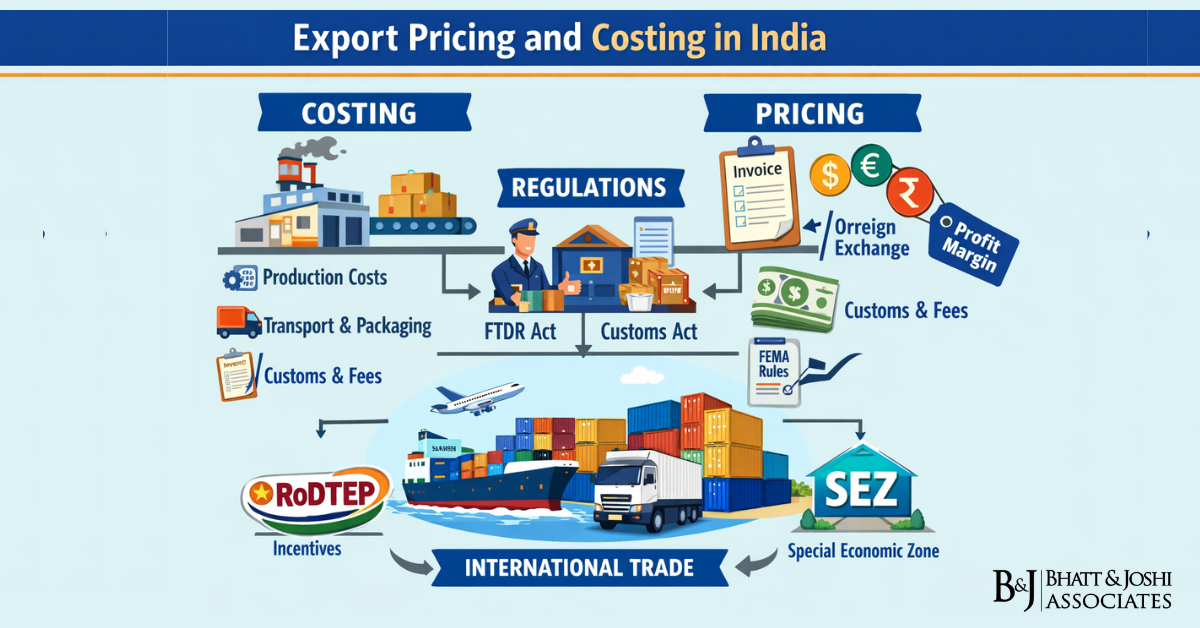
The cornerstone of India’s export regulatory framework is the Foreign Trade (Development and Regulation) Act, 1992 [1]. This landmark legislation replaced the earlier Imports and Exports (Control) Act, 1947, marking a fundamental shift in India’s approach to international trade. The Act empowers the Central Government to formulate policies for developing and regulating foreign trade, which is a cornerstone for effective Export Planning in India, facilitating imports and augmenting exports.
The Act provides that exports and imports shall be free except when regulated by way of prohibition, restriction, or exclusive trading through State Trading Enterprises as laid down in the Indian Trade Classification (Harmonized System) [2]. This principle of presumptive freedom, subject to specified restrictions, represents a significant departure from the earlier control-oriented regime. The Central Government exercises its regulatory authority by publishing orders in the Official Gazette that make provisions for the development and regulation of foreign trade.
The Customs Act, 1962 [3] works in tandem with the Foreign Trade Act to regulate the physical movement of goods across Indian borders. The Customs Act governs the levy of customs duties, valuation of export goods, and procedural requirements for clearance. These two statutes together create a dual regulatory mechanism where policy is set by the Foreign Trade Act while operational implementation occurs through the Customs Act.
Key Aspects of Export Planning in India
The Directorate General of Foreign Trade operates as the administrative authority responsible for implementing export policy in India. Every exporter must obtain an Import Export Code before engaging in international trade activities [4]. This unique identification number serves as the primary registration requirement and must be quoted on all export documents. The IEC is issued free of cost through an online application process and remains valid permanently unless suspended or cancelled for violations.
The Indian Trade Classification (Harmonized System) of Exports and Imports provides the detailed framework for classifying goods and determining their export policy status [5]. The ITC-HS system is aligned at the six-digit level with the international Harmonized System maintained by the World Customs Organization, while India maintains its own eight-digit classification to suit national requirements. Schedule 2 of the ITC-HS details the Export Policy regime, indicating whether specific goods are free for export, prohibited, restricted, or can only be traded through State Trading Enterprises.
Goods classified as free for export do not require any authorization, permission, or license from the DGFT. However, even free items may be subject to conditions stipulated in other Acts or laws currently in force. Prohibited goods cannot be exported under any circumstances except for specific exemptions such as scientific research or government-to-government arrangements. Restricted items can be exported only after obtaining appropriate authorization, permission, or license from the DGFT or in accordance with procedures prescribed in official notifications.
Documentation and Procedural Requirements
Accurate documentation is critical for successful export planning in India, as it forms the backbone of compliance in international trade.”. The primary document for exports is the shipping bill or bill of export, which must be filed with customs authorities before goods can be loaded for shipment [6]. The shipping bill contains details about the nature, quantity, value, and classification of goods being exported. Exporters must also submit a commercial invoice, packing list, and other documents as required by the importing country or specific product regulations.
The classification of goods under the correct ITC-HS code is critical for determining applicable duties, restrictions, and export promotion benefits. Misclassification can result in significant penalties and delays. The eight-digit HS code structure begins with the chapter number in the first two digits, followed by the Customs Tariff Head in digits three and four, the Customs Tariff Sub-heading in digits five and six, and finally the Tariff Item at the eight-digit level.
Exporters must also comply with valuation requirements under the Customs Act. The value of export goods is determined as the transaction value, meaning the price actually paid or payable for the goods when sold for export from India. This transaction value includes all costs up to the place of shipment but excludes freight and insurance for destinations beyond India’s borders. Accurate valuation is essential as it forms the basis for calculating any applicable export duties or determining eligibility for various export promotion schemes.
Regulatory Compliance and Prohibitions
The Foreign Trade Act grants the Central Government broad powers to prohibit, restrict, or otherwise regulate the export of goods for various purposes including national security, public order, protection of human, animal, or plant life, conservation of exhaustible natural resources, and compliance with international obligations [7]. These powers are exercised through notifications that specify conditions and restrictions for particular categories of goods.
Certain classes of goods face absolute prohibition on export to protect national interests. These include wild animals and their parts covered under the Wildlife Protection Act, 1972, certain antiquities and art treasures, and items related to national security. The export of Special Chemicals, Organisms, Materials, Equipment, and Technologies (SCOMET) is strictly controlled due to their potential dual-use applications in weapons of mass destruction. Exporters dealing with SCOMET items must obtain specific authorization and comply with end-use certification requirements.
For controlled and restricted items, exporters must demonstrate compliance with specific conditions before receiving export authorization. These conditions vary depending on the nature of the goods and may include obtaining certificates from designated authorities, meeting minimum quality standards, or proving that domestic supply has been adequately met before permitting export. The burden of proving compliance rests with the exporter, who must maintain proper documentation to establish conformity with all applicable requirements.
Export Promotion Schemes and Incentives
India operates various export promotion schemes designed to enhance the competitiveness of domestic exporters in international markets. These schemes provide benefits such as duty-free import of inputs, exemption from certain taxes, and financial incentives for export performance. Eligibility for these schemes depends on proper registration, compliance with export obligations, and adherence to prescribed procedures.
The export authorization process involves submitting applications through the online DGFT portal along with necessary supporting documents. The DGFT reviews applications against eligibility criteria and issues authorizations that specify the quantity of goods that can be imported duty-free or the value of exports that must be achieved within a stipulated timeframe. Exporters must carefully track their obligations and ensure timely fulfillment to avoid penalties or cancellation of benefits.
Realization of export proceeds represents another critical compliance requirement. All export proceeds must be realized and repatriated to India within the prescribed time limit, typically nine months from the date of export [8]. Banks act as authorized dealers and monitor compliance with foreign exchange regulations. Failure to realize export proceeds can result in denial of export benefits, inclusion in the caution list, and potential prosecution under the Foreign Exchange Management Act.
Customs Clearance Process
The physical export process begins with the presentation of a shipping bill to the customs authorities at the port of export. The proper officer examines the shipping bill along with supporting documents to verify the description, quantity, value, and classification of goods. For certain categories of goods or exporters with good compliance records, examination may be conducted on a risk-based sampling basis rather than for every consignment.
After examination and assessment, customs grants a “Let Export” order permitting the goods to be loaded onto the vessel or aircraft. The shipping bill is electronically transmitted to the customs system and forms the basis for all subsequent export benefits and compliance tracking. Exporters must ensure that the actual goods loaded match the declared particulars in the shipping bill, as any discrepancy can lead to penalties and delays.
Electronic Data Interchange systems have streamlined the customs clearance process by enabling online submission of documents and real-time tracking of shipment status. Exporters can file shipping bills electronically through customs brokers or directly if they have obtained Digital Signature Certificates. The Authorized Economic Operator program provides further facilitation measures for compliant exporters, including reduced examination rates and faster clearance.
Dispute Resolution and Judicial Interpretation
Disputes arising from export classification, valuation, or denial of benefits are addressed through a hierarchical appellate structure. The first level of appeal lies with the Commissioner of Customs (Appeals) who reviews decisions of lower customs authorities. Further appeals can be filed before the Customs, Excise and Service Tax Appellate Tribunal, which functions as a specialized tribunal for indirect tax matters [9].
Judicial pronouncements have clarified various aspects of export law and procedure. Courts have emphasized that classification disputes must be resolved based on the nature and characteristics of goods as they exist at the time of export, not based on how they might be used after import. The principle of contemporaneous evidence requires that classification and valuation decisions be based on documents and information available at the time of export rather than evidence created subsequently.
The doctrine of presumption of correctness applies to self-assessments made by exporters, meaning that customs authorities cannot arbitrarily reject declared values or classifications without specific evidence of misdeclaration. This principle balances facilitation of trade with the need for revenue protection and regulatory compliance. Exporters who maintain proper documentation and demonstrate good faith in their declarations receive protection against arbitrary reassessment.
Conclusion
Export Planning in India requires careful attention to a complex regulatory framework that balances trade facilitation with legitimate government interests in revenue collection, quality control, and strategic security. The fundamental principle that trade is free unless specifically restricted creates opportunities for exporters while maintaining necessary controls. Success in export operations depends on a thorough understanding of classification requirements, documentation procedures, and compliance obligations.
The shift from control-oriented regulation to facilitation-focused administration has significantly improved the ease of export planning in India and conducting export business. However, exporters must remain vigilant about evolving regulations, especially regarding prohibited and restricted items, valuation requirements, and realization of export proceeds. Proactive compliance, maintenance of accurate records, and regular engagement with regulatory authorities ensure smooth export operations and minimize the risk of disputes or penalties.
References
[1] The Foreign Trade (Development and Regulation) Act, 1992. Available at: https://www.indiacode.nic.in/handle/123456789/1947
[2] Directorate General of Foreign Trade. Foreign Trade Policy Chapter 2 – General Provisions Regarding Exports and Imports. Available at: https://content.dgft.gov.in/Website/dgftprod/74e3e7a9-3401-427b-815f-0a5b5aed15b0/FTP%20Chapter2-Updated%20as%20on%20%2009.11.2022%20(2).pdf
[3] The Customs Act, 1962. Available at: https://www.indiacode.nic.in/handle/123456789/2475
[4] Directorate General of Foreign Trade. Handbook of Procedures Chapter 2. Available at: https://content.dgft.gov.in/Website/dgftprod/9c3a442d-45e3-467b-b8e0-217902e9fa7d/HBP%20Chapter%202.pdf
[5] Indian Trade Classification (Harmonised System) of Exports and Imports. Available at: https://www.gstindia.biz/ftp-content-short-title.php?id=czoyOiI3MSI7
[6] Ministry of Commerce & Industry. How to Export – A Practical Guide. Available at: https://content.dgft.gov.in/Website/HTE.pdf
[7] The Foreign Trade (Development and Regulation) Act, 1992 – Full Text. Available at: https://www.commerce.gov.in/wp-content/uploads/2021/06/Foreign_Trade_Development__Regulation_Act_1992.pdf
[8] B&B Associates LLP. Export and Import Laws in India. Available at: https://bnblegal.com/article/export-and-import-laws-in-india/
[9] Customs Manual 2023. Available at: https://www.aepcindia.com/system/files/pdf/Customs_Manual_2023.pdf

Advocate Chandni Joshi
Advocate at Gujarat High Court and CoFounder at Bhatt and Joshi Associates. As Co-Founder, Chandni leads firm operations and client advisory functions. Her dual background in technology and law enables her to handle corporate, cyber, and IP matters with precision and insight.