 Whatsapp

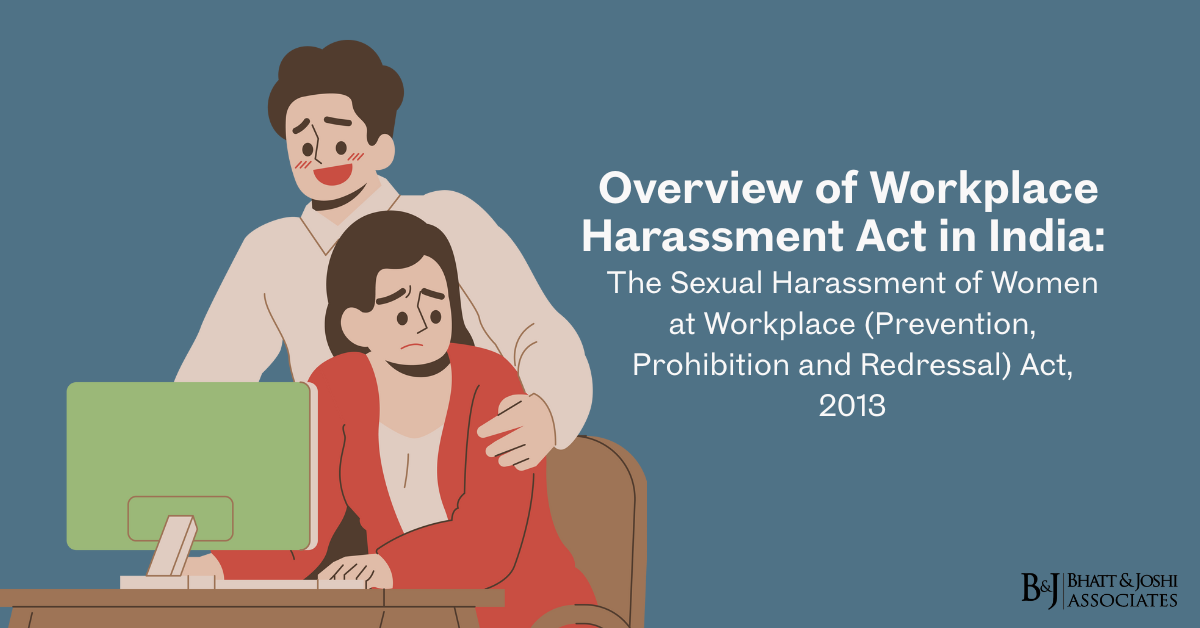
Overview of Workplace Harassment Act in India: The Sexual Harassment of Women at Workplace (Prevention, Prohibition and Redressal) Act, 2013 (POSH Act)
Introduction
The workplace should be a sanctuary of professional growth and dignity, yet for decades, women in India faced an invisible battle against sexual harassment that remained largely unaddressed by formal legal mechanisms. The Sexual Harassment of Women at Workplace (Prevention, Prohibition and Redressal) Act, 2013, commonly known as the POSH Act, emerged as a watershed legislative intervention that fundamentally transformed how workplace safety and dignity are protected in India. This landmark legislation, which received Presidential assent on April 23, 2013, and came into force on December 9, 2013, represents the culmination of years of advocacy, judicial intervention, and societal recognition of women’s fundamental right to work in an environment free from harassment [1].
The genesis of this Act lies in the recognition that sexual harassment at the workplace is not merely an interpersonal conflict but a violation of fundamental constitutional rights guaranteed under Articles 14, 15, 19(1)(g), and 21 of the Constitution of India. The Act extends to the whole of India and applies to all workplaces, whether organized or unorganized, in the public or private sector. What makes this legislation particularly significant is its attempt to create a preventive, prohibitory, and redressal framework that places the responsibility of ensuring safe workplaces squarely on employers while empowering women to seek justice without fear of retaliation.
The POSH Act, 2013 was enacted to address a critical legislative vacuum that existed despite India’s ratification of the Convention on the Elimination of All Forms of Discrimination Against Women (CEDAW) in 1993. For nearly two decades before the Act’s enactment, workplaces in India were governed by the Vishaka Guidelines, which, while groundbreaking, lacked the enforcement mechanisms and statutory backing necessary for effective implementation [2]. The transition from judicially mandated guidelines to codified legislation marked a significant evolution in India’s commitment to workplace gender equality and women’s safety.
Historical Background and the Vishaka Guidelines
Understanding the POSH Act requires examining the historical context that necessitated its creation. The story begins with a heinous incident in 1992 when Bhanwari Devi, a social worker employed by the Government of Rajasthan’s Rural Development Programme, was gang-raped by five men from an upper-caste community while she was attempting to prevent a child marriage in her village. The brutal attack was an act of revenge for her efforts to stop the illegal practice. What followed was not just a legal battle but a social awakening to the pervasive reality of sexual harassment and violence against women in workplaces across India.
The incident prompted women’s rights organizations and activists to approach the Supreme Court of India through a public interest litigation. In the landmark case of Vishaka and Others v. State of Rajasthan (1997) [3], the Supreme Court recognized that the absence of domestic legislation on workplace sexual harassment violated India’s international obligations and constitutional mandate to protect women’s rights. The Court observed that sexual harassment at the workplace violates a woman’s fundamental right to gender equality under Articles 14 and 15, her right to life and to live with dignity under Article 21, and her right to practice any profession or carry on any occupation, trade, or business under Article 19(1)(g) of the Constitution.
In this historic judgment delivered on August 13, 1997, the Supreme Court laid down detailed guidelines known as the Vishaka Guidelines. These guidelines defined sexual harassment, mandated the creation of complaints committees in workplaces, outlined complaint procedures, and prescribed preventive measures. The Court explicitly stated that these guidelines would have the force of law until appropriate legislation was enacted by Parliament. The Vishaka Guidelines became the legal framework governing workplace sexual harassment for the next sixteen years, serving as the foundation upon which the POSH Act would eventually be built.
The Vishaka judgment was revolutionary for several reasons. First, it expanded the definition of workplace to include not just traditional office settings but any place visited by an employee during or arising out of employment. Second, it recognized that sexual harassment creates a hostile work environment and amounts to discrimination on the grounds of sex. Third, it placed affirmative obligations on employers to prevent and redress sexual harassment, moving beyond mere prohibition to active prevention. The judgment drew upon international conventions, particularly CEDAW, and utilized Article 253 of the Constitution, which permits Parliament to make laws for implementing international agreements, to justify the application of international standards in the absence of domestic legislation.
However, the Vishaka Guidelines, despite their legal force, faced significant implementation challenges. Many workplaces, particularly in the private sector and smaller establishments, either remained unaware of these guidelines or failed to establish the required complaints committees. The lack of statutory penalties for non-compliance meant that enforcement was inconsistent and often dependent on the willingness of individual organizations to take the guidelines seriously. These limitations underscored the urgent need for comprehensive legislation with clear definitions, wider applicability, stronger enforcement mechanisms, and prescribed penalties for violations.
Genesis and Enactment of the POSH Act, 2013
The journey from the Vishaka Guidelines to the enactment of the POSH Act, 2013 was neither swift nor straightforward. It took sixteen years of persistent advocacy by women’s groups, civil society organizations, legal experts, and progressive lawmakers to translate the spirit of the Vishaka Guidelines into statutory law. During this period, various draft bills were proposed, debated, and refined. The Protection of Women against Sexual Harassment at Workplace Bill was first introduced in the Rajya Sabha in 2010 but underwent several modifications based on feedback from stakeholders, parliamentary committees, and public consultations.
The Bill that would eventually become the POSH Act was introduced in the Lok Sabha and passed on September 3, 2012. It was subsequently passed by the Rajya Sabha on February 26, 2013, with certain amendments aimed at strengthening its provisions and expanding its scope. The Act received Presidential assent on April 23, 2013, and was officially notified as Act No. 14 of 2013 [4]. The implementation rules, known as the Sexual Harassment of Women at Workplace (Prevention, Prohibition and Redressal) Rules, 2013, were notified later that year, and the Act came into force on December 9, 2013.
The POSH Act consists of 32 sections divided into seven chapters, covering definitions, internal complaints mechanisms, district-level committees, inquiry procedures, penalties, and miscellaneous provisions. The Act superseded the Vishaka Guidelines, providing a more detailed and enforceable framework for preventing and addressing sexual harassment at workplaces. Unlike the Guidelines, which were judge-made law, the POSH Act derives its authority from parliamentary legislation, giving it greater legitimacy, wider acceptance, and stronger enforcement teeth.
One of the most significant aspects of the POSH Act is its inclusive definition of workplace and employee. The Act recognizes that modern employment relationships extend beyond traditional employer-employee dynamics and that women work in various capacities across diverse settings. Consequently, it applies to organized and unorganized sectors, public and private establishments, and covers women employees, workers, interns, volunteers, apprentices, and even those visiting workplaces for professional purposes. This expansive scope ensures that the protective umbrella of the Act extends to all women who may be vulnerable to sexual harassment in professional settings.
Defining Sexual Harassment Under the POSH Act, 2013
The POSH Act 2013 provides a comprehensive definition of sexual harassment, recognizing that such behavior manifests in various forms and may not always involve physical contact. Section 2(n) of the Act defines sexual harassment to include any one or more of the following unwelcome acts or behavior, whether directly or by implication: physical contact and advances, a demand or request for sexual favors, making sexually colored remarks, showing pornography, or any other unwelcome physical, verbal, or non-verbal conduct of a sexual nature.
Importantly, the Act specifies that unwelcome behavior is the cornerstone of sexual harassment. This means that the subjective feeling of the woman is paramount; if she perceives the conduct as unwelcome, it constitutes harassment regardless of the alleged harasser’s intent. This woman-centric approach marks a departure from traditional legal frameworks that often required proof of intent or malice, which were difficult to establish and placed unfair burdens on complainants.
The Act also recognizes certain circumstances where sexual harassment occurs even in the absence of explicit sexual conduct. These circumstances, outlined in Section 2(n), include situations where there is an implied or explicit promise of preferential treatment in employment, an implied or explicit threat of detrimental treatment in employment, an implied or explicit threat about the woman’s present or future employment status, interference with her work or creating an intimidating or offensive or hostile work environment, or humiliating treatment likely to affect her health or safety. This recognition that hostile work environments and quid pro quo harassment are equally serious forms of sexual harassment was groundbreaking and aligned Indian law with international best practices.
By providing such a detailed definition, the POSH Act ensures that various manifestations of sexual harassment are legally cognizable. It covers verbal harassment such as sexually explicit comments, jokes, or innuendos; non-verbal harassment including leering, making obscene gestures, or displaying pornographic material; and physical harassment ranging from unwelcome touching to more serious forms of sexual assault. The Act’s definition also recognizes that harassment can occur through electronic means, including emails, messages, or social media, acknowledging the evolving nature of workplace interactions in the digital age.
The definition’s emphasis on unwelcomeness is critical because it centers the experience of the aggrieved woman. What one person might perceive as harmless banter could be experienced by another as deeply offensive and threatening. The Act respects this subjective reality while providing an objective framework for adjudication. This balance ensures that women are not dismissed when they report uncomfortable experiences while also providing fair procedures for the accused to present their case.
Regulatory Framework and Institutional Mechanisms
The POSH Act, 2013 establishes a dual redressal mechanism comprising Internal Complaints Committees (ICC) at the workplace level and Local Complaints Committees (LCC) at the district level. This two-tier structure ensures that all women, regardless of their workplace size or organizational structure, have access to a forum where they can file complaints and seek redress.
Every employer of a workplace with ten or more employees is mandated to constitute an Internal Complaints Committee. The composition of the ICC is carefully prescribed to ensure impartiality, gender sensitivity, and inclusion of external expertise. The ICC must consist of a Presiding Officer who must be a woman employed at a senior level at the workplace, not less than two members from amongst employees preferably committed to the cause of women or who have experience in social work or have legal knowledge, and one external member from amongst NGOs or associations committed to the cause of women or a person familiar with issues relating to sexual harassment. Importantly, at least one-half of the total members must be women.
This composition serves multiple purposes. The requirement for a senior woman employee as Presiding Officer ensures that the person leading the inquiry has both organizational standing and an understanding of workplace dynamics. The inclusion of internal members provides institutional knowledge and context, while the external member brings objectivity, prevents potential conflicts of interest, and ensures that the process is not entirely controlled by the employer. The gender balance requirement ensures that women’s perspectives are adequately represented in the decision-making process.
For establishments with fewer than ten employees, or in cases where a woman is unable or unwilling to file a complaint with the Internal Committee, the Act provides for Local Complaints Committees at the district level. The District Officer is responsible for constituting the LCC, which has a similar composition to the ICC but operates independently of any specific workplace. The LCC plays a crucial role in ensuring that women working in smaller establishments, those in the unorganized sector, domestic workers, and women working in private homes as employees have access to a complaints mechanism.
Both the ICC and LCC are vested with the same powers as those vested in a civil court under the Code of Civil Procedure, 1908, when dealing with certain matters. These powers include summoning and enforcing the attendance of any person and examining them on oath, requiring the discovery and production of documents, and any other matter which may be prescribed. This grant of quasi-judicial powers ensures that complaints committees can conduct thorough investigations and that parties cannot refuse to cooperate with the inquiry process.
The Act mandates that every employer must provide all necessary facilities to the ICC for dealing with complaints and conducting inquiries. This includes providing a safe and confidential space for conducting hearings, ensuring that the complainant and witnesses are not intimidated or retaliated against, and making available such other facilities as may be prescribed. Employers are also required to organize orientation and awareness programs at regular intervals for sensitizing employees about the provisions of the Act and organizing workshops and seminars for members of the ICC. These preventive measures are essential for creating a culture of respect and dignity in workplaces.
The Act also addresses the issue of interim relief for complainants during the pendency of inquiry. Upon receiving a complaint, the ICC or LCC may recommend to the employer measures such as transferring the complainant or the respondent to any other workplace, granting leave to the complainant, or restraining the respondent from reporting on the work performance of the complainant or writing confidential reports. These provisions recognize that the inquiry process may take time and that the complainant should not be forced to continue working in a hostile environment or facing potential retaliation while the complaint is under investigation.
Complaint and Inquiry Procedures under the POSH Act
The POSH Act, 2013 prescribes detailed procedures for filing complaints and conducting inquiries, ensuring that the process is fair, transparent, and efficient. Any aggrieved woman may make a complaint of sexual harassment in writing to the ICC or LCC within a period of three months from the date of the incident. In cases where a series of incidents occur, the complaint must be filed within three months from the date of the last incident. The Act recognizes that in certain situations, women may not be able to file complaints themselves, and therefore permits complaints to be made on behalf of the aggrieved woman by her legal heir in case of her death or mental or physical incapacity, or by any person who has knowledge of the incident with the written consent of the aggrieved woman.
The three-month limitation period has been a subject of discussion, with some arguing that it may be insufficient given that women may take time to process traumatic experiences, fear retaliation, or initially attempt informal resolution. However, the Act does provide that the ICC or LCC may extend this period by another three months if they are satisfied that circumstances prevented the complainant from filing the complaint within the initial period. This flexibility ensures that genuine cases are not dismissed on technical grounds while also providing some certainty and closure.
Upon receiving a complaint, the ICC or LCC must send a copy to the respondent within seven working days. The respondent is then given an opportunity to submit a written response within ten working days of receipt. This ensures that principles of natural justice are followed and that the accused has adequate opportunity to understand the allegations and prepare a defense. The Act mandates that the ICC or LCC must complete the inquiry within a period of ninety days from the date of receipt of the complaint.
Before initiating the inquiry, the Act provides for an important mechanism of conciliation at the request of the complainant. However, this conciliation process cannot involve any monetary settlement and must be handled sensitively to ensure that the complainant is not pressured into withdrawal. If a settlement is reached through conciliation, the ICC or LCC records the settlement and provides copies to both parties, and no further inquiry is conducted. If the settlement terms are not complied with, the ICC or LCC may proceed with the inquiry or take action as recommended. This provision recognizes that in some cases, particularly those involving misunderstandings or less serious offenses, reconciliation may be appropriate and preferred by the complainant.
During the inquiry process, both parties are given an opportunity to be heard and present their case. The inquiry must be conducted in accordance with principles of natural justice, ensuring fairness, impartiality, and due process. The ICC or LCC has the discretion to call witnesses, examine documents, and seek expert opinions as necessary for arriving at a just conclusion. The Act specifically mandates that the identity of the complainant, respondent, witnesses, and all information relating to conciliation and inquiry proceedings must be kept confidential. This confidentiality provision is crucial for protecting the dignity and privacy of all parties involved and for encouraging women to come forward without fear of public humiliation or retaliation.
The Act also addresses situations where complaints may be false or malicious. While emphasizing that the mere inability to substantiate a complaint or provide adequate proof does not amount to a false or malicious complaint, the Act provides that if the ICC or LCC arrives at a conclusion that the allegation was false or malicious or made with a mischievous intent, it may recommend action against the complainant. However, such a finding must be based on concrete evidence and cannot be made merely because the complaint could not be proved. This balance ensures that women are not deterred from filing genuine complaints while also protecting against deliberate misuse of the law.
Recommendations, Actions, and Enforcement
Upon completion of the inquiry, the ICC or LCC prepares an inquiry report within ten days, which must be made available to the concerned parties. If the inquiry reveals that the allegation of sexual harassment is proved, the Committee makes recommendations for action to be taken against the respondent. For employees, this may include written apology, warning, reprimand, withholding of promotion, withholding of pay rise or increments, termination from service, undergoing counseling, or carrying out community service. For respondents who are not employees, the Committee may recommend appropriate action according to the provisions of service rules applicable to them.
In cases where sexual harassment amounts to an offense under the Indian Penal Code or any other law, the ICC or LCC may recommend initiation of criminal action. This provision recognizes that some forms of sexual harassment are also criminal offenses such as assault, criminal intimidation, or stalking, and that civil remedies under the POSH Act do not preclude criminal prosecution. The employer or District Officer, as the case may be, is mandated to implement the recommendations within sixty days of their receipt and inform the ICC or LCC about the action taken.
The Act also provides for compensation to be awarded to the aggrieved woman. If the ICC or LCC arrives at the conclusion that the allegation is proved, it may recommend payment of compensation to the complainant by the respondent. The compensation should be determined based on the mental trauma, pain, suffering, and emotional distress caused to the complainant, the loss of career opportunity arising from the incident, medical expenses incurred by the victim for physical or psychiatric treatment, the income and financial status of the respondent, and feasibility of such payment. The employer must facilitate payment of this compensation, which can be recovered as an arrear of land revenue if not paid.
The POSH Act prescribes penalties for non-compliance with its provisions, making it one of the few gender-specific laws with built-in enforcement mechanisms. If any employer fails to constitute an ICC, the penalty is a fine up to fifty thousand rupees. For subsequent contraventions of the same provision, the fine may extend to one lakh rupees. Similarly, contravention of other provisions of the Act, such as not providing necessary facilities to the ICC, not assisting in securing attendance of respondent and witnesses, not making available necessary information to the ICC or LCC, or discharging or otherwise discriminating against the complainant, attracts penalties ranging from ten thousand to fifty thousand rupees.
The Act designates the appropriate government to appoint or authorize any officer to be the competent authority to ensure compliance. This officer has the power to inspect workplace records, recommend prosecution for violations, and monitor implementation of the Act’s provisions. The District Officer is specifically tasked with ensuring compliance with the Act at the district level, particularly regarding the constitution and functioning of Local Complaints Committees. State governments are required to submit annual reports to the central government on the number of cases filed and their disposal, providing a mechanism for monitoring nationwide implementation.
Landmark Judicial Pronouncements
Since the enactment of the POSH Act, several judicial pronouncements have interpreted its provisions and clarified its application, building upon the foundation laid by the Vishaka judgment. These cases have addressed various aspects of the law, from definitional issues to procedural requirements, and have played a crucial role in shaping the practical implementation of workplace sexual harassment laws in India.
In the case of Medha Kotwal Lele v. Union of India and Others (2013) [5], which was decided just before the POSH Act came into force, the Supreme Court directed all states and union territories to implement the Vishaka Guidelines strictly until the new legislation was brought into effect. The Court expressed concern over the lack of compliance with the Guidelines and emphasized the government’s constitutional obligation to protect women’s rights. The judgment reinforced that judicial guidelines have the force of law and that authorities cannot take a casual approach to their implementation. The Court’s proactive stance in this case demonstrated the judiciary’s commitment to ensuring that women’s workplace safety was not compromised during the transition from guidelines to statutory law.
The Supreme Court case of Aureliano Fernandes v. State of Goa and Others (2023) [6] provided crucial directions for effective implementation of the POSH Act. The Court observed that despite the Act being in force for nearly a decade, many establishments had not constituted Internal Complaints Committees or were not functioning effectively. The judgment directed all state governments to ensure strict compliance with the Act and to take action against employers who failed to constitute ICCs. The Court also emphasized the need for regular training of ICC members and awareness programs for employees. This judgment was significant for recognizing that the mere enactment of legislation is insufficient without robust implementation mechanisms and government oversight.
In various High Court decisions across India, courts have addressed specific issues arising under the POSH Act. Courts have held that the definition of workplace extends beyond traditional office premises to include locations such as client sites, transportation provided by employers, and even social events organized by the employer. This expansive interpretation ensures that women are protected wherever their professional duties take them. Courts have also clarified that the three-month limitation period for filing complaints should be interpreted liberally, particularly in cases involving power imbalances or where the complainant faced threats or intimidation that delayed her complaint.
Judicial pronouncements have also emphasized the importance of maintaining confidentiality during inquiry proceedings. Courts have held that unauthorized disclosure of the complainant’s identity or inquiry details amounts to a violation of the Act and can attract contempt proceedings. This protection is essential for encouraging women to file complaints without fear of public exposure or character assassination. At the same time, courts have balanced this with the respondent’s right to a fair hearing, ensuring that confidentiality does not compromise due process.
Courts have also addressed the relationship between proceedings under the POSH Act and criminal proceedings under the Indian Penal Code. It has been consistently held that civil remedies under the POSH Act and criminal prosecution can proceed simultaneously; one does not bar the other. However, if criminal charges are filed, the ICC or LCC inquiry may be stayed pending the outcome of the criminal case, particularly if the accused demonstrates that proceeding with both simultaneously would prejudice their defense. This nuanced approach recognizes the different purposes served by civil and criminal proceedings while preventing harassment through multiple proceedings.
Challenges in Implementation of the POSH Act
Despite the robust legal framework established by the POSH Act,2013 its implementation faces several challenges that limit its effectiveness in achieving the goal of workplace safety for women. One of the primary challenges is awareness. Many workplaces, particularly small and medium enterprises and those in the unorganized sector, remain unaware of their obligations under the Act. Women employees in such establishments often do not know their rights or the existence of redressal mechanisms. This information gap is especially pronounced in rural areas and among women with lower educational backgrounds or those engaged in informal employment.
Compliance with the requirement to constitute Internal Complaints Committees remains inconsistent. While larger corporations and government establishments generally have ICCs in place, smaller private sector establishments frequently fail to constitute committees or constitute them only on paper without actual functionality. The lack of regular monitoring and enforcement by competent authorities allows non-compliance to persist. Even where ICCs exist, their effectiveness varies significantly depending on the commitment of the organization, the training provided to committee members, and the organizational culture regarding gender issues.
The quality of inquiries conducted by ICCs and LCCs is another area of concern. Many committee members lack proper training in conducting sensitive inquiries, understanding trauma-informed approaches, or applying legal principles of evidence and natural justice. This can result in inquiries that are either too lenient, failing to establish harassment even when it occurred, or too harsh, violating the respondent’s right to fair hearing. The quasi-judicial nature of ICC proceedings requires a delicate balance between being victim-centric and ensuring due process, which untrained members may struggle to maintain.
Fear of retaliation remains a significant barrier to women filing complaints. Despite the Act’s provisions prohibiting retaliation and providing for interim relief, many women fear that complaining will jeopardize their careers, result in isolation at work, or lead to hostile treatment from colleagues. This fear is particularly acute when the alleged harasser is a superior or someone in a position of power within the organization. While the Act provides legal protection, changing organizational culture to genuinely support complainants requires sustained effort beyond legal compliance.
The provision regarding Local Complaints Committees, while important for covering smaller establishments, faces serious implementation challenges. Many districts have not constituted LCCs or have done so without adequate resources, infrastructure, or trained personnel. Women who might want to approach LCCs often do not know where to find them or how to access them. The lack of dedicated resources for LCCs means that they cannot function effectively as parallel redressal mechanisms for women in smaller workplaces or the unorganized sector.
Another challenge relates to the intersection of the POSH Act with other labor laws and organizational practices. Questions arise about how sexual harassment complaints should be handled when they involve workers governed by different service rules, contract employees, or third-party vendors. The Act’s applicability to various employment relationships is sometimes unclear in practice, leading to situations where women fall through the cracks because of jurisdictional confusion.
The Road Ahead for the POSH Act, 2013
The Sexual Harassment of Women at Workplac e (Prevention, Prohibition and Redressal) Act, 2013, represents a significant milestone in India’s journey toward gender equality and workplace safety. It transforms the judicial innovation of the Vishaka Guidelines into a robust statutory framework with clear obligations, procedures, and enforcement mechanisms. However, the journey from legislative enactment to effective implementation and cultural transformation is ongoing and requires sustained commitment from all stakeholders.
Moving forward, several measures are necessary to strengthen the Act’s implementation and effectiveness. First, there must be a concerted effort to increase awareness about the Act among both employers and employees across all sectors. Government agencies, civil society organizations, and industry associations must collaborate to conduct widespread sensitization programs, particularly targeting smaller enterprises and the unorganized sector. Such programs should not merely explain legal compliance requirements but should focus on building understanding of what constitutes sexual harassment, why it violates fundamental rights, and how everyone in the workplace has a role in preventing it.
Second, capacity building for ICC and LCC members is essential. Standardized training modules should be developed and mandated for all committee members, covering areas such as gender sensitivity, understanding power dynamics, trauma-informed inquiry techniques, principles of natural justice, and confidentiality. Regular refresher training should be required to ensure that committee members remain updated on evolving jurisprudence and best practices. The government could consider creating a certification system for ICC members to ensure minimum standards of competence.
Third, enforcement mechanisms must be strengthened. The designated competent authorities under the Act need adequate resources and support to conduct regular audits of workplace compliance. The penalties for non-compliance, while significant on paper, are often not imposed in practice because of lack of monitoring. Creating dedicated cells within labor departments or women and child development departments specifically for POSH Act enforcement would demonstrate government commitment and facilitate better compliance.
Fourth, the collection and publication of data on sexual harassment complaints, inquiries, and their outcomes is crucial for understanding the Act’s impact and identifying areas for improvement. Currently, data collection is inconsistent, and even when data is collected, it is rarely made public or analyzed systematically. Transparent reporting would help identify patterns, assess whether penalties are being imposed consistently, and determine if certain sectors or types of workplaces have particular challenges that need targeted interventions.
Fifth, there should be periodic review of the Act’s provisions to address emerging challenges. For instance, the rise of remote work and virtual workplaces raises questions about how sexual harassment in digital spaces should be addressed. The applicability of the Act to gig economy workers and platform-based employment relationships is another area that may require clarification. As work arrangements evolve, the law must adapt to ensure that all women remain protected regardless of how or where they work.
Finally, and perhaps most importantly, there must be a focus on prevention rather than merely responding to complaints. While having robust redressal mechanisms is essential, the ultimate goal should be to create workplaces where sexual harassment does not occur. This requires fundamental shifts in organizational culture, gender sensitization at all levels, clear messaging from leadership about zero tolerance for harassment, and accountability structures that make prevention everyone’s responsibility. Employers must move beyond viewing POSH compliance as a legal checkbox to recognizing it as a core component of creating healthy, productive, and equitable workplaces.
Conclusion
The Sexual Harassment of Women at Workplace (Prevention, Prohibition and Redressal) Act, 2013, stands as a testament to the power of sustained advocacy, judicial innovation, and legislative commitment to gender justice. From the tragic incident involving Bhanwari Devi to the landmark Vishaka Guidelines and finally to comprehensive legislation, the journey reflects India’s evolving understanding of women’s rights and workplace dignity. The Act provides a framework that is both preventive and remedial, placing clear obligations on employers while empowering women to seek redress without fear.
Yet, the true measure of the Act’s success lies not in its provisions but in its implementation and the cultural change it engenders. Laws alone cannot eliminate sexual harassment; they must be accompanied by genuine commitment from organizations, awareness among all workplace participants, effective enforcement by authorities, and a societal recognition that women’s right to work with dignity is non-negotiable. The POSH Act provides the tools; it is now incumbent upon all stakeholders to use these tools effectively to create workplaces where every woman can pursue her professional aspirations without fear of harassment or discrimination.
As India continues its journey toward becoming a more inclusive and equitable society, the effective implementation of the POSH Act will remain a crucial indicator of our commitment to women’s rights and gender justice. The Act is not merely about handling complaints; it is about building a culture of respect, dignity, and equality in every workplace across the nation. This cultural transformation, more than any legal provision, will be the Act’s lasting legacy.
References
[1] Ministry of Law and Justice, Government of India. (2013). The Sexual Harassment of Women at Workplace (Prevention, Prohibition and Redressal) Act, 2013. Available at: https://www.indiacode.nic.in/handle/123456789/2104
[2] Department of Women and Child Development, Delhi Government. Sexual Harassment of Women at Workplace (Prevention, Prohibition and Redressal) Act, 2013. Available at: https://wcd.delhi.gov.in/wcd/sexual-harassment-women-workplaceprevention-prohibition-and-redressal-act-2013sh-act-2013
[3] Vishaka and Others v. State of Rajasthan, AIR 1997 SC 3011. Available at: https://indiankanoon.org/doc/1031794/
[4] Wikipedia. (2025). Sexual Harassment of Women at Workplace (Prevention, Prohibition and Redressal) Act, 2013. Available at: https://en.wikipedia.org/wiki/Sexual_Harassment_of_Women_at_Workplace_(Prevention,_Prohibition_and_Redressal)_Act,_2013
[5] India Corporate Law. (2023). Supreme Court’s landmark ruling: Directions for effective implementation of the POSH Act. Available at: https://corporate.cyrilamarchandblogs.com/2023/06/supreme-courts-landmark-ruling-directions-for-effective-implementation-of-the-posh-act/
[6] LegalOnus. (2025). Landmark Cases and Evolution of POSH Act. Available at: https://legalonus.com/landmark-cases-and-evolution-of-posh-act/
[7] iPleaders. (2025). Vishaka & Ors. vs. State of Rajasthan & Ors. (1997). Available at: https://blog.ipleaders.in/vishaka-ors-vs-state-of-rajasthan-ors-1997/
[8] Ungender. (2024). Everything you need to know about Vishaka Guidelines. Available at: https://www.ungender.in/here-is-everything-you-need-to-know-about-vishaka-guidelines/
[9] POSH at Work. (2024). Judicial precedents leading to the implementation of POSH Act. Available at: https://poshatwork.com/judicial-precedents-leading-to-the-implementation-of-posh-act/
