 Whatsapp

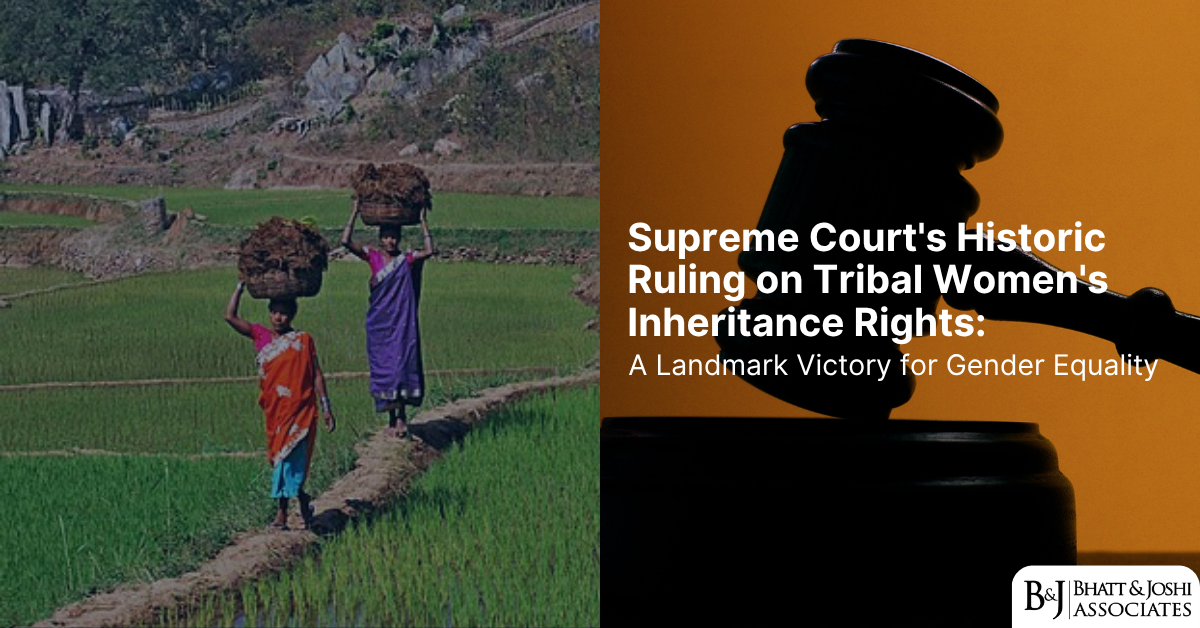
Supreme Court’s Historic Ruling on Tribal Women’s Inheritance Rights: A Landmark Victory for Gender Equality
Introduction
The Supreme Court of India delivered a groundbreaking judgment on July 17, 2025, that fundamentally transformed the inheritance rights landscape for tribal women across the country. The bench comprising Justice Sanjay Karol and Justice Joymalya Bagchi ruled that tribal women and their legal heirs are entitled to equal shares in ancestral property, marking a watershed moment in India’s journey toward gender equality and constitutional justice [1]. This judgment is now being seen as a turning point in the legal recognition of tribal women’s inheritance rights in India, addressing a long-standing gap in the country’s property and succession laws. The case emerged from a dispute involving Dhaiya, a tribal woman whose children sought equal inheritance rights in their maternal grandfather’s property. The ruling not only resolved the individual grievance but also established a broader precedent that challenges patriarchal customs and affirms the constitutional principles of equality and non-discrimination.
Background and Legal Context
The Case of Dhaiya and the Genesis of the Judgment
The case that led to this historic ruling originated when Dhaiya’s children, representing her legal heirs, approached the Supreme Court seeking equal inheritance rights in ancestral property. The family’s male heirs had categorically denied this claim, citing customary practices that excluded women from succession and inheritance rights within their tribal community.
Dhaiya’s legal journey began in lower courts, where her plea for equal inheritance rights was consistently rejected. Two lower courts had denied her petition, requiring her to prove the existence of a custom that would allow women to inherit property rather than placing the burden on male heirs to demonstrate the legal validity of exclusionary practices. This flawed approach in the lower courts became a central point of criticism in the Supreme Court’s eventual judgment.
The Supreme Court’s intervention became necessary when it became apparent that the lower courts had fundamentally misapplied the burden of proof. The apex court recognized that requiring a woman to prove her right to inherit, rather than requiring those who sought to exclude her to justify such exclusion, violated basic principles of justice and equality enshrined in the Constitution.
Constitutional Framework and Legal Principles
The Supreme Court’s judgment was anchored in fundamental constitutional principles, particularly Article 14 and Article 15 of the Indian Constitution. Article 14 guarantees equality before the law and equal protection of laws to all persons within the territory of India. Article 15 specifically prohibits discrimination on grounds of religion, race, caste, sex, or place of birth [2].
The court’s opening observation captured the essence of the constitutional imperative: “One would think that in this day and age, where great strides have been made in realising the constitutional goal of equality, this Court would not need to intervene for equality between the successors of a common ancestor, and the same should be a given, irrespective of their biological differences… but it is not so.”
This statement reflects the court’s recognition that despite decades of constitutional governance and legal reform, gender-based discrimination in inheritance matters persists, particularly within marginalized communities like Scheduled Tribes. The judgment emphasizes that constitutional principles must prevail over discriminatory customs, regardless of their historical or cultural significance.
The Hindu Succession Act and Tribal Communities
Statutory Framework and Exemptions
The Hindu Succession Act, 1956, serves as the primary legislation governing inheritance rights for Hindus, Buddhists, Jains, and Sikhs in India. However, Section 2(2) of the Act specifically exempts Scheduled Tribes from its purview unless the Central Government directs otherwise through official notification [3]. This exemption was designed to preserve tribal autonomy and protect customary laws that govern tribal communities.
The statutory exemption reads: “Sub-section (2) of Section 2 of the Hindu Succession Act significantly provides that nothing contained in the Act shall apply to the members of any Scheduled Tribe within the meaning of clause (25) of Article 366 of the Constitution unless otherwise directed by the Central Government by means of a notification in the Official Gazette.”
This exemption was affirmed by the Supreme Court in its 1996 judgment in Madhu Kishwar versus State of Bihar, which recognized the special constitutional status of tribal communities and their right to be governed by customary laws in matters of personal law, including succession and inheritance [4].
Implications of the Exemption
The exemption of Scheduled Tribes from the Hindu Succession Act created a legal vacuum that often worked to the disadvantage of tribal women. While the Act, particularly after its 2005 amendment, granted equal inheritance rights to daughters and sons in Hindu families, tribal women remained subject to customary laws that frequently discriminated against them.
The Supreme Court in the current judgment acknowledged this disparity while emphasizing that exemption from the Hindu Succession Act could not automatically deprive tribal women of their inheritance rights. The court stated that the exemption was meant to preserve tribal autonomy, not to perpetuate gender-based discrimination that violates constitutional principles.
Legal Analysis and Judicial Reasoning
Application of Justice, Equity, and Good Conscience
The Supreme Court’s judgment extensively relied on the principle of “justice, equity, and good conscience,” a fundamental tenet of Indian jurisprudence that guides courts when statutory law provides inadequate guidance. Justice Karol, writing for the bench, emphasized that courts must exercise these principles when confronted with customs that deny women their rightful inheritance.
The court observed: “When applying the principle of justice, equity and good conscience, the courts have to be vigilant in ensuring that discrimination against women is not perpetuated under the garb of customs or traditions.” This principle becomes particularly relevant in cases involving tribal communities where customary laws may conflict with constitutional guarantees of equality.
The application of justice, equity, and good conscience in this context serves as a bridge between constitutional principles and customary practices. The court recognized that while customs deserve respect and protection, they cannot be used as shields to perpetuate discrimination that violates fundamental rights guaranteed by the Constitution.
Burden of Proof and Evidentiary Standards
One of the most significant aspects of the Supreme Court’s judgment was its critique of the evidentiary burden placed on Dhaiya by the lower courts. The Supreme Court noted that the lower courts had erroneously required Dhaiya to prove the existence of a custom allowing women to inherit, rather than requiring the male heirs to demonstrate the legal validity of exclusionary practices.
The court established that when inheritance rights are disputed, the burden of proof should not fall on those seeking equal treatment but rather on those who claim the right to exclude others based on discriminatory customs. This shift in evidentiary burden represents a significant advancement in protecting the rights of marginalized individuals within tribal communities.
The judgment states: “The Supreme Court acknowledged Dhaiya had been unable to establish a custom of female succession, but said it was equally true that no custom to the contrary could be proved.” This observation highlights the court’s recognition that the absence of evidence supporting women’s inheritance rights does not automatically validate discriminatory practices.
Evolution of Customs and Legal Adaptation
The Supreme Court’s judgment contains a profound observation about the evolutionary nature of customs and their relationship with contemporary legal principles. Justice Karol noted: “Like law, customs also cannot be bound by time. Others cannot be allowed to take refuge in customs or hide behind them to deprive others of their rights.”
This statement reflects the court’s understanding that customs, while deserving of respect, must adapt to changing social and legal realities. The judgment emphasizes that customs that perpetuate discrimination cannot claim immunity from constitutional scrutiny simply because of their historical prevalence.
The court’s approach represents a balanced perspective that respects cultural diversity while ensuring that cultural practices conform to constitutional principles. This balance is particularly important in the context of tribal communities, where the tension between tradition and modernity often manifests in legal disputes over inheritance rights.
Regulatory Framework and Implementation
Central Government’s Role and Notification Powers
The Supreme Court’s judgment implicitly calls for greater Central Government involvement in regulating inheritance rights within tribal communities. Under Section 2(2) of the Hindu Succession Act, the Central Government possesses the power to extend the Act’s provisions to Scheduled Tribes through official notifications.
The court’s judgment suggests that the Central Government should consider exercising this power to ensure that tribal women receive equal inheritance rights. Such notifications would provide a statutory framework for inheritance rights while respecting the autonomy of tribal communities to maintain their cultural practices in other areas.
The regulatory framework would need to balance several competing interests: constitutional guarantees of equality, tribal autonomy protected under various constitutional provisions, and the practical realities of implementing uniform inheritance laws across diverse tribal communities with varying customs and practices.
State-Level Implementation and Monitoring
The implementation of the Supreme Court’s judgment requires coordinated efforts at both central and state levels. State governments, particularly those with significant tribal populations, must ensure that local courts and administrative officials understand and implement the new legal standard established by the Supreme Court.
State-level implementation would involve training judicial officers, revenue officials, and other administrators who deal with inheritance disputes in tribal areas. Additionally, legal aid programs would need to be strengthened to ensure that tribal women can access the legal system to enforce their newly recognized rights.
The regulatory framework must also address practical challenges such as documentation of property ownership, resolution of existing disputes, and prevention of future discrimination. These challenges require a comprehensive approach that combines legal reform with social awareness programs and institutional capacity building.
Impact on Gender Equality and Social Justice
Transformative Potential of the Judgment
The Supreme Court’s ruling represents more than a legal victory; it embodies a transformative potential that could reshape gender relations within tribal communities across India. By establishing tribal women’s inheritance rights, the judgment challenges deeply entrenched patriarchal structures that have historically marginalized women within these communities.
The transformative impact extends beyond individual cases to encompass broader social change. When women possess equal inheritance rights, they gain economic independence and social status that can positively influence their roles within families and communities. This economic empowerment can lead to improved decision-making power, better access to education and healthcare, and enhanced overall quality of life.
The judgment also sends a powerful message about the universality of constitutional principles. It demonstrates that equality and non-discrimination are not merely aspirational goals but enforceable rights that apply to all citizens, regardless of their community affiliation or cultural background.
Addressing Historical Injustices
The Supreme Court’s judgment represents a significant step toward addressing historical injustices faced by tribal women. For generations, these women have been denied equal inheritance rights based on customs that reflected patriarchal power structures rather than legitimate cultural practices.
The court’s recognition of tribal women’s inheritance rights acknowledges that gender equality is not a modern Western concept imposed on traditional societies but rather a fundamental human right that transcends cultural boundaries. This recognition helps correct historical narratives that have portrayed gender discrimination as an integral part of tribal culture.
The judgment also provides a foundation for addressing other forms of gender-based discrimination within tribal communities. By establishing that customs cannot override constitutional principles, the court has created a legal framework that can be applied to other areas where tribal women face discrimination.
Comparative Analysis with Other Inheritance Laws
Hindu Succession Act Amendments and Their Impact
The 2005 amendment to the Hindu Succession Act granted daughters equal inheritance rights with sons in Hindu families, representing a significant advancement in women’s property rights. However, the exemption of Scheduled Tribes from the Act’s purview meant that tribal women did not automatically benefit from these progressive changes.
The Supreme Court’s current judgment effectively extends the spirit of the 2005 amendment to tribal communities, ensuring that tribal women receive similar protection against inheritance discrimination. This extension is achieved not through direct application of the Hindu Succession Act but through constitutional principles that mandate equal treatment.
The comparative analysis reveals that while Hindu women gained statutory protection against inheritance discrimination through legislative amendment, tribal women have achieved similar protection through judicial interpretation of constitutional principles. This difference in approach reflects the complex relationship between statutory law, customary practices, and constitutional guarantees in India’s diverse legal landscape.
International Human Rights Standards
The Supreme Court’s judgment aligns with international human rights standards that recognize women’s equal inheritance rights as fundamental human rights. The Convention on the Elimination of All Forms of Discrimination Against Women (CEDAW), to which India is a signatory, specifically addresses inheritance discrimination and requires states to ensure equal rights for women in property matters [5].
The judgment demonstrates India’s commitment to international human rights obligations while respecting cultural diversity. By grounding its decision in constitutional principles rather than imposing external standards, the court has achieved compliance with international norms while maintaining the legitimacy of its ruling within the Indian legal system.
Challenges and Future Implications
Implementation Challenges
Despite the Supreme Court’s clear ruling, implementation of tribal women’s inheritance rights faces several practical challenges. These challenges include resistance from traditional power structures within tribal communities, lack of awareness about legal rights among tribal women, and inadequate legal infrastructure in remote tribal areas.
The implementation process must address these challenges through comprehensive strategies that combine legal reform with social awareness programs. Legal aid organizations, women’s rights groups, and tribal welfare departments must work together to ensure that the court’s ruling translates into practical benefits for tribal women.
Documentation and proof of inheritance claims present additional challenges in tribal areas where formal property records may be incomplete or non-existent. The implementation framework must address these documentation challenges while ensuring that procedural requirements do not become barriers to accessing inheritance rights.
Future Legal Developments
The Supreme Court’s judgment is likely to influence future legal developments in several related areas. Courts may apply similar reasoning to other forms of gender-based discrimination within tribal communities, potentially leading to broader reforms in tribal personal laws.
The judgment may also prompt legislative action to formally extend tribal women’s inheritance rights in India through amendments to existing laws or enactment of new legislation specifically addressing tribal women’s rights. Such legislative developments would provide additional statutory protection beyond the constitutional principles established in this judgment.
Future legal developments may also address the intersection between tribal autonomy and individual rights, potentially leading to more nuanced frameworks that respect cultural diversity while protecting fundamental rights. These developments could serve as models for other jurisdictions grappling with similar tensions between traditional practices and modern legal standards.
Conclusion
The Supreme Court’s judgment on tribal women’s inheritance rights represents a landmark victory for gender equality and constitutional justice in India. By establishing that tribal women and their legal heirs are entitled to equal shares in ancestral property, the court has taken a significant step toward eliminating gender-based discrimination in one of the most marginalized communities in Indian society.
The judgment’s significance extends beyond its immediate impact on inheritance rights to encompass broader principles of equality, justice, and human dignity. It demonstrates that constitutional principles must prevail over discriminatory customs, regardless of their historical or cultural significance. The court’s reasoning provides a framework for addressing other forms of discrimination while respecting cultural diversity and community autonomy.
The successful implementation of this judgment will require sustained efforts from government agencies, legal aid organizations, and civil society groups. These stakeholders must work together to ensure that the court’s ruling translates into practical benefits for tribal women across India. The judgment’s ultimate success will be measured not only by its legal impact but also by its contribution to broader social transformation within tribal communities.
As India continues its journey toward gender equality and social justice, the Supreme Court’s ruling on tribal women’s inheritance rights will be remembered as a pivotal moment when the highest court of the land affirmed that constitutional principles of equality and non-discrimination apply to all citizens, regardless of their community affiliation or cultural background. The judgment represents both an end and a beginning: an end to centuries of discrimination and a beginning of a more equitable future for tribal women and their families.
References
[1] ‘Excluding Female Heirs From Inheritance Discriminatory’: Supreme Court Allows Tribal Women Equal Succession Rights As Men. Available at: https://www.livelaw.in/supreme-court/excluding-female-heirs-from-inheritance-discriminatory-supreme-court-allows-tribal-women-equal-succession-rights-as-men-297937
[2] Constitution of India. (1950). Article 14 and Article 15.
[3] The Hindu Succession Act, 1956. Section 2(2).
[4] Madhu Kishwar v. State of Bihar, (1996) 5 SCC 125.
[5] United Nations. (1979). Convention on the Elimination of All Forms of Discrimination Against Women. Available at: https://www.ohchr.org/en/instruments-mechanisms/instruments/convention-elimination-all-forms-discrimination-against-women
[6] The Print. (2025, January 24). SC grants inheritance rights to ST women via 1875 law, urges Centre to amend their succession laws. Available at: https://theprint.in/judiciary/sc-grants-inheritance-rights-to-st-women-via-1875-law-urges-centre-to-amend-their-succession-laws/2413607/
