Whatsapp

Customs Valuation under the Customs Act, 1962

Introduction
The valuation of imported and exported goods forms the bedrock of customs administration in India. Under the Customs Act, 1962, the determination of accurate customs value is not merely a procedural requirement but the fundamental basis upon which the entire customs duty structure operates. This framework ensures that duties are levied fairly, revenue collection remains transparent, and international trade obligations under the World Trade Organization are fulfilled. The legislative architecture governing valuation of custom duty in India represents a careful balance between revenue protection and trade facilitation, incorporating international best practices while addressing domestic commercial realities.
The Customs Act, 1962 provides the statutory foundation for valuation procedures, with Section 14 serving as the principal provision that defines how goods shall be valued for customs purposes [1]. This provision underwent significant transformation in 2007 when India aligned its valuation methodology with global standards, moving from a deemed value concept to transaction value as the primary basis of assessment. This shift represented not just a technical change in valuation methodology but a fundamental reorientation towards accepting commercial reality as reflected in actual transactions between buyers and sellers.
Legislative Framework and International Foundations
The valuation of custom duty provisions under Indian customs law are deeply rooted in international trade agreements. Section 14 of the Customs Act, 1962, as amended in 2007, aligns with Article VII of the General Agreement on Tariffs and Trade (GATT) 1994 and the Agreement on Implementation of Article VII of GATT 1994 [2]. This international framework was developed to ensure that customs valuation systems worldwide operate on uniform, fair, and neutral principles, preventing arbitrary or fictitious valuations that could serve as non-tariff barriers to international trade.
The Agreement on Customs Valuation, concluded during the Uruguay Round of multilateral trade negotiations, established transaction value as the primary basis for customs valuation globally. India incorporated these principles by enacting the Customs Valuation (Determination of Value of Imported Goods) Rules, 2007 and the Customs Valuation (Determination of Value of Export Goods) Rules, 2007, both of which came into force on October 10, 2007 [3]. These rules replaced the earlier 1988 valuation rules and represented a paradigm shift in how customs authorities approach valuation disputes.
Transaction Value under Section 14
Section 14(1) of the Customs Act, 1962 establishes transaction value as the cornerstone of customs valuation. The provision states that for the purposes of the Customs Tariff Act, 1975, or any other law for the time being in force, the value of imported goods and export goods shall be the transaction value of such goods, that is to say, the price actually paid or payable for the goods when sold for export to India for delivery at the time and place of importation, or as the case may be, for export from India for delivery at the time and place of exportation, where the buyer and seller of the goods are not related and price is the sole consideration for the sale [4].
This provision establishes three critical requirements for accepting transaction value. First, the buyer and seller must not be related persons as defined under the Customs Valuation Rules, 2007. Second, the price must be the sole consideration for the sale, meaning no additional conditions or considerations can influence the transaction. Third, the transaction must represent a genuine commercial sale for export to or from India at the relevant time and place. Where these conditions are satisfied, customs authorities are bound to accept the declared transaction value as the assessable value for duty calculation.
The proviso to Section 14(1) further clarifies that transaction value in the case of imported goods shall include, in addition to the price, any amount paid or payable for costs and services including commissions and brokerage, engineering and design work, royalties and license fees, costs of transportation to the place of importation, insurance, loading, unloading and handling charges to the extent and in the manner specified in the rules [4]. This inclusive definition ensures that all costs associated with bringing goods to India are captured in the customs value, preventing undervaluation through artificial separation of transaction elements.
Hierarchical Valuation Methods under the 2007 Rules
The Customs Valuation Rules, 2007 prescribe a sequential methodology for determining customs value when transaction value cannot be accepted. Rule 3 of the Customs Valuation (Determination of Value of Imported Goods) Rules, 2007 reiterates that transaction value shall be the primary method of valuation. However, when transaction value is rejected or cannot be determined, the rules provide alternative methods that must be applied in strict hierarchical order.
Rule 4 provides for valuation of custom duty based on transaction value of identical goods. Under this rule, the customs value shall be the transaction value of identical goods sold for export to India and imported at or about the same time as the goods being valued [5]. Identical goods are defined as goods which are same in all respects including physical characteristics, quality and reputation, produced in the same country by the same person who produced the goods being valued. This method requires contemporaneous imports and similarity in commercial level and quantity, with adjustments made for demonstrated differences.
When identical goods cannot be identified, Rule 5 permits valuation based on similar goods. Similar goods must be commercially and functionally interchangeable with the goods being valued, though minor differences in appearance are permissible provided they do not affect value. Like identical goods valuation, this method requires imports at or about the same time with appropriate adjustments for commercial and quantity level differences.
Rule 7 introduces the deductive value method, which bases valuation on the unit price at which the imported goods or identical or similar goods are sold in India in the greatest aggregate quantity to persons not related to the sellers. This method requires deductions for commissions, profits, transportation costs within India, and customs duties paid. Rule 8 provides the computed value method, which builds up value from the cost of materials, fabrication costs, profit and general expenses, and other costs incurred by the producer.
Finally, Rule 9 establishes the residual or fallback method, applicable when value cannot be determined under any of the preceding rules. This method allows reasonable flexibility in applying the earlier methods, consistent with the principles and general provisions of the Valuation Rules and Article VII of GATT 1994. The sequential nature of these methods is mandatory, and customs authorities cannot arbitrarily skip methods or apply them out of order, though Rule 6 permits reversal of the order of Rules 7 and 8 at the importer’s request.
Related Party Transactions and of Valuation of Custom Duty
One of the most contentious areas in customs valuation involves transactions between related parties. Rule 2(2) of the Customs Valuation Rules, 2007 defines when persons shall be deemed to be related. The criteria include situations where they are officers or directors of each other’s businesses, legally recognized partners, employer and employee relationships, direct or indirect ownership of five percent or more of outstanding voting stock or shares, one party controlling the other, both being controlled by a third party, or together controlling a third party. Additionally, sole agents, sole distributors, or sole concessionaires are deemed related if they fall within these criteria.
Where buyer and seller are related, transaction value can still be accepted under Rule 3(3) if the examination of circumstances indicates that the relationship did not influence the price. Alternatively, the importer can demonstrate that the declared value closely approximates one of several test values: the transaction value of identical or similar goods in sales to unrelated buyers in India, the deductive value for identical or similar goods, or the computed value for identical or similar goods [5]. These test values must be ascertained at or about the same time, with adjustments for demonstrated differences in commercial levels and quantities.
The burden of demonstrating that the relationship has not influenced the price rests with the importer. This can be accomplished through various means including showing that the price was determined in a manner consistent with normal pricing practices of the industry, that the price was adequate to ensure recovery of all costs plus a representative profit, or through other objective evidence that the relationship did not distort the transaction value.
Rejection of Declared Value and Rule 12
Rule 12 of the Customs Valuation (Determination of Value of Imported Goods) Rules, 2007 provides the mechanism for rejection of declared transaction value. This rule, which represents India’s implementation of WTO Ministerial Decision 6.1, applies when the proper officer has reason to doubt the truth or accuracy of the value declared in relation to imported goods. The officer may request further information including documents or other evidence, and if after receiving such information or in absence of response the officer still has reasonable doubt, the transaction value shall be deemed to have not been determined in accordance with Rule 3(1).
Importantly, Rule 12 does not provide a method for determination of value but merely establrates a mechanism and procedure for rejection of declared value in cases of suspected valuation fraud. Where declared value is rejected under this rule, the value must be determined by proceeding sequentially through Rules 4 to 9. The rule requires customs authorities to communicate grounds for doubting the declared value in writing and provide reasonable opportunity of being heard before taking final decision.
The application of Rule 12 has been subject to extensive judicial scrutiny. Customs authorities cannot reject transaction value arbitrarily or based solely on database comparisons without establishing concrete reasons for doubt. The rejection must be based on objective evidence and material facts, not mere suspicion or departure from average values in customs databases.
Tariff Value Provisions
Section 14(2) of the Customs Act empowers the Central Board of Indirect Taxes and Customs to fix tariff values for any class of imported or export goods by notification in the Official Gazette, having regard to the trend of value of such or like goods. Where tariff values are fixed, duty shall be chargeable with reference to such tariff value rather than transaction value [6]. This mechanism represents an exception to the transaction value principle and is resorted to only in specific circumstances where market price fluctuations are significant and have economic impact.
Tariff value fixation serves as an administrative convenience in situations where determining individual transaction values would be impractical or where there is widespread evidence of systematic undervaluation in particular commodity categories. However, the power to fix tariff values must be exercised judiciously and based on proper market analysis, as it overrides the transaction value principle that forms the foundation of the WTO Valuation Agreement. Currently, tariff values are notified for limited categories of goods including certain edible oils and brass scrap.
Judicial Interpretation and Landmark Cases
The Supreme Court of India has played a crucial role in shaping valuation of custom duty jurisprudence, particularly in interpreting Section 14 post-2007 amendment. In the landmark case of Commissioner of Central Excise and Service Tax, Noida v. Sanjivani Non-Ferrous Trading Pvt. Ltd., the Court emphasized that Section 14(1) creates a deeming provision requiring the assessing officer to normally act on the basis of price actually paid and treat the same as assessable value or transaction value of goods [7]. The Court held that this principle is reinforced by Rules 3(1) and 4(1) of the Customs Valuation Rules, which mandate acceptance of price actually paid or payable as transaction value.
The Court further clarified that exceptions to transaction value acceptance are carved out in Rule 4(2), which permits rejection only when there are imports of identical or similar goods at higher prices at around the same time, or when buyers and sellers are related. Critically, the Court held that in order to invoke such provisions, it is incumbent upon the assessing officer to give reasons supported by material evidence explaining why transaction value declared in bills of entry is being rejected, to establish that price is not the sole consideration, and to justify the alternative assessable value arrived at.
The Sanjivani decision represented a watershed moment in customs valuation law by placing a clear burden on customs authorities to evidentially establish grounds for rejection of transaction value. The judgment emphasized that charges of underinvoicing must be supported by evidence of prices of contemporaneous imports of like goods, stating that it is for the department to prove that the apparent is not the real. This principle has been consistently followed in subsequent decisions and has significantly reduced arbitrary rejections of transaction value.
In South India Television (P) Ltd., the Supreme Court had earlier explained the distinction between value and price in customs valuation context, holding that value in export declaration may be relied upon for ascertainment of assessable value under Customs Valuation Rules but not for determining the price at which goods are ordinarily sold at time and place of importation [8]. This conceptual clarification helped establish that customs valuation must be anchored in actual commercial transactions rather than notional or theoretical values.
Regulation of Valuation Disputes and Procedural Safeguards
The Customs Act, 1962 provides multiple procedural safeguards to ensure fair determination of customs value. Section 17 governs assessment of duty, requiring proper officers to verify self-assessed bills of entry and reassess when necessary based on examination of goods or testing. Section 17(5) mandates that when reassessment results in any duty becoming payable, the proper officer shall issue a speaking order specifying grounds for such reassessment.
Section 18 provides for provisional assessment when the proper officer deems it necessary either on account of inability to determine value, classification, exemption, or at the request of importer or exporter. Provisional assessment allows goods to be cleared while valuation or classification issues are resolved, with final assessment to be done subsequently. The importer or exporter must execute a bond with surety or security for payment of differential duty that may be finally determined.
Section 28 contains provisions for recovery of duties not levied or short-levied or erroneously refunded. The section distinguishes between normal cases, cases involving fraud or collusion or willful misstatement or suppression of facts, and cases involving interpretation issues. Different limitation periods apply to these categories, with extended limitation of five years applicable in cases involving fraud or willful misstatement. The issuance of show cause notice is mandatory before demanding differential duty, and the assessing officer must provide opportunity of hearing and pass reasoned orders.
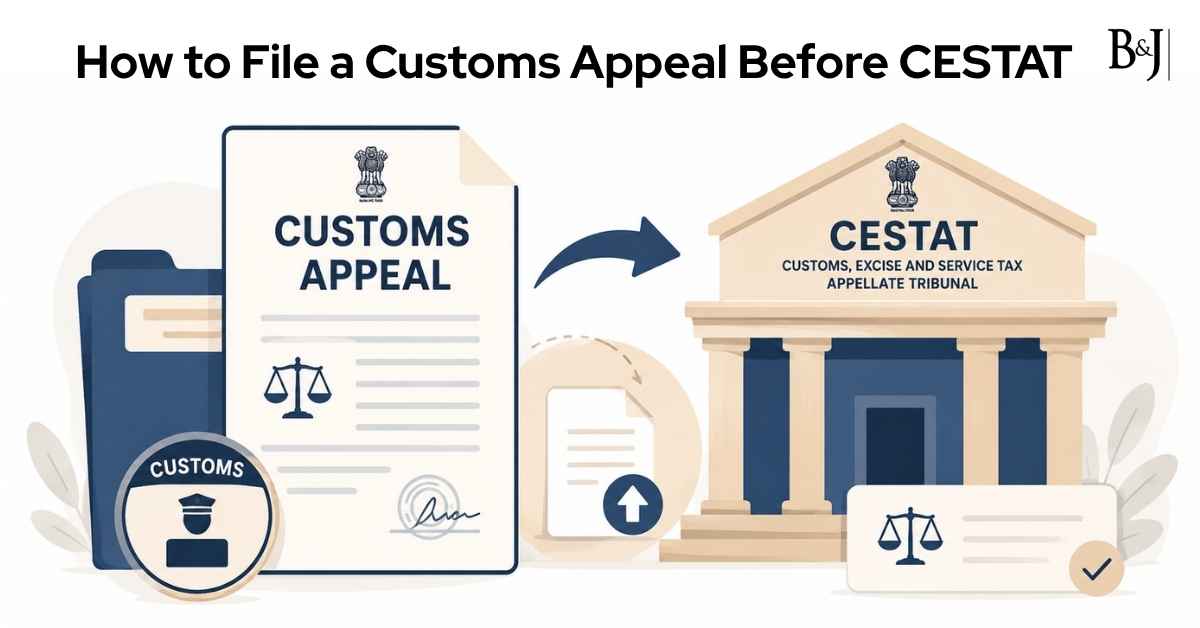
The appellate framework under the Customs Act provides multiple tiers of review. Section 128 provides for appeals to Commissioner (Appeals) against decisions of officers of customs. Section 129A creates appeals to the Customs, Excise and Service Tax Appellate Tribunal (CESTAT) against orders of Commissioner (Appeals) or certain other authorities. Further appeals lie to High Courts and ultimately to the Supreme Court under Article 136 of the Constitution of India.
Valuation of Export Goods
Modern customs administration faces unique challenges in valuation determination. The proliferation of e-commerce and digital trade has created situations where traditional valuation methods may not easily apply. Cross-border e-commerce often involves small value consignments, related party transactions through group companies, and complex pricing structures including platform fees, logistics charges, and marketing costs. Customs authorities must adapt valuation principles to these new business models while maintaining fidelity to statutory requirements.
For export goods, transaction value typically represents the FOB (Free on Board) value, which includes the cost of goods and all charges up to the point of loading on the vessel or aircraft for export. Unlike import valuation where CIF (Cost, Insurance, Freight) considerations apply, export valuation focuses on the value at which goods leave Indian territory. Rule 8 of the Export Valuation Rules provides for rejection of declared value when the proper officer has reason to doubt its truth or accuracy, following procedures similar to Rule 12 of Import Valuation Rules.
Export valuation assumes particular significance in the context of export incentive schemes such as duty drawback, Merchandise Exports from India Scheme (MEIS) under the now-defunct Foreign Trade Policy provisions, and other value-linked benefits. Overvaluation of exports to claim higher incentives attracts serious consequences including confiscation of goods, penalties, and potential prosecution. Customs authorities must therefore scrutinize export valuations carefully while ensuring genuine exporters are not harassed through unreasonable demands or procedural delays.
Contemporary Challenges and Compliance Requirements
Modern customs administration faces unique challenges in valuation determination for customs duty. The proliferation of e-commerce and digital trade has created situations where traditional valuation methods may not easily apply. Cross-border e-commerce often involves small value consignments, related party transactions through group companies, and complex pricing structures including platform fees, logistics charges, and marketing costs. Customs authorities must adapt valuation principles to these new business models while maintaining fidelity to statutory requirements.
Transfer pricing between related entities operating in different jurisdictions presents another area of complexity. While customs authorities must determine value for duty purposes, the same transactions may be subject to income tax transfer pricing regulations. Although the legal frameworks and objectives differ, importers and exporters must navigate both regimes, often requiring careful documentation and pricing policies that satisfy requirements under both laws.
The National Import Database (NIDB) maintained by the Directorate of Valuation serves as a reference tool for customs authorities, containing information on import values across different ports and time periods. However, judicial decisions have consistently held that NIDB data alone cannot justify rejection of transaction value. In Century Metal Recycling Pvt. Ltd. v. Union of India, the Supreme Court held that enhancement of value solely based on database comparisons without investigation of actual transactions or quality differences is impermissible. Customs authorities must establish contemporaneity, identity or similarity of goods, and account for quality differences before relying on comparative values.
Conclusion
The valuation framework under the Customs Act, 1962 represents a sophisticated legal regime balancing multiple objectives including revenue collection, trade facilitation, compliance with international obligations, and protection against misdeclaration. The 2007 reforms aligned Indian law with global best practices while retaining mechanisms to address valuation fraud and manipulation. The hierarchical valuation methodology ensures that customs value determination follows objective, verifiable criteria rather than arbitrary assessments.
Judicial interpretation, particularly by the Supreme Court in decisions like Sanjivani Non-Ferrous Trading, has reinforced the primacy of transaction value and placed appropriate burdens of proof on customs authorities when challenging declared values. This jurisprudence has brought greater certainty and predictability to customs valuation, reducing unnecessary litigation and facilitating legitimate trade. The regulatory framework continues to evolve in response to changing trade patterns, technological developments, and emerging compliance challenges, while maintaining fidelity to core principles of fairness, transparency, and adherence to actual commercial reality.
References
[1] Customs Act, 1962, Section 14. Available at: https://indiankanoon.org/doc/368047/
[2] Directorate General of Valuation. Brief on Valuation. Available at: https://dov.gov.in/brief-valuation
[3] Customs Valuation (Determination of Value of Imported Goods) Rules, 2007. Available at: https://upload.indiacode.nic.in/showfile?actid=AC_CEN_2_2_00042_196252_1534829466423&type=rule&filename=Customs+Valuation+Determination+of+Value+of+Imported+Goods+Rules++2007.pdf
[4] Customs Act 1962, Chapter 5, Section 14. Available at: https://web.lawcrux.com/newversion/web/Assets/data5t/cu/cuacts/cuacts62_14.htm
[5] Customs Valuation (Determination of Value of Imported Goods) Amendment Rules, 2007.
[6] TaxGuru. Customs Valuation under Customs Act, 1962. Available at: https://taxguru.in/custom-duty/customs-valuation-under-customs-act-1962.html
[7] Commissioner of Central Excise and Service Tax, Noida v. Sanjivani Non-Ferrous Trading Pvt. Ltd., (2019) 2 SCC 378. Available at: https://indiankanoon.org/doc/105048115/
[8] SCC Times. Customs Valuation between unrelated parties: Supreme Court clarifies the legal position. Available at: https://www.scconline.com/blog/post/2019/06/11/customs-valuation-between-unrelated-parties-supreme-court-clarifies-the-legal-position/

Advocate Aaditya Bhatt
Senior Standing Counsel Income Tax Department, Advocate Gujarat High Court. Aaditya combines his technical and legal expertise to deliver strategic counsel in litigation, constitutional, and regulatory matters. He represents clients before High Courts and Tribunals with a technology-driven approach.