 Whatsapp

Constitutional Pathways for Renaming India as Bharat: A Legal Analysis
Introduction
After having navigated through the legal, historical, and cultural landscapes of renaming India as “Bharat” in the previous installments, Part 4 will explore an alternative yet significant legal avenue: the constitutional resolution. While Parts 1 and Part 2 laid the groundwork by discussing the diplomatic, cultural, and historical implications, and Part 3 focused on the complexities of the constitutional amendment process under Article 368 of the Constitution of India, 1950, this legal analysis examines the constitutional mechanisms available for such a transformation, focusing on Article 368 of the Constitution of India and the established jurisprudential framework governing constitutional amendments. The question transcends mere nomenclature, touching upon fundamental aspects of national identity, constitutional interpretation, and the limits of parliamentary power.
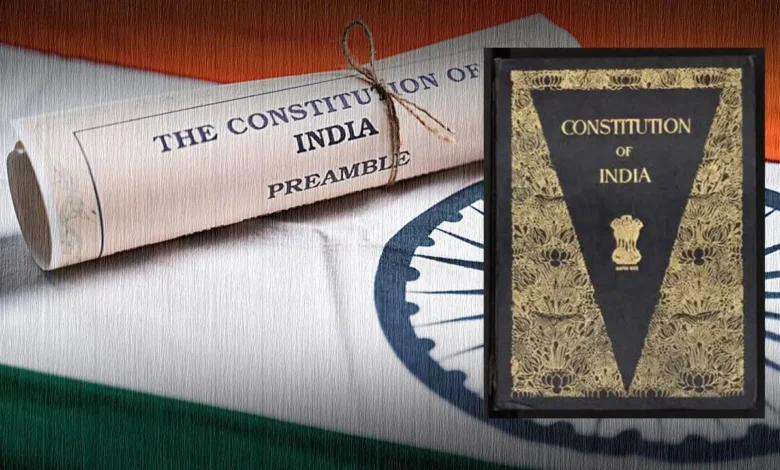
Constitutional Resolution: A Simpler Path?
The Constitution of India, in its Article 1, declares that “India, that is Bharat, shall be a Union of States” [1]. This dual nomenclature has existed since the Constitution’s inception in 1950, creating a unique legal framework where both names possess equal constitutional validity. However, any formal change to prioritize one name over another or eliminate the dual nomenclature would require careful constitutional consideration.
Constitutional Framework for Amendment
Article 368: The Constitutional Amendment Power
Article 368 of the Constitution provides the exclusive power to Parliament to amend the Constitution [2]. The provision states: “Notwithstanding anything in this Constitution, Parliament may in exercise of its constituent power amend by way of addition, variation or repeal any provision of this Constitution in accordance with the procedure laid down in this article.” This power, however, is not unlimited and operates within specific constraints established through judicial interpretation.
The amendment process under Article 368 requires a special majority, defined as a majority of the total membership of each House and by a majority of not less than two-thirds of the members present and voting [3]. For amendments affecting the federal structure, including provisions related to the Union’s name, additional ratification by at least half of the state legislatures becomes mandatory. This requirement reflects the federal character of the Indian Constitution and ensures that changes affecting the Union’s fundamental character receive broad consensus.
Categories of Constitutional Amendments
Constitutional amendments in India fall into three distinct categories, as established through judicial interpretation and constitutional practice. The first category involves amendments that can be passed by simple majority in Parliament, covering matters such as citizenship, elections, and certain administrative provisions. The second category requires special majority in Parliament and covers most constitutional provisions. The third category demands both special majority in Parliament and ratification by state legislatures, applicable to amendments affecting the federal structure, including the Union’s name and territorial integrity [4].
The proposed renaming of India as Bharat would fall under the third category of constitutional amendments, as it impacts the Union’s identity and federal character, thereby requiring ratification by at least half of the State legislatures.
Judicial Constraints: The Basic Structure Doctrine
Evolution of the Basic Structure Doctrine
The Supreme Court of India, through landmark judgments, has established that Parliament’s amending power under Article 368 is subject to implied limitations. The basic structure doctrine, first articulated in Kesavananda Bharati v. State of Kerala (1973) and refined in subsequent cases, holds that certain fundamental features of the Constitution cannot be altered even through the amendment process [5].
The doctrine gained further refinement in Minerva Mills Ltd. v. Union of India (1980), where the Supreme Court held that “the power of Parliament to amend the Constitution given by Article 368 does not include the power to destroy or emasculate the basic elements or fundamental features of the Constitution” [6]. This judgment struck down portions of the 42nd Amendment that had attempted to place constitutional amendments beyond judicial review, reaffirming that even constitutional amendments are subject to judicial scrutiny when they threaten the Constitution’s basic structure.
Implications for Name Change
The basic structure doctrine raises important questions about whether changing the country’s name could potentially violate fundamental constitutional principles. While the name change itself may not directly impact core constitutional features such as federalism, democracy, or fundamental rights, the process must be carefully evaluated to ensure it doesn’t undermine the Constitution’s essential character.
The Supreme Court has identified several elements as part of the basic structure, including the federal character of the Constitution, separation of powers, judicial review, and the balance between fundamental rights and directive principles [7]. Any amendment affecting the Union’s name must be crafted to preserve these fundamental features while achieving the desired nomenclatural change.
Legal Precedents and Constitutional Interpretation
Historical Amendments Affecting Union Structure
The Constitution has undergone numerous amendments affecting the Union’s territorial and structural aspects. The Seventh Amendment Act, 1956, reorganized states on linguistic basis, while the Thirty-first Amendment Act, 1973, increased the representation of Union Territories in Parliament. These precedents demonstrate that significant changes to the Union’s structure are constitutionally permissible when they follow proper procedures and maintain constitutional principles [8].
The constitutional amendment process has proven adaptable to changing national needs while preserving fundamental democratic principles. The successful passage of 106 amendments since 1950 demonstrates the Constitution’s flexibility and the viability of the amendment mechanism for addressing evolving national requirements [9].
International Practices and Comparative Analysis
Several nations have successfully changed their names through constitutional processes. Ceylon became Sri Lanka in 1972, Burma became Myanmar in 1989, and Rhodesia became Zimbabwe in 1980. These examples demonstrate that name changes, while significant, can be accomplished within established constitutional frameworks when proper procedures are followed and adequate consensus is achieved.
The Indian context presents unique considerations given the dual nomenclature already present in Article 1. Unlike other nations that completely replaced their names, India’s situation involves choosing between two constitutionally recognized names or modifying their relationship within the constitutional text.
Procedural Requirements and Legislative Process
Parliamentary Procedure
The constitutional amendment process begins with the introduction of a Constitution Amendment Bill in either House of Parliament. The Bill must be passed by each House with the requisite special majority before moving to the next stage. For amendments affecting the Union’s name, subsequent ratification by at least half of the state legislatures becomes mandatory [10].
The legislative process ensures thorough deliberation at multiple levels. Parliamentary debates allow comprehensive discussion of the proposed change’s implications, while state ratification ensures federal consensus. This multi-tiered approach reflects the Constitution’s federal character and protects against hasty decisions affecting national identity.
State Ratification Process
State legislature ratification occurs through simple resolutions and does not require the Governor’s assent. However, there is no specified time limit for state ratification, potentially creating procedural uncertainty. The Constitution does not address whether states can withdraw their ratification or what happens if some states initially refuse to ratify but later agree.
These procedural aspects require careful consideration when planning a name change amendment. Clear timelines and procedures for state consultation would facilitate smooth implementation and prevent legal complications during the ratification process.
Contemporary Legal and Political Considerations
Cultural and Legal Significance
The name “Bharat” carries profound cultural and historical significance, appearing in ancient texts and representing India’s civilizational heritage. From a legal perspective, both “India” and “Bharat” enjoy equal constitutional status under Article 1, making the renaming of India as Bharat primarily symbolic rather than a substantive alteration of constitutional provisions.
However, the symbolic importance should not be underestimated in constitutional law. Names and symbols form part of national identity and constitutional culture, influencing how citizens relate to their constitutional system. The legal framework must therefore accommodate both practical constitutional requirements and cultural considerations.
Implementation Challenges
Beyond constitutional amendment, implementing a name change would require extensive legal and administrative modifications. Thousands of statutes, rules, and regulations containing references to “India” would need updating. International treaties, agreements, and recognition would require attention, though these fall primarily under executive rather than constitutional authority.
The administrative complexity suggests that any name change amendment should include transition provisions and implementation timelines to ensure smooth legal continuity. Constitutional amendments typically include such provisions to prevent legal vacuum or uncertainty during implementation.
Alternative Constitutional Approaches
Limited Amendment Strategies
Rather than completely replacing “India” with “Bharat,” alternative approaches could modify Article 1 to prioritize “Bharat” while retaining dual nomenclature for international purposes. This approach might reduce implementation complexity while achieving the desired symbolic effect.
Another approach could involve constitutional amendments that emphasize “Bharat” in ceremonial and cultural contexts while maintaining “India” for international legal purposes. Such nuanced approaches require careful drafting to avoid constitutional ambiguity while achieving intended objectives.
Interpretive Evolution
Constitutional interpretation could evolve to emphasize “Bharat” without formal amendment through judicial interpretation and governmental practice. While this approach avoids amendment complexities, it lacks the clarity and permanence that formal constitutional change would provide.
The interpretive approach also raises questions about democratic legitimacy, as major changes to national identity arguably require explicit constitutional amendment rather than interpretive evolution. The formal amendment process ensures public debate and political consensus that interpretive changes might lack.
Conclusion
The constitutional pathway for renaming India as Bharat requires careful navigation of Article 368’s amendment process, including special majority requirements and state ratification. The basic structure doctrine, while not directly prohibiting such changes, requires that amendments preserve the Constitution’s fundamental features and democratic character.
Legal precedents demonstrate the viability of constitutional amendments affecting the Union’s character when proper procedures are followed and adequate consensus is achieved. The existing dual nomenclature in Article 1 provides a foundation for such changes while requiring careful attention to procedural requirements and implementation challenges.
The success of any name change initiative will depend on building broad political consensus, following constitutional procedures meticulously, and addressing practical implementation challenges. While legally feasible under existing constitutional frameworks, such changes require sustained political will and careful legal craftsmanship to achieve desired objectives while preserving constitutional integrity.
The debate over renaming India as Bharat ultimately reflects deeper questions about national identity, constitutional interpretation, and the relationship between law and culture in democratic societies. Whatever path is chosen, it must honor both constitutional requirements and democratic principles while serving the nation’s long-term interests and aspirations.
References
[1] Constitution of India, Article 1. Available at: https://www.indiacode.nic.in/bitstream/123456789/15240/1/constitution_of_india.pdf
[2] Constitution of India, Article 368. Available at: https://www.constitutionofindia.net/articles/article-368-power-of-parliament-to-amend-the-constitution-and-procedure-therefor/
[3] Basu, D.D. (2018). Introduction to the Constitution of India. LexisNexis.
[4] List of amendments of the Constitution of India. Available at: https://en.wikipedia.org/wiki/List_of_amendments_of_the_Constitution_of_India
[5] Kesavananda Bharati v. State of Kerala, AIR 1973 SC 1461. Available at: https://indiankanoon.org/doc/257876/
[6] Minerva Mills Ltd. v. Union of India, AIR 1980 SC 1789. Available at: https://indiankanoon.org/doc/1939993/
[7] Basic Structure Doctrine of Indian Constitution. Available at: https://byjus.com/free-ias-prep/landmark-cases-relating-basic-structure-constitution/
[8] The Constitution Amendment Acts. Available at: https://legislative.gov.in/the-constitution-amendment-acts/
[9] Amendment of the Constitution: Meaning, Provisions & More. Available at: https://www.nextias.com/blog/amendment-of-the-constitution/
[10] Constitutional Amendments in India, Types, Procedures. Available at: https://vajiramandravi.com/current-affairs/constitutional-amendments-in-india/
Authorized by Rutvik Desai
