 Whatsapp

Writ Jurisdiction Under Article 226: A Comprehensive Guide to Constitutional Remedies Before the Gujarat High Court
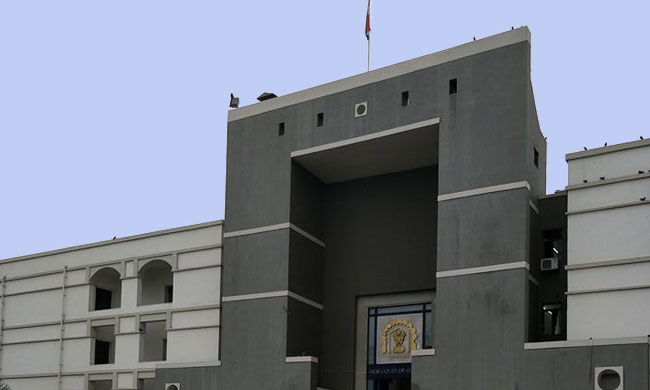
Introduction: The Foundation of Constitutional Remedies in India
The Indian Constitution represents one of the most elaborate frameworks for protecting fundamental and legal rights through judicial mechanisms. Among these protective instruments, the writ jurisdiction Under Article 226 stands as a powerful tool that enables citizens to seek direct relief from higher courts when their rights are violated or when governmental authorities act beyond their legal mandate. This article examines the writ jurisdiction exercised by the Gujarat High Court under Article 226 of the Indian Constitution, exploring its scope, types, procedural aspects, and the judicial principles that govern its application.
The framers of the Indian Constitution, drawing inspiration from both Anglo-Saxon legal traditions and the need for robust constitutional safeguards, incorporated provisions that allow High Courts to issue various types of writs for the enforcement of fundamental rights guaranteed under Part III of the Constitution, as well as for other legal purposes. Unlike the Supreme Court’s jurisdiction under Article 32, which is limited to fundamental rights violations, High Courts possess broader powers under Article 226 to address both fundamental and ordinary legal rights.[1]
The Constitutional Framework: Article 226 and Its Scope
Article 226 of the Indian Constitution confers upon every High Court the power to issue directions, orders, or writs, including writs in the nature of habeas corpus, mandamus, prohibition, quo warranto, and certiorari, for the enforcement of fundamental rights and for any other purpose. This provision creates a constitutional court of first instance for citizens seeking protection against executive excesses or judicial errors by subordinate authorities. The territorial jurisdiction of each High Court extends to the entire state or states under its purview, which in the case of the Gujarat High Court, encompasses the entire state of Gujarat.[2]
The scope of Article 226 is significantly wider than that of Article 32, which exclusively deals with fundamental rights enforcement through the Supreme Court. While Article 32 itself is a fundamental right and the Supreme Court cannot refuse to exercise this jurisdiction when fundamental rights are violated, the exercise of power under Article 226 is discretionary. Courts have consistently held that High Courts may refuse to entertain writ petitions on various grounds, including the availability of alternative remedies, delay and laches, or when the petitioner has not approached the court with clean hands.
The landmark judgment in Dwarka Prasad Agarwal vs B.D. Agarwal established that while Article 226 confers wide powers on High Courts, this power must be exercised in accordance with well-established principles. The court cannot issue writs merely because jurisdiction exists; there must be a legal right that has been infringed, and the petitioner must demonstrate that no other equally efficacious remedy is available.[3]
Types of Writs: The Five Prerogative Remedies
Habeas Corpus: The Writ of Personal Liberty
The writ of habeas corpus, derived from Latin meaning “to have the body,” serves as the most fundamental protection against unlawful detention. This writ operates as a command from the High Court to the person or authority detaining another individual to produce the detained person before the court and justify the legal basis for such detention. If the detention is found to be unlawful or without proper authority, the court orders the immediate release of the detained person.
The scope of habeas corpus has evolved considerably through judicial interpretation. In the seminal case of Kanu Sanyal vs District Magistrate, Darjeeling, the Supreme Court expanded the traditional understanding by holding that the court may examine the legality of detention without necessarily requiring the physical production of the detained person before it. This interpretation recognizes practical difficulties and focuses on the substantive issue of lawful detention rather than mere procedural formalities.
Another significant expansion came through Sheela Barse vs State of Maharashtra, where the Supreme Court recognized that if a detained person is unable to file a petition for habeas corpus due to their circumstances, any other person may file such a petition on their behalf. This principle has been particularly important in cases involving vulnerable persons, including children, mentally challenged individuals, or those held incommunicado.[4]
The compensatory aspect of habeas corpus was established in the landmark case of Nilabati Behera vs State of Orissa, where the Supreme Court awarded compensation to the mother of a deceased person who died in police custody. The court held that the award of compensation for established infringement of fundamental rights under Article 21 is a remedy available in public law, distinct from private law remedies for torts. In this case, the petitioner was awarded compensation of one lakh fifty thousand rupees, establishing an important precedent for monetary relief in constitutional matters.[5]
Mandamus: Compelling Performance of Public Duty
The writ of mandamus, meaning “we command,” is issued to compel a public authority, tribunal, or subordinate court to perform a duty that it is legally obligated to perform but has failed or refused to do so. This writ cannot be issued against private individuals or organizations unless they are discharging public functions or statutory duties. The essential requirement for issuing mandamus is the existence of a clear legal right in the petitioner and a corresponding legal duty on the respondent.
The Supreme Court in State of Uttar Pradesh vs Jokhu laid down comprehensive guidelines for the issuance of mandamus. The court must be satisfied that the petitioner has a legal right, the respondent has a legal duty to perform, the respondent has failed to perform that duty, and no other equally efficacious alternative remedy is available. Additionally, mandamus will not be issued if it would be inequitable or contrary to public policy.[6]
In Hemendra Kumar Roy vs State of Assam, the court issued a writ of mandamus directing Gauhati University to declare that the petitioner had passed his examination when the university refused to do so despite the petitioner obtaining the pass marks required by the statutory rules of the university. This case demonstrates how mandamus serves as a powerful tool to ensure that public institutions adhere to their own rules and statutory obligations.
The limitations on mandamus were clearly articulated in Barada Kanta Sarma vs State of West Bengal, where the court held that a writ of mandamus cannot be issued against a private person or organization because they are not entrusted with any public duty or statutory obligation. This principle ensures that constitutional remedies remain focused on state action and public functions rather than extending to purely private disputes.
Certiorari: Quashing Excess of Jurisdiction
The writ of certiorari, meaning “to be certified” or “to be informed,” is issued primarily to quash the order or decision of an inferior court, tribunal, or quasi-judicial body when such authority has acted in excess of jurisdiction, with an error apparent on the face of the record, or in violation of principles of natural justice. Unlike prohibition, which is preventive in nature, certiorari is both curative and corrective, as it operates after the decision has been made.
In the foundational case of Hari Vishnu Kamath vs Ahmad Ishaque, the Supreme Court laid down several propositions governing the issuance of certiorari. The writ may be issued to correct errors of jurisdiction, when a court or tribunal acts illegally within its jurisdiction, when an order is passed in violation of principles of natural justice, or when the court acts in exercise of its supervisory rather than appellate jurisdiction. Significantly, the court held that even an error in the decision or determination itself may be amenable to certiorari if it goes to the root of jurisdiction.[7]
The principles of natural justice form a crucial component of certiorari jurisdiction. In Maneka Gandhi vs Union of India, the Supreme Court expanded the concept of natural justice to include not just audi alteram partem (right to be heard) and nemo judex in causa sua (no one should be a judge in their own cause), but also the requirement that the procedure followed must be just, fair, and reasonable. This landmark judgment fundamentally altered administrative law in India by reading Article 14 (equality) into Article 21 (life and liberty).
Prohibition: Preventing Excess of Jurisdiction
The writ of prohibition is issued to prevent an inferior court, tribunal, or quasi-judicial authority from exceeding its jurisdiction or acting contrary to the rules of natural justice. Unlike certiorari, which is issued after an order has been passed, prohibition is preventive in nature and is issued during the pendency of proceedings before the inferior authority. The primary purpose is to ensure that authorities do not travel beyond their legitimate jurisdictional boundaries.
In Nagendra Nath Bora vs Commissioner of Hills Division and Appeals, the Supreme Court outlined the parameters for exercising jurisdiction through prohibition. The court must examine whether the inferior court or tribunal has exceeded its jurisdiction or is acting without jurisdiction. However, the court clarified that mere formal or technical errors that do not affect jurisdiction do not attract the writ of prohibition. The focus must be on jurisdictional errors rather than errors within jurisdiction.[8]
The distinction between prohibition and certiorari lies primarily in timing and purpose. Prohibition prevents an authority from continuing proceedings or making a decision when it lacks jurisdiction, while certiorari corrects decisions already made. Both writs, however, are supervisory in nature and form part of the High Court’s constitutional obligation to ensure that subordinate authorities function within their legitimate spheres of authority.
Quo Warranto: Challenging Unauthorized Assumption of Public Office
The writ of quo warranto, meaning “by what authority” or “what is your warrant,” is issued to prevent a person from holding a public office to which they are not entitled. This writ serves to protect public offices from being usurped by unauthorized persons and ensures that only qualified individuals occupy positions of public trust. The remedy is available not only to the person directly affected but also to any member of the public, as the integrity of public offices is a matter of public interest.
For the issuance of quo warranto, certain conditions must be satisfied. The office in question must be a public office created by statute or the Constitution, the appointment must be made under a statute or statutory instrument, and the person holding the office must lack the requisite qualification or eligibility. The writ cannot be issued in respect of private offices or ministerial positions.
In Manohar Reddy vs Union of India, two advocates filed a petition challenging the appointment of a judge to the High Court of Andhra Pradesh. The petition sought a writ in the nature of mandamus commanding the Bar Council of Andhra Pradesh to cancel the enrollment of the concerned person as an advocate. This case illustrates how quo warranto serves as a mechanism for ensuring that constitutional and statutory requirements for public appointments are strictly followed.[9]
The public interest litigation filed by Subramanian Swamy regarding certain appointments demonstrates another dimension of quo warranto jurisdiction. The court held that when a person holds a public office without proper authority or qualification, it affects not only the immediate parties but also the broader public interest in good governance and rule of law. Therefore, standing requirements for quo warranto are more liberal than for other remedies, recognizing the collective interest in preventing unauthorized occupation of public offices.
Judicial Review: The Broader Constitutional Context
Beyond the specific writ remedies, the concept of judicial review forms the constitutional backbone of judicial oversight over executive and legislative actions. Judicial review represents the power of courts to examine the constitutionality of legislative enactments and executive orders, ensuring that they conform to constitutional principles and do not exceed constitutional limitations. This power flows from the basic structure doctrine and the supremacy of the Constitution over all other legal instruments.
Articles 13, 32, and 226 of the Constitution collectively establish the framework for judicial review in India. Article 13 declares that any law inconsistent with fundamental rights shall be void to the extent of such inconsistency, creating a substantive limitation on legislative power. Articles 32 and 226 provide the procedural mechanisms through which this substantive guarantee can be enforced through the Supreme Court and High Courts respectively.
The doctrine of judicial review finds its philosophical foundation in the separation of powers and the system of checks and balances that characterize constitutional democracies. While India does not follow a strict separation of powers doctrine like the United States, the Constitution creates distinct institutions with defined powers and builds in mechanisms for each institution to check potential excesses by others. The judiciary’s power of judicial review represents its contribution to this system of mutual accountability.
In Kesavananda Bharati vs State of Kerala, the Supreme Court articulated the basic structure doctrine, holding that while Parliament possesses wide powers to amend the Constitution under Article 368, it cannot alter the basic structure or essential features of the Constitution. This landmark judgment established that judicial review itself forms part of the Constitution’s basic structure and cannot be taken away even through constitutional amendment. The decision fundamentally shaped Indian constitutional jurisprudence and reinforced the judiciary’s role as the ultimate interpreter and guardian of the Constitution.
Procedural Aspects and Limitations
While Article 226 confers extensive powers on High Courts, several procedural and substantive limitations govern the exercise of this jurisdiction. Courts have developed these limitations through decades of jurisprudence to balance the need for constitutional remedies with principles of judicial restraint and respect for other branches of government.
The availability of alternative remedies constitutes a significant limitation on writ jurisdiction Under Article 226. Courts generally refrain from entertaining writ petitions when adequate alternative remedies exist, such as statutory appeals or revision mechanisms. However, this principle is not absolute. In Whirlpool Corporation vs Registrar of Trade Marks, the Supreme Court held that the existence of an alternative remedy is a matter of discretion rather than an absolute bar, and courts may entertain writ petitions if the case involves questions of jurisdiction, violation of principles of natural justice, or if the alternative remedy would be inadequate or ineffective.
The doctrine of laches, or unexplained delay, also limits the exercise of writ jurisdiction Under Article 226. Since writ remedies are discretionary and equitable in nature, courts may refuse relief to petitioners who approach the court after unreasonable delay without satisfactory explanation. The rationale is that constitutional remedies should be sought promptly, and administrative decisions should not remain under a cloud of uncertainty indefinitely.
The principle of clean hands requires that a petitioner approaching the court for equitable relief must not have engaged in any wrongdoing or illegality in relation to the matter in dispute. If a petitioner has contributed to the situation of which they complain, or has acted in bad faith, courts may refuse to grant discretionary relief under Article 226.
Conclusion: The Continuing Relevance of Writ Jurisdiction Under Article 226
The writ jurisdiction exercised by High Courts under Article 226 remains a vital constitutional mechanism for protecting rights and ensuring governmental accountability in India. Through the five prerogative writs and the broader power of judicial review, High Courts serve as constitutional sentinels, vigilantly guarding against excesses of power and violations of legal and fundamental rights. The Gujarat High Court, like all High Courts in India, exercises this jurisdiction as part of its constitutional mandate to uphold the rule of law and ensure that all authorities function within their legitimate spheres of power. As administrative structures become more complex and the scope of state action expands, the writ jurisdiction Under Article 226 continues to evolve through judicial interpretation, adapting to new challenges while remaining rooted in fundamental constitutional principles of justice, liberty, and equality. For citizens of Gujarat and throughout India, access to constitutional remedies through writ petitions represents an essential safeguard against arbitrary state action and a concrete manifestation of the Constitution’s promise to protect individual dignity and rights against all encroachments.
References
[1] Constitutional Law of India, https://legislative.gov.in/constitution-of-india/
[2] Gujarat High Court Official Website, https://gujarathighcourt.nic.in/
[3] AIR Online, https://www.scconline.com/
[4] Supreme Court Cases Database, https://main.sci.gov.in/
[5] Indian Kanoon Legal Database, https://indiankanoon.org/
[6] Manupatra Legal Database, https://www.manupastra.com/
[7] SCC Online Legal Resources, https://www.scconline.com/
[8] Supreme Court of India Judgments, https://main.sci.gov.in/judgments
[9] Legal Services India, https://www.legalservicesindia.com/
Author : Vishal Davda
