Whatsapp

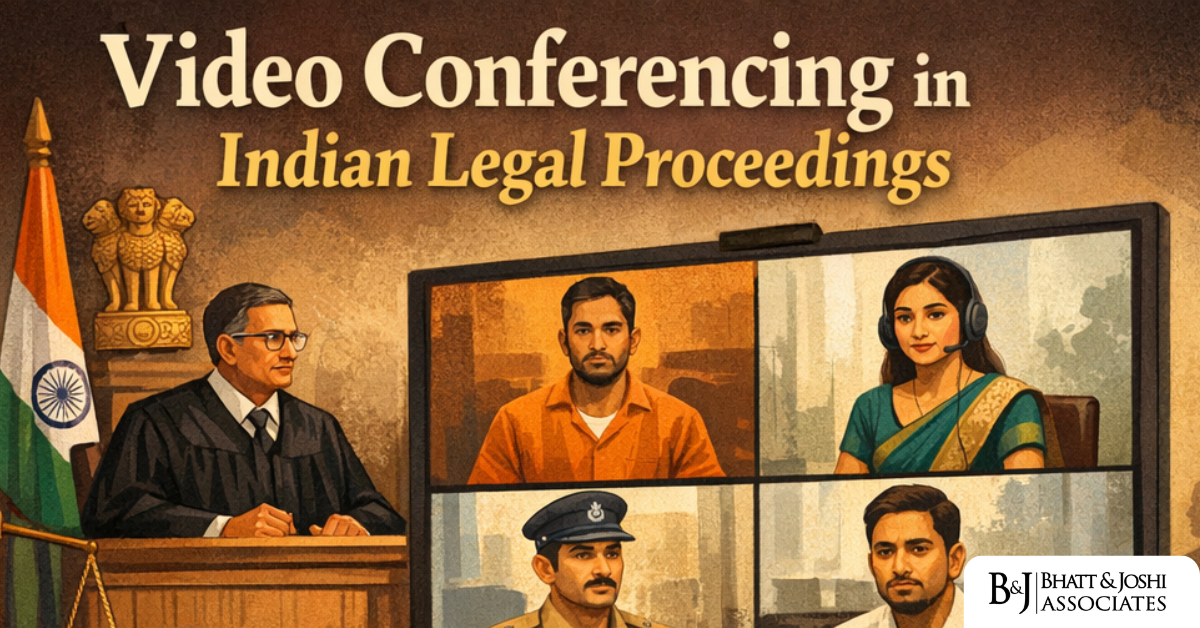
Video Conferencing in Indian Courts and Legal Proceedings: A Comprehensive Analysis
Introduction
The integration of technology within the Indian judicial system has witnessed remarkable transformation over the past two decades, with video conferencing emerging as a pivotal innovation in the administration of justice. This technological advancement has fundamentally altered the traditional courtroom dynamics, enabling remote participation while maintaining the sanctity of judicial proceedings. The adoption of video conferencing mechanisms in courts has not merely been a matter of convenience but has evolved into a necessity, particularly evidenced during unprecedented circumstances that demanded continuity in judicial functioning without compromising public health and safety. The legal framework governing video conferencing in Indian courts has developed through a combination of legislative amendments, judicial interpretations, and administrative guidelines. What began as an experimental measure has now crystallized into an established mode of conducting various judicial proceedings. The journey from initial skepticism to widespread acceptance reflects the judiciary’s adaptability and commitment to ensuring access to justice while embracing technological progress.
Historical Evolution and Landmark Judicial Recognition
The acceptance of video conferencing within Indian courts represents a paradigmatic shift in procedural law. Prior to formal recognition, courts operated under traditional notions where physical presence formed the cornerstone of judicial proceedings. The turning point arrived with the landmark judgment in State of Maharashtra v. Dr. Praful B. Desai [1], decided by the Supreme Court on April 1, 2003. This case fundamentally challenged existing interpretations and opened new avenues for technological integration in evidence recording.
The facts of the Praful Desai case centered around a medical negligence prosecution where the testimony of Dr. Ernest Greenberg, an expert witness residing in the United States, became crucial for establishing the case. Dr. Greenberg, while willing to testify, was unable to travel to India due to health constraints. The prosecution sought permission to record his evidence through video conferencing, which the trial court initially permitted. However, the Bombay High Court reversed this decision, holding that the requirement of presence under Section 273 of the Code of Criminal Procedure, 1973 mandated actual physical presence in court.
When the matter reached the Supreme Court, the bench comprising Justices S.N. Variava and B.N. Agrawal took a progressive stance. The Court held that the term presence under Section 273 of the Code of Criminal Procedure, 1973 does not exclusively mean physical presence but encompasses constructive presence as well. The Court reasoned that evidence can be both oral and documentary, and electronic records constitute valid evidence. The judgment emphasized that video conferencing permits one to see, hear, and communicate with someone far away with the same facility as if they were physically present.
The Supreme Court specifically stated that when evidence is recorded by video conferencing with the accused and their pleader present at the court end, such evidence is recorded in the presence of the accused and fully meets the requirements of Section 273 of the Code of Criminal Procedure, 1973. This interpretation aligned with the principle that the primary duty of courts is to deliver justice, and justice would fail not only through unjust conviction but equally through acquittal of guilty persons due to unjustified failure to produce evidence. The Court directed that the Magistrate should proceed to have Dr. Greenberg’s evidence recorded by way of video conferencing and requested expeditious completion of the trial.
Statutory Framework and Legal Provisions
The legislative framework supporting video conferencing in Indian courts draws authority from multiple statutes that collectively create a comprehensive legal basis for virtual proceedings. The foundation rests primarily on procedural codes and evidence laws that have either been amended to explicitly recognize electronic means or interpreted by courts to accommodate technological advancements.
Under the Code of Civil Procedure, 1908, Order XVI deals with summoning and examination of witnesses, while Order XVIII governs the recording of evidence. Although these provisions were originally drafted for physical proceedings, they have been interpreted elastically to permit video conferencing. Section 30 of the Code empowers courts to issue commissions for examination of witnesses, which has been extended to encompass video conferencing as a modern form of commission.
The Code of Criminal Procedure, 1973 contains several provisions relevant to video conferencing. Section 273 mandates that evidence be taken in the presence of the accused, which the Praful Desai judgment interpreted to include virtual presence. Significantly, the 2008 amendments to the Code of Criminal Procedure introduced explicit recognition of audio-video electronic means in certain provisions. Section 275, which deals with recording of evidence in warrant cases triable by Magistrates, was amended to allow recording through audio-video electronic means, subject to conditions that the Court may impose. Section 161(3) was amended to permit police officers to record statements through audio-video electronic means. Section 164, which provides for recording of confessions and statements by Magistrates, was similarly modified.
The Indian Evidence Act, 1872 underwent crucial amendments through the Information Technology Act, 2000. Section 3 was modified to include electronic records within the definition of evidence. The phrase “all documents produced for the inspection of the Court” was substituted with “all documents including electronic records produced for the inspection of the Court.” This amendment fundamentally expanded the scope of documentary evidence to encompass digital materials. Section 59 was amended to replace “content of documents” with “content of documents or electronic records,” thereby bringing electronic records within the ambit of documentary evidence that must be proved through production rather than oral testimony.
The most significant additions came through Sections 65A and 65B of the Indian Evidence Act, 1872, which were inserted by the Information Technology Act, 2000. Section 65A provides that the contents of electronic records may be proved in accordance with the provisions of Section 65B. Section 65B contains detailed provisions regarding admissibility of electronic records. Subsection (1) states that notwithstanding anything contained in the Act, any information contained in an electronic record which is printed on paper, stored, recorded, or copied in optical or magnetic media produced by a computer shall be deemed to be a document, provided conditions specified in subsection (2) are satisfied. These conditions ensure that the electronic record was produced by a computer during regular use, that information was regularly fed into the computer, that the computer was operating properly during the material period, and that the information represents a reproduction or derivation from information fed into the computer in ordinary course.
Section 65B(4) requires that where it is desired to give a statement in any proceedings pertaining to an electronic record, a certificate must accompany such evidence. This certificate must identify the electronic record, describe the manner of its production, furnish particulars of the device involved, deal with the conditions mentioned in subsection (2), and be signed by a person occupying a responsible official position in relation to the operation of the relevant device. The certificate need only state matters to the best of the signatory’s knowledge and belief.
Judicial Interpretation of Electronic Evidence Requirements
The interplay between Sections 65A and 65B of the Indian Evidence Act, 1872 and general provisions relating to documentary evidence has generated considerable judicial discourse. Courts have grappled with questions of whether electronic evidence requires mandatory certification, whether such certification is procedural or substantive, and when exceptions to certification requirements may apply.
The Supreme Court in Anvar P.V. v. P.K. Basheer [2], decided on September 18, 2014, provided authoritative guidance on electronic evidence admissibility. The case arose from an election petition where the petitioner sought to prove corrupt practices through electronic records including CDs and VCDs containing recordings of speeches and songs. The Kerala High Court had admitted these electronic records despite absence of certification under Section 65B(4), but dismissed the election petition on merits.
The Supreme Court bench of Chief Justice R.M. Lodha and Justices Kurian Joseph and Rohinton Fali Nariman examined whether electronic evidence could be admitted without complying with Section 65B requirements. The Court held that Sections 65A and 65B constitute a complete code for proving electronic records and must be treated as special provisions overriding general provisions under Sections 63 and 65 regarding secondary evidence. The judgment specifically overruled the earlier decision in State (NCT of Delhi) v. Navjot Sandhu, which had held that electronic evidence could be proved under general secondary evidence provisions without Section 65B certification.
The Court explained that Section 65B begins with a non obstante clause stating “notwithstanding anything contained in this Act,” which indicates legislative intent to create a special regime for electronic evidence. Any documentary evidence by way of electronic record must be proved in accordance with Section 65B, and the certificate required under subsection (4) is mandatory for admissibility. The Court emphasized that electronic records are more susceptible to manipulation and tampering, necessitating stringent safeguards through certification to ensure authenticity and reliability.
The Anvar judgment clarified that if an electronic record is used as primary evidence by producing the original device itself, then Section 65B certification is unnecessary. For instance, if the owner of a mobile phone, laptop, or tablet steps into the witness box and proves that the device where information is first stored is owned and operated by them, the original electronic record can be directly adduced without certification. However, when it becomes impossible to physically bring the device to court because it forms part of a computer network or system, then secondary evidence in the form of printouts or copies must be produced along with Section 65B(4) certification.
Model Rules and Administrative Framework
Recognizing the need for standardization and uniformity in conducting video conferencing proceedings across various courts, the e-Committee of the Supreme Court of India formulated Model Rules for Video Conferencing for Courts. The Hon’ble Chairperson of the e-Committee constituted a Sub-Committee consisting of five experienced Judges of High Courts to draft these model rules during April 2020. The model rules were finalized after incorporating suggestions from all High Courts and subsequently transmitted to them for adoption and notification.
The Model Rules represent a comprehensive framework addressing technical, procedural, and substantive aspects of video conferencing in judicial proceedings. The rules define key terms including “Court Point” as the courtroom or place where the court is physically convened or where a commissioner or inquiring officer holds proceedings under court directions, and “Remote Point” as the place where persons are required to be present or appear through video link. The rules designate specific software platforms as “Designated Video Conferencing Software” approved by the High Court for conducting proceedings.
The Model Rules explicitly state that all relevant statutory provisions applicable to judicial proceedings, including provisions of the Code of Civil Procedure, 1908, Code of Criminal Procedure, 1973, Contempt of Courts Act, 1971, Indian Evidence Act, 1872, and Information Technology Act, 2000, shall apply to proceedings conducted by video conferencing. This ensures that virtual proceedings maintain the same legal standards and protections as physical court hearings. Courts are authorized to adopt technological advances as they become available, subject to maintaining independence, impartiality, and credibility of judicial proceedings.
The rules establish detailed procedures for various types of proceedings. For examination of witnesses, the person being examined must provide identity proof recognized by the Government of India, State Government, or Union Territory. In absence of such documents, an affidavit attested by authorities referred to in Section 139 of the Code of Civil Procedure, 1908 or Section 297 of the Code of Criminal Procedure, 1973 must be furnished. The affidavit must state that the person who is shown to be the party or witness is the same person who is to depose at the virtual hearing.
Where the person being examined or the accused to be tried is in custody, statements or testimony may be recorded through video conferencing with adequate opportunity provided to the under-trial prisoner to consult privately with their counsel before, during, and after the video conferencing session. Courts are empowered to record the demeanor of persons being examined. Audio-visual recordings of examinations must be preserved, and an encrypted master copy with hash value shall be retained as part of the record.
Application in Criminal Proceedings
Video conferencing has found extensive application in criminal proceedings, where timely recording of evidence and conduct of trials assumes paramount importance. The Model Rules address specific criminal proceedings including judicial remand, framing of charges, examination of accused under Section 313 of the Code of Criminal Procedure, 1973, and recording of statements under Section 164.
Courts may authorize detention of accused and frame charges in criminal trials through video conferencing. However, the rules provide that ordinarily judicial remand in the first instance or police remand shall not be granted through video conferencing except in exceptional circumstances for reasons to be recorded in writing. This safeguard ensures that crucial determinations affecting personal liberty receive adequate judicial scrutiny while permitting flexibility for genuine exceptional situations.
For examination of witnesses under Section 164 of the Code of Criminal Procedure, 1973 or recording of statements of accused under Section 313, courts may proceed through video conferencing in exceptional circumstances for reasons to be recorded in writing. Courts must observe all due precautions to ensure that the witness or accused is free from any form of coercion, threat, or undue influence. Compliance with Section 26 of the Indian Evidence Act, 1872, which prohibits confessions to police officers, must be ensured. These provisions balance the convenience and efficiency of video conferencing with fundamental rights of accused persons to fair trial and protection against coerced statements.
The recording of evidence of official witnesses including Scientific Officers, Police Officers, and Medical Officers who depose in official capacity is ordinarily conducted through video conferencing under the various State adaptations of the Model Rules. This recognizes that such witnesses often need to appear in multiple courts and proceedings, and video conferencing significantly reduces their travel burden while ensuring efficient utilization of court time.
Technical Infrastructure and Security Protocols
The technological infrastructure supporting video conferencing in Indian courts requires robust equipment, reliable connectivity, and stringent security measures. The Model Rules recommend specific equipment for conducting proceedings including desktop computers, laptops, or mobile devices with internet connectivity and printing capabilities. Courts must ensure that adequate bandwidth and stable connectivity are available to prevent disruptions during proceedings.
Security protocols form an integral component of video conferencing in judicial proceedings. The rules strictly prohibit unauthorized recording of proceedings by any person or entity. This prohibition protects the integrity of judicial proceedings and prevents misuse of recordings. Courts maintain official audio-visual recordings which are preserved as part of the record, with encrypted master copies having hash values for authentication and security.
Coordinators are appointed both at Court Point and Remote Point to ensure compliance with all technical requirements. These coordinators verify identity of participants, conduct technical checks before proceedings commence, and address any technical difficulties that arise during hearings. The coordinator’s role extends to ensuring that no unauthorized persons are present at the Remote Point when witnesses are being examined, and that the environment is conducive to fair and undisturbed testimony.
Protection of Fair Trial Rights and Due Process
The implementation of video conferencing must be balanced against constitutional and statutory guarantees of fair trial and due process. Courts have consistently emphasized that virtual proceedings cannot compromise fundamental rights of parties, particularly accused persons in criminal cases. Several safeguards are built into the legal framework to ensure this balance.
The right to legal representation remains protected in video conferencing proceedings. Accused persons in custody are provided adequate opportunity to consult privately with their counsel before, during, and after video conferencing sessions. This ensures that the accused can receive legal advice and instructions without surveillance or interference. Courts must ensure that communication between accused and counsel is confidential and that technical arrangements facilitate such private consultation.
The principle of open court proceedings is maintained through provisions allowing members of public to view court hearings conducted through video conferencing, except in proceedings ordered to be conducted in camera for reasons such as protection of victim identity in sensitive cases or national security considerations. This transparency ensures public confidence in the justice system while permitting necessary privacy protections in appropriate circumstances.
Cross-examination rights are fully preserved in video conferencing proceedings. The party against whom a witness testifies has complete opportunity to question the witness through virtual means. Courts must ensure that the quality of audio and video transmission permits effective cross-examination without hindrance. The ability to observe demeanor of witnesses, which is crucial for assessing credibility, is maintained through high-quality video feeds that capture facial expressions and body language.
High Court Rules and State-Level Implementation
Following the Model Rules formulated by the Supreme Court’s e-Committee, all 25 High Courts in India have implemented their own Video Conferencing Rules adapted to local requirements and infrastructure capabilities. These rules follow the broad framework of Model Rules while incorporating state-specific modifications addressing peculiarities of each judicial system.
The Delhi High Court Rules for Video Conferencing for Courts 2020 [3] state that video conferencing facilities may be used at all stages of judicial proceedings. The Delhi High Court conducts hearing of approximately 700 cases daily through video conferencing, demonstrating the scale and success of virtual court operations. The rules establish detailed protocols for scheduling video conferencing hearings, technical requirements, identity verification, and preservation of recordings.
Other High Courts including Punjab and Haryana, Madhya Pradesh, Rajasthan, Orissa, and numerous others have notified comprehensive video conferencing rules. These state-level rules address local considerations such as connectivity challenges in remote areas, language requirements for participants, and coordination with prisons and hospitals for conducting proceedings with persons in custody or patients requiring medical care. The uniformity in basic principles across different states ensures consistent legal standards while permitting flexibility for local implementation.
District Courts in each state have adopted the mode of video conferencing prescribed by their respective High Courts. As of August 2025, video conferencing facilities are operational in all district courts across India, connecting 3,240 court complexes with 1,272 jails. This extensive network enables daily conduct of judicial remands, recording of evidence from witnesses in custody, and other proceedings without requiring physical transportation of prisoners to courts. The infrastructure includes document visualizers allowing parties to display documents during virtual hearings, and dedicated video conferencing cabins ensuring privacy and appropriate courtroom atmosphere.
Supreme Court Directions During COVID-19 Pandemic
The COVID-19 pandemic necessitated rapid and extensive adoption of video conferencing across the entire judicial system to ensure continuity of justice delivery while protecting health and safety. The Supreme Court passed a landmark order on April 6, 2020 [4] in Suo Motu Writ (Civil) No. 5/2020, exercising powers under Article 142 of the Constitution of India to provide comprehensive directions regarding court functioning through video conferencing.
The Supreme Court directed that all measures taken by the Supreme Court and High Courts to reduce need for physical presence of stakeholders within court premises and to secure functioning of courts in consonance with social distancing guidelines shall be deemed lawful. The Supreme Court and all High Courts were authorized to adopt measures required to ensure robust functioning of the judicial system through use of video conferencing technologies. Every High Court was authorized to determine modalities suitable to the temporary transition to video conferencing technologies considering peculiarities of the judicial system in each state and the dynamically developing public health situation.
The Court directed that concerned courts should maintain helplines to ensure that any complaint regarding quality or audibility of feed is communicated during proceedings or immediately after conclusion. District Courts in each state were required to adopt the mode of video conferencing prescribed by concerned High Courts. Courts were directed to notify and make available video conferencing facilities for litigants who do not have means or access to such facilities. In appropriate cases, courts may appoint amicus curiae and make video conferencing facilities available to such advocates.
Contemporary Challenges and Legal Debates
Despite widespread acceptance and implementation, video conferencing in Indian courts continues to face certain challenges and ongoing legal debates. Digital divide remains a significant concern, as not all litigants, witnesses, and lawyers have equal access to technology, reliable internet connectivity, and digital literacy. While courts are directed to provide facilities for those lacking access, practical implementation varies across different locations and socioeconomic contexts.
Questions persist regarding the stage at which Section 65B(4) certification must be furnished for electronic evidence produced through video conferencing. The Supreme Court has clarified that while no specific stage is mandated by the statute, in criminal trials the certificate should generally accompany documents supplied to the accused before commencement of trial under relevant sections of the Code of Criminal Procedure, 1973. However, courts may exercise discretion to summon persons for producing certificates when necessary, particularly where defective certificates are initially provided or where parties cannot procure certificates despite reasonable efforts.
The retrospective application of the Anvar judgment requiring Section 65B certification has been referred to a larger bench of the Supreme Court for resolution. This question has practical significance for numerous pending cases where electronic evidence was admitted prior to the 2014 Anvar decision without certification, and subsequent judgments differed on whether the stricter requirements apply retroactively to such cases.
Technological Advancements and Future Directions
The Indian judiciary continues to explore and adopt emerging technologies to enhance video conferencing capabilities. Under the “Atma Nirbhar App Challenge,” an Indian-made video conferencing application called Bharat VC has been shortlisted and is under trial for use as a uniform video conferencing platform across courts. This initiative promotes indigenous technology while ensuring data security and sovereignty.
Mobile e-courts vans equipped with WiFi and computers for video conferencing have been introduced in states like Uttarakhand and Telangana to reach remote hill areas and underserved regions lacking easy access to physical courts. These mobile courts bring justice delivery to remote populations, enabling witnesses and parties to participate in proceedings without undertaking arduous and expensive travel to distant court complexes.
Artificial intelligence and machine learning technologies are being explored for enhancing video conferencing through features such as real-time transcription, automatic language translation for multilingual proceedings, facial recognition for identity verification, and quality enhancement of audio-video feeds. However, implementation of such technologies requires careful consideration of privacy rights, data protection, and potential biases in algorithmic decision-making.
Conclusion
The evolution of video conferencing in Indian courts represents a remarkable transformation in judicial administration. From initial judicial recognition in the Praful Desai case to comprehensive statutory amendments and detailed procedural rules, the legal framework has matured to accommodate technological progress while safeguarding fundamental principles of justice. The experience demonstrates that courts can successfully integrate modern technology without compromising the sanctity of judicial proceedings or the rights of parties.
The COVID-19 pandemic accelerated adoption and normalized virtual proceedings across all levels of the judiciary. What began as an emergency measure has revealed inherent benefits of video conferencing including reduced costs, saved time, minimized security risks in transportation of under-trial prisoners, and expanded access to justice for witnesses and parties located remotely. The extensive infrastructure established during this period provides foundation for continued and expanded use of video conferencing as a permanent feature of Indian courts.
Moving forward, the challenge lies in ensuring equitable access, maintaining adequate safeguards for fair trial rights, and continuously updating technical infrastructure and legal provisions to keep pace with technological evolution. The judiciary must balance efficiency gains against the irreplaceable value of in-person proceedings for certain types of cases and stages of litigation where physical presence enhances justice delivery. Through thoughtful implementation and ongoing refinement of policies and procedures, video conferencing can significantly contribute to the overarching goal of making the Indian justice system more accessible, efficient, and responsive to the needs of all stakeholders.
References
[1] State of Maharashtra v. Dr. Praful B. Desai, (2003) 4 SCC 601. Available at: https://indiankanoon.org/doc/560467/
[2] Anvar P.V. v. P.K. Basheer, (2014) 10 SCC 473. Available at: https://indiankanoon.org/doc/187283766/
[3] Delhi High Court Rules for Video Conferencing for Courts 2021, High Court of Delhi. Available at: https://www.lexology.com/library/detail.aspx?g=9eb5e51e-67e8-4f82-9812-0b4931b5ce0c
[4] Supreme Court Order in Suo Motu Writ (Civil) No. 5/2020 dated April 6, 2020. Available at: https://ecommitteesci.gov.in/document/model-rules-for-video-conferencing-for-courts-2/
[5] Model Rules for Video Conferencing for Courts, e-Committee Supreme Court of India, 2020. Available at: https://www.latestlaws.com/bare-acts/central-acts-rules/model-rules-for-video-conferencing-in-courts-by-ecommittee-of-supreme-court-2020
[6] Information Technology Act, 2000, incorporating amendments to Indian Evidence Act, 1872.
[7] Department of Justice, Government of India, Video Conferencing Statistics and Implementation. Available at: https://doj.gov.in/video-conferencing/
[8] The Code of Criminal Procedure, 1973 (as amended by Act 5 of 2009).
[9] The Code of Civil Procedure, 1908.