 Whatsapp

Service Rules vs Government Resolutions: Supreme Court’s Landmark Ruling on Primacy in Service Jurisprudence
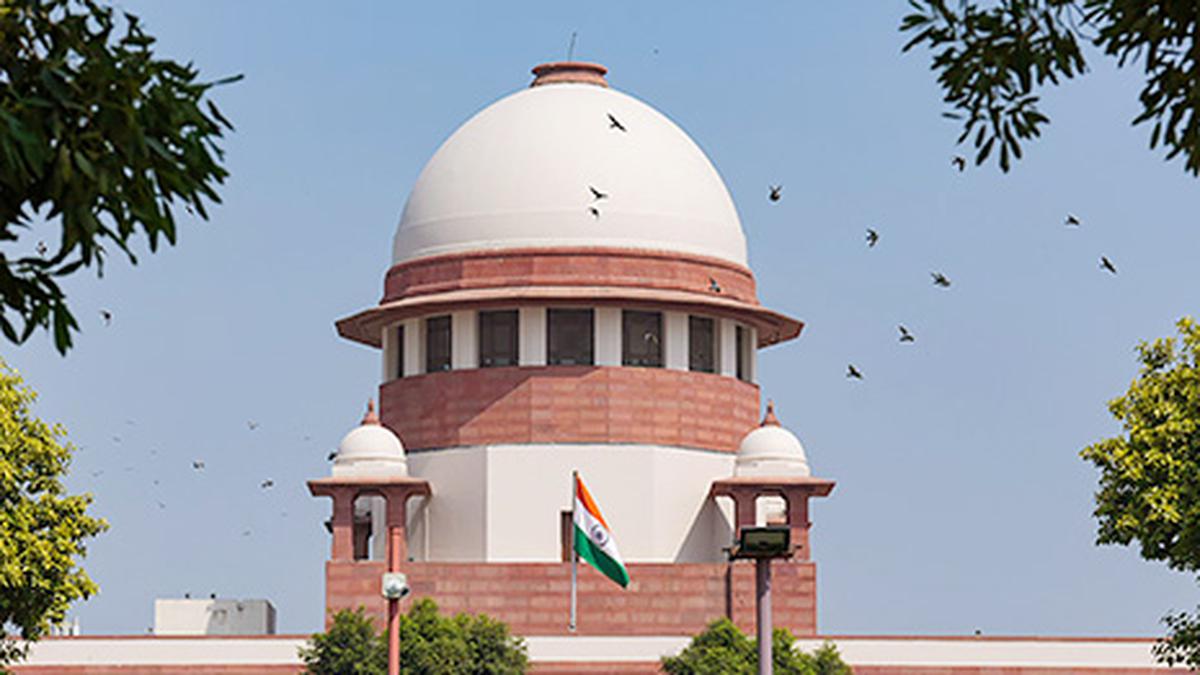
SC stated that Service Rules, which possess statutory force, will take precedence, and Government Resolutions cannot be in conflict with these rules.
Introduction: Understanding the Constitutional Framework
The relationship between service rules and government resolutions has remained a subject of intense judicial scrutiny in Indian administrative law. When conflicts arise between these two instruments of governance, the question of which should prevail becomes crucial for determining the rights of government employees. The Supreme Court of India, in the case of Ashok Ram Parhad & Ors v. The State of Maharashtra & Ors [1], addressed this fundamental question and established a clear hierarchy that has far-reaching implications for service jurisprudence across the country.
This landmark judgment clarified that service rules, which are framed under constitutional provisions and possess statutory force, must take precedence over government resolutions that are issued through executive orders. The decision came at a time when numerous disputes involving direct recruits and promotees were creating uncertainty in the administrative services, particularly regarding seniority determination. The Court’s ruling not only resolved the immediate controversy but also laid down principles that would govern similar disputes in the future.
Background of the Dispute: The Forest Service Controversy
The case originated from a long-standing dispute in the Maharashtra Forest Service concerning the determination of seniority between two groups of Assistant Conservator of Forest (ACF) officers. The recruitment to the ACF position followed two distinct pathways – nomination, which involved direct appointment, and promotion from lower ranks. These two methods of recruitment created inherent differences in the process of assuming the post, particularly concerning training requirements and the commencement of actual service.
Officers recruited through promotion would assume charge immediately upon their elevation to the ACF position. They were not required to undergo the extensive training program that was mandatory for nominated candidates. In stark contrast, individuals selected through nomination had to complete two years of specialized ACF training followed by one year of field training before they could formally assume their positions. This distinction in the recruitment process became the source of controversy when questions arose about when exactly these nominated officers should be considered to have commenced their service for seniority purposes.
The appellants in the case were direct recruits who had undergone the mandatory training period. They approached the Maharashtra Administrative Tribunal seeking a declaration that their seniority should be counted from the date they commenced their training, rather than from the date of their formal appointment after completing the training. The Tribunal initially ruled in favor of the appellants, holding that they would be entitled to count their service from the beginning of their training period. This decision was based on the reasoning that the training period formed an integral part of their recruitment process and should not be excluded from service calculation.
Following this Tribunal order, the Maharashtra Government issued a Resolution on August 14, 2018, which accepted the Tribunal’s judgment. The Resolution provided that successful completion of the training period would be considered as regular service from the date of inception of training for all service purposes. This Government Resolution appeared to settle the matter in favor of the direct recruits, stating explicitly that ACF officers appointed by nomination would have their seniority determined from the initial date of their training commencement.
However, this resolution created dissatisfaction among another group of officers – those who had been promoted to the ACF position. Respondents numbered 4 to 9 in the case had been appointed as Range Forest Officers between 1987 and 1990 and were subsequently promoted to ACF positions during 2014-2015. Despite being promoted to the ACF rank before the appellants herein, these promoted officers found themselves ranked junior to the appellants in the official seniority list prepared in accordance with the Government Resolution. They challenged this situation by filing a writ petition before the Bombay High Court, arguing against both the direct recruits and the State Government that had accepted the Tribunal’s decision.
Legal Framework: Constitutional Provisions Governing Service Rules
The constitutional foundation for service rules in India rests primarily on two key provisions. Article 309 of the Constitution [2] provides the legislative framework for regulating recruitment and conditions of service for persons appointed to public services and posts. This provision states that acts of the appropriate legislature may regulate the recruitment and conditions of service of persons appointed to public services and posts in connection with the affairs of the Union or of any State, subject to the provisions of the Constitution. The Article further contains a proviso that empowers the President or the Governor to make rules regulating recruitment and conditions of service until legislative provisions are enacted. These rules made under the proviso to Article 309 possess statutory force and remain effective until superseded by legislative enactments.
The significance of Article 309 lies in its dual nature. It recognizes both the legislative supremacy in matters of public service regulation and the need for executive flexibility through interim rule-making powers. The rules framed under this constitutional provision are not merely administrative instructions but carry the force of law. They bind the government and cannot be altered or overridden by simple executive orders or administrative decisions. The Supreme Court has consistently held that such rules are legislative in character and must be treated accordingly in any legal analysis.
In contrast, Article 162 of the Constitution [3] deals with the extent of executive power of a State. It provides that the executive power of a State shall extend to matters with respect to which the Legislature of the State has power to make laws, subject to the provisions of the Constitution. Government Resolutions are typically issued under this executive power granted by Article 162. While these resolutions can provide policy directions and implement decisions, they do not possess the same legal status as statutory rules. The executive power, though vast in its scope, remains subordinate to legislative enactments and statutory provisions.
The distinction between these two constitutional provisions became central to the Supreme Court’s analysis in the Ashok Ram Parhad case. The Court had to determine whether a Government Resolution issued under Article 162 could override or modify the operation of service rules that were framed under the proviso to Article 309 and possessed statutory force. This question went to the heart of the constitutional distribution of powers between the legislature and the executive in matters of public administration.
The Maharashtra Forest Service Recruitment Rules
The specific service rules at issue in this case were the Divisional Forest Officer (in Maharashtra Forest Service, Class I) (Recruitment) Rules, 1984 [4], commonly referred to as the 1984 Rules. These Rules were framed under the proviso to Article 309 of the Constitution and therefore possessed statutory force from their inception. The 1984 Rules provided a detailed framework for recruitment to forest service positions, including the crucial distinction between the recruitment process and the actual appointment to the post.
Rule 2 of the 1984 Rules specifically defined various terms related to the recruitment process. It distinguished between the commencement of the recruitment procedure, which included the training period, and the actual appointment to the substantive post, which occurred only after successful completion of the prescribed training. This distinction was fundamental because it clarified that while training was part of the recruitment process, it did not constitute appointment to the service. The Rules explicitly stated that seniority would be determined from the date of appointment order issued after successful completion of training, not from the date of commencement of training.
Additionally, the Maharashtra Forest Service, Group A (Junior Grade) (Recruitment) Regulations, 1998 [5], known as the 1998 Rules, provided further clarity on this matter. Rules 3 and 7 of the 1998 Rules specifically addressed the issue of when a nominated ACF would be entitled to an appointment. These provisions reinforced the principle that training, though mandatory and essential, was preparatory in nature and did not confer the status of being appointed to the service. The appointment came into effect only upon successful completion of all training requirements and the issuance of a formal appointment order.
Both sets of rules also contained provisions regarding probation and its relationship to seniority. They required the period spent on probation and training to be excluded when computing the period of service for certain purposes, particularly for eligibility for promotion to higher posts like Divisional Forest Officer. This exclusion was based on the sound administrative principle that probationary periods serve as an assessment phase before an individual is confirmed in their position, and hence should not automatically count as regular service in all circumstances.
The rules further provided that in cases where direct recruits and promotees were to be considered together for seniority, their relative positions would be determined based on their dates of actual appointment to the substantive post, not the dates on which they commenced training or were promoted. This provision was designed to ensure fairness and clarity in seniority determination, avoiding the complications that could arise from counting different types of preparatory or provisional periods as regular service.
High Court’s Analysis and Reasoning
The Bombay High Court, which heard the writ petition filed by the promoted officers, undertook a thorough analysis of the legal issues involved. The High Court’s reasoning was grounded in a careful examination of the constitutional and statutory framework governing service matters. The Court recognized that the case required it to determine the relative authority of two different types of governmental actions – statutory rules and executive resolutions – when they appeared to conflict.
The High Court emphasized that the 1984 Rules had been framed under the proviso to Article 309 of the Constitution, which gave them the character and force of statutory provisions. Being statutory in nature, these rules could not be overridden or modified by Government Resolutions, which were merely executive instructions issued under Article 162 of the Constitution. The Court noted that Article 162 grants executive power to the State, but this power remains subject to constitutional provisions and statutory enactments. Therefore, when a Government Resolution conflicts with a statutory rule, the rule must prevail.
The Court examined the Government Resolution dated February 17, 1997, which had provided that the probation period shall be considered for purposes of experience. While this Resolution might have been well-intentioned and aimed at ensuring that individuals undergoing training received appropriate benefits, it could not alter the fundamental provisions of the 1984 Rules regarding when appointment actually occurs and how seniority should be determined. The High Court observed that the Resolution was attempting to do indirectly what could not be done directly – modify statutory rules through executive action.
Furthermore, the High Court analyzed the purpose and effect of the Government Resolution dated August 14, 2018, which had been issued in response to the Tribunal’s decision. The Court noted that while this Resolution stated that successful completion of training would count as regular service from the beginning of training for all service purposes, such a blanket provision could not override the specific provisions of the 1984 Rules that governed seniority determination. The Resolution might have been intended to provide monetary compensation and other benefits to trainees, but it could not alter the statutory framework for determining seniority.
The High Court concluded that the seniority of individuals appointed to the post of ACF by nomination would be determined from the date of issuance of their appointment order after successful completion of training. For those appointed by promotion, seniority would be determined separately according to the applicable rules. This approach respected the statutory framework while recognizing the different pathways through which individuals could reach the ACF position. The Court’s judgment effectively held that the Government Resolutions, regardless of their beneficial intent, could not supersede or contradict the statutory provisions contained in the 1984 Rules and the 1998 Rules.
Supreme Court’s Judgment and Key Holdings
The Supreme Court, comprising Justices Sanjay Kishan Kaul and Abhay S. Oka, upheld the High Court’s decision and provided authoritative guidance on the relationship between service rules and government resolutions. The Court’s judgment, delivered on March 15, 2023, addressed not just the specific facts of the case but also laid down broader principles applicable to service jurisprudence throughout India. The bench noted at the outset that this was yet another dispute in the unending series of conflicts between direct recruits and promotees regarding their inter se seniority, a problem that has plagued administrative services across the country.
The Supreme Court’s primary holding was clear and unequivocal: Service Rules framed under the proviso to Article 309 of the Constitution possess statutory force and will take precedence over Government Resolutions issued under Article 162. This hierarchy is not merely a matter of administrative convenience but flows from the constitutional structure itself. The Court explained that while Government Resolutions have their legitimate role in governance and can provide policy guidance and operational directions, they cannot contradict or override provisions that have been given the force of law through the constitutional mechanism provided in Article 309.
The Court specifically examined Rule 2 of the 1984 Rules, which distinguished between the recruitment process and the actual appointment to the post. The recruitment process, the Court noted, commences with the initial steps including training, but appointment to the service occurs only when a formal appointment order is issued after successful completion of all requirements including training and probation. This distinction was not merely semantic but had substantive legal implications for determining when an individual actually becomes a member of the service for seniority purposes.
Addressing the appellants’ contention that their seniority should be counted from the commencement of their training, the Supreme Court held that this interpretation would be inconsistent with the clear language of the applicable rules. The Court observed that training is an essential part of the qualification process for the post, similar to how educational qualifications are prerequisites for appointment but do not themselves constitute service. Just as the years spent obtaining a required degree are not counted as service years, the period spent in mandatory training before appointment cannot be automatically counted as service for determining seniority.
The Supreme Court also addressed the Government Resolutions that had been issued in an attempt to resolve the dispute. The Court acknowledged that the Resolutions dated February 17, 1997, and August 14, 2018, were enacted with the objective of ensuring that individuals who successfully completed training received monetary compensation and were not financially disadvantaged during the training period. This was a legitimate policy objective, and the Resolutions could validly address matters of pay, allowances, and other benefits during the training period.
However, the Court made a crucial distinction: while Government Resolutions could address matters of compensation and benefits, they could not alter the statutory framework for determining seniority. The Court stated that the Resolutions, when read in their proper context, did not definitively speak to the question of seniority determination for promotional purposes or inter se ranking between direct recruits and promotees. To the extent that the Resolutions could be interpreted as attempting to modify the seniority provisions of the statutory rules, such interpretation would render them invalid as being beyond the executive’s power.
The Supreme Court emphasized that in the absence of any ambiguity in the statutory rules, those rules must be given their plain and natural meaning, and they must prevail over any conflicting executive instructions. The Court noted that if the government wished to change the seniority determination mechanism, the proper course would be to amend the relevant rules through the procedure prescribed under Article 309, not to issue executive resolutions attempting to achieve the same result. This holding reinforced the principle of rule of law and the supremacy of statutory provisions over administrative fiat.
The Court also considered the implications of its decision on the principles of fairness and equal treatment. By upholding the High Court’s judgment, the Supreme Court ensured that all candidates for the ACF position, whether recruited through nomination or promotion, would be treated according to the same clear and predetermined rules. This approach promoted transparency and predictability in service matters, essential features of good governance and administrative justice.
Finally, the Supreme Court dismissed the appeal filed by the direct recruits, thereby affirming that their seniority would be counted from the date of their appointment orders issued after successful completion of training, not from the date they commenced their training. The Court’s decision provided finality to a dispute that had persisted for years and had created uncertainty in the Maharashtra Forest Service regarding promotional opportunities and career advancement.
Implications for Service Jurisprudence
The Supreme Court’s judgment in Ashok Ram Parhad has significant implications that extend far beyond the specific facts of the case. The decision has established clear principles regarding the hierarchy of legal instruments in service matters that will guide administrative decision-making and judicial interpretation across India. The primary implication is the reinforcement of the principle that statutory provisions cannot be overridden by executive actions, even when those executive actions are labeled as policy decisions or are intended to benefit a class of employees.
This judgment serves as a reminder to governments at all levels that while they possess extensive executive powers to manage public services, these powers must be exercised within the framework established by the Constitution and statutory laws. When governments wish to modify the terms and conditions of service or the rules governing recruitment and seniority, they must do so through appropriate legislative or rule-making procedures, not through administrative resolutions that lack statutory backing.
The decision also has important implications for the protection of employee rights. By requiring adherence to established statutory rules, the Court has ensured that service conditions cannot be altered arbitrarily through executive orders. This provides stability and predictability to government employees, who can rely on statutory rules to understand their rights and entitlements. The judgment prevents situations where frequent changes in government policy through executive resolutions could create uncertainty regarding fundamental service matters like seniority, which directly affects career progression and retirement benefits.
For administrative tribunals and courts dealing with service matters, this judgment provides clear guidance on how to approach conflicts between service rules and government resolutions. The decision establishes that when faced with such conflicts, adjudicating authorities must first examine the source and legal status of the competing provisions. Statutory rules will always prevail over executive resolutions, regardless of the beneficial intent behind the resolutions or the practical difficulties their invalidation might create.
The judgment also has implications for the ongoing debates between direct recruits and promotees in various services across India. The Court has made it clear that seniority disputes must be resolved by reference to the applicable statutory rules, not by ad hoc executive decisions or administrative convenience. This approach ensures that the legitimate expectations of both direct recruits and promotees are protected based on predetermined legal rules rather than being subject to changing administrative policies.
Furthermore, the decision reinforces the federal structure of governance established by the Constitution. By recognizing the distinct roles of legislative, executive, and judicial organs of the state, the judgment maintains the balance of powers essential to constitutional governance. The executive cannot usurp legislative functions by issuing resolutions that have the practical effect of modifying statutory provisions, even when the executive considers such modifications necessary or beneficial.
The judgment also has practical implications for human resource management in government services. Administrative departments must now be more careful about the scope and content of government resolutions dealing with service matters. While resolutions remain valid instruments for providing operational guidelines, implementing policies within the statutory framework, and addressing matters not covered by statutory rules, they cannot be used as shortcuts to avoid the more rigorous process of rule amendment.
Regulatory Framework and Legislative Oversight
The regulatory framework for government services in India operates at multiple levels, with the Constitution providing the foundational principles, statutes enacted by legislatures providing detailed rules, and executive actions implementing these rules in practice. Article 309 establishes that the appropriate legislature – Parliament for Union services and State Legislatures for State services – has the primary authority to regulate recruitment and conditions of service. This legislative primacy is fundamental to ensuring democratic oversight and accountability in public administration.
When legislatures enact laws governing service matters, they typically delegate the authority to frame detailed rules to the executive, but this delegation is always subject to the parameters set by the legislative enactment. The rules framed under such delegation, though made by the executive, acquire statutory force because they are made in exercise of powers conferred by statute. These rules can only be amended or repealed through the same process by which they were made, ensuring stability and preventing arbitrary changes.
The proviso to Article 309 recognizes a limited interim rule-making power in the President or Governor until the appropriate legislature makes provision by law. This interim power serves an important function in ensuring administrative continuity and allowing services to function smoothly even in the absence of comprehensive legislative enactments. However, rules made under this proviso, though having statutory force, remain subject to any subsequent legislative enactment on the same subject. Once the legislature acts, the executive rules must give way to the extent of any inconsistency.
Government resolutions, in contrast, are executive actions taken under Article 162 (for States) or Article 73 (for the Union). These resolutions serve important administrative functions, including providing policy directions, establishing procedures for implementing statutory provisions, and addressing situations not covered by existing rules. However, they cannot contradict or override statutory provisions. Their validity depends on their conformity with the Constitution, existing laws, and statutory rules.
The Supreme Court has, through various judgments, clarified the boundaries between legitimate executive action and impermissible executive overreach. Resolutions that merely implement or clarify existing statutory provisions are valid and binding. Resolutions that provide benefits or establish procedures not inconsistent with statutory rules are also valid. However, resolutions that attempt to modify, supersede, or contradict statutory provisions are invalid to the extent of such conflict, as established in the Ashok Ram Parhad case.
Legislative oversight of service matters also includes parliamentary and legislative scrutiny through questions, debates, and committee examinations. These mechanisms ensure that the executive’s exercise of delegated rule-making powers remains within constitutional and statutory bounds. When rules framed by the executive appear to exceed the scope of delegated authority or conflict with legislative intent, legislatures can intervene through appropriate legislative action.
The judiciary plays a crucial role in this regulatory framework by adjudicating disputes regarding the validity and interpretation of service rules and government resolutions. Courts exercise judicial review to ensure that both rule-making and executive actions conform to constitutional provisions and statutory requirements. The Ashok Ram Parhad judgment exemplifies this judicial role in maintaining the hierarchy of legal instruments and preventing executive overreach.
Case Law Analysis and Precedential Value
The Ashok Ram Parhad judgment builds upon and reinforces a long line of judicial decisions that have addressed the relationship between statutory rules and executive actions in service matters. The Supreme Court has consistently held that executive authorities cannot, through administrative orders or resolutions, override or modify provisions contained in statutory rules. This principle has been applied in numerous contexts, from seniority determination to pay scales to service conditions.
The distinction between recruitment and appointment, which was central to the Ashok Ram Parhad case, has also been addressed in other Supreme Court decisions. The Court has repeatedly emphasized that recruitment is a process that may involve multiple stages including examinations, interviews, and training, while appointment is the culmination of this process when an individual is formally inducted into service. This distinction has practical significance because various rights and benefits may be linked to the date of appointment rather than to earlier stages of the recruitment process.
The principle that training periods should generally not count as service for seniority purposes has been applied consistently, though courts have recognized exceptions where specific statutory provisions explicitly provide otherwise. In the absence of such specific provisions, the general rule is that candidates acquire seniority from their date of appointment to the substantive post, not from the date they commenced training or appeared for examinations.
The Ashok Ram Parhad judgment also relates to the broader constitutional principle that statutory provisions cannot be amended or overridden by executive action. This principle applies not just to service matters but to all areas of governance where legislative and executive powers intersect. The judgment serves as a reminder that in a constitutional democracy, the rule of law requires adherence to established legal procedures, and expediency or administrative convenience cannot justify bypassing these procedures.
The precedential value of this judgment extends beyond the specific context of forest service recruitment in Maharashtra. The principles laid down by the Supreme Court apply to all services under the Union and States, covering millions of government employees across the country. Whenever conflicts arise between service rules and government resolutions, this judgment provides the framework for resolution: statutory rules must prevail, and government resolutions must conform to these rules or be invalid to the extent of conflict.
Conclusion: Upholding the Rule of Law in Service Matters
The Supreme Court’s judgment in Ashok Ram Parhad & Ors v. The State of Maharashtra & Ors represents a significant contribution to service jurisprudence in India. By clearly establishing that service rules possessing statutory force must prevail over conflicting government resolutions, the Court has reinforced fundamental constitutional principles regarding the hierarchy of legal instruments and the limits of executive power. This decision ensures that service matters are governed by law rather than by administrative discretion, providing stability and predictability for government employees.
The judgment recognizes the legitimate role of government resolutions in public administration while maintaining clear boundaries on their scope. Resolutions can provide important policy guidance, implement statutory provisions, and address matters not covered by existing rules, but they cannot contradict or override statutory rules. This balanced approach respects both the need for administrative flexibility and the requirement of legal certainty in matters affecting the rights and interests of public servants.
For direct recruits and promotees in services across India, this judgment provides clarity regarding how seniority disputes should be resolved. The Court has made it clear that statutory rules, not administrative convenience or executive policy, must govern such fundamental questions. This approach protects the legitimate expectations of all classes of employees by ensuring that predetermined legal rules, rather than changing administrative priorities, determine their career progression and rights.
The decision also has broader implications for governance and the rule of law in India. By insisting that executive actions conform to statutory provisions and that changes to service rules be made through proper legal procedures, the Court has upheld the principle that in a constitutional democracy, all organs of the state must act within the limits of their constitutional authority. This principle is essential to maintaining the balance of powers and ensuring accountable governance.
Looking forward, this judgment will serve as an authoritative precedent for resolving conflicts between statutory provisions and executive actions in service matters. It provides clear guidance to governments, administrative tribunals, and courts on how to approach such conflicts. The decision reinforces the importance of following established legal procedures when making changes to service conditions and reminds all stakeholders that in matters affecting the rights of individuals, the rule of law must prevail over administrative expediency.
References
[1] Ashok Ram Parhad & Ors v. The State of Maharashtra & Ors, Civil Appeal No. 822 of 2023, Supreme Court of India (2023). Available at: https://indiankanoon.org/doc/93905407/
[2] Article 309 of the Constitution of India. Available at: https://www.constitutionofindia.net/articles/article-309-recruitment-and-conditions-of-service-of-persons-serving-the-union-or-a-state/
[3] Article 162 of the Constitution of India. Available at: https://www.constitutionofindia.net/articles/article-162-extent-of-executive-power-of-state/
[6] Centre For Labour Laws. “Service Rules shall Prevail Over Conflicting Government Resolutions; holds Supreme Court.” Available at: https://cll.nliu.ac.in/service-rules-shall-prevail-over-conflicting-government-resolutions-holds-supreme-court/
[7] GK Today. “Article 309 of the Constitution of India – Recruitment and Conditions of Service.” Available at: https://www.gktoday.in/article-309/
[8] Testbook. “Article 309 of Indian Constitution – Recruitment and Service Rules for Government Employees.” Available at: https://testbook.com/constitutional-articles/article-309-of-indian-constitution
[9] Testbook. “Article 162 of Indian Constitution – Extent of Executive Power of State.” Available at: https://testbook.com/constitutional-articles/article-162-of-indian-constitution
Published and Authorized by
Prapti Bhatt
