 Whatsapp

Supreme Court Guidelines on Arrest in Criminal Cases: Protecting Personal Liberty
Introduction
The criminal justice system in India operates on the fundamental principle that personal liberty is sacrosanct and cannot be curtailed arbitrarily. However, over the years, widespread misuse of arrest powers by law enforcement agencies emerged as a concerning trend, particularly in cases where the alleged offenses attracted punishment of less than seven years imprisonment. The practice of routine arrests without proper application of mind led to innocent individuals being incarcerated for prolonged periods, causing irreparable damage to their reputation, livelihood, and dignity. Recognizing this grave injustice, the Supreme Court of India intervened to establish clear supreme court guidelines on arrest that safeguard the constitutional right to personal liberty while ensuring effective law enforcement.
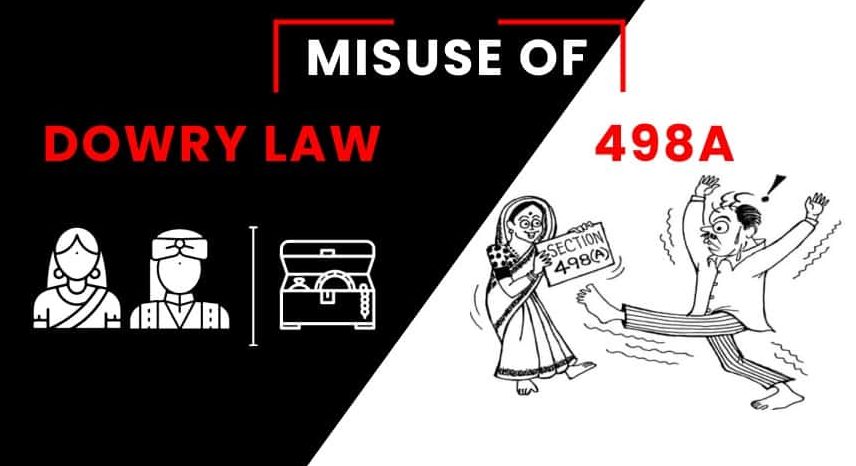
In 2014, the Supreme Court delivered a landmark judgment in Arnesh Kumar v. State of Bihar, which fundamentally transformed the approach toward arrests in criminal cases [1]. This judgment addressed the rampant misuse of Section 498-A of the Indian Penal Code relating to cruelty by husband or relatives of the husband, though its principles extended far beyond matrimonial disputes. Nearly a decade later, in 2023, the Supreme Court revisited and reinforced these principles in Md. Asfak Alam v. The State of Jharkhand, emphasizing that the guidelines laid down in Arnesh Kumar remained binding on all law enforcement agencies and judicial officers across the country [2]. These judgments collectively represent a watershed moment in balancing the imperatives of criminal investigation with the constitutional mandate to protect individual liberty.
Historical Context and the Problem of Arbitrary Arrests
Before the Arnesh Kumar judgment, the criminal justice system witnessed systematic abuse of arrest powers. Police officers frequently exercised their authority under Section 41 of the Code of Criminal Procedure without proper justification, often making arrests merely because a cognizable offense had been registered. This mechanical approach disregarded the statutory conditions that required officers to satisfy themselves about the necessity of arrest based on specific parameters. The situation was particularly acute in cases registered under Section 498-A of the Indian Penal Code, where complaints of cruelty in matrimonial relationships often led to immediate arrest of the accused husband and his relatives without any preliminary inquiry into the veracity of allegations.
Section 41 of the Code of Criminal Procedure, as amended in 2008, introduced important safeguards by inserting sub-section (1)(b)(ii) which enumerated specific conditions that must be satisfied before effecting an arrest. These conditions require the police officer to have reason to believe that the arrest is necessary to prevent the person from committing any further offense, to conduct proper investigation of the offense, to prevent the person from causing evidence to disappear or tampering with evidence, to prevent the person from making inducement, threat or promise to witness, or when the person’s presence cannot be secured without arrest [3]. Despite these statutory protections, ground-level implementation remained poor, with officers routinely ignoring these mandatory requirements.
The consequences of such arbitrary arrests extended beyond individual suffering. Families were torn apart, reputations were destroyed, employment was lost, and the burden on an already overburdened prison system increased manifold. Innocent individuals languished in custody while their cases proceeded at a glacial pace through the judicial system. Recognizing this, the Supreme Court introduced guidelines on arrest to ensure that law enforcement acts within legal bounds and that personal liberty under Article 21 of the Constitution is protected.
The Arnesh Kumar Judgment: A Paradigm Shift
On July 2, 2014, a two-judge bench of the Supreme Court comprising Justice Dipak Misra and Justice V. Gopala Gowda delivered the judgment in Arnesh Kumar v. State of Bihar, which would fundamentally reshape arrest practices in India. The case arose from a complaint under Section 498-A of the Indian Penal Code, where the appellant and his family members were arrested and subsequently released on bail. The appellant challenged the arrest on the ground that the police had failed to follow the mandatory procedure prescribed under Section 41 of the Code of Criminal Procedure.
The Supreme Court observed that arrests were being made in a routine manner without application of mind solely because the alleged offense was cognizable and non-bailable. The Court noted that such practice caused great harm not only to the person arrested but also to their family members and had serious repercussions on their reputation and self-respect. The Court emphasized that arrest brings humiliation, curtails freedom, and damages reputation, and therefore should not be resorted to unless absolutely necessary.
The Supreme Court judgment laid down comprehensive guidelines that police officers and judicial magistrates must scrupulously follow when making arrests. The Court directed that all police officers throughout the country must comply with the requirements under Section 41 of the Code of Criminal Procedure before making any arrest under Section 498-A of the Indian Penal Code or any other provision where the offense is punishable with imprisonment for a term which may be less than seven years or which may extend to seven years, whether with or without fine [4]. The supreme court guidelines specifically mandated that police officers must not automatically arrest when a case under Section 498-A is registered but should satisfy themselves about the necessity for arrest under the parameters laid down in Section 41(1)(b)(ii) of the Code of Criminal Procedure.
The Court further directed that if a police officer decides to arrest without warrant in such cases, they must record their reasons in writing and specify why the arrest was necessary. These reasons must be related to the parameters set out in Section 41(1)(b)(ii) of the Code of Criminal Procedure. The police officer is required to forward a copy of the entry in the case diary recording such reasons along with the notice of appearance to the Magistrate for their record. The judgment clarified that this requirement is not mere formality but a substantive safeguard designed to prevent arbitrary deprivation of liberty.
For judicial magistrates, the Court laid down equally important obligations. When an accused is produced before a magistrate, they must apply their mind to whether the arrest was necessary under Section 41(1)(b)(ii) of the Code of Criminal Procedure. These Supreme Court guidelines on arrest ensure that magistrates do not simply rubber-stamp police actions but independently assess the legality and necessity of the detention. If the magistrate finds the arrest was not necessary, the matter must be sent back for compliance with the procedural requirements before any detention is authorized.
Procedural Safeguards Under Section 41 and Section 41-A of CrPC
The Code of Criminal Procedure contains detailed provisions governing arrest without warrant, which form the statutory foundation for the Arnesh Kumar guidelines. Section 41 of the Code of Criminal Procedure, in its present form after the 2008 amendment, creates a nuanced framework that distinguishes between different categories of offenses and prescribes corresponding conditions for arrest.
Section 41(1)(a) of the Code of Criminal Procedure lists seven categories of serious offenses where police officers may arrest without warrant, including offenses involving acts affecting sovereignty and integrity of India, state security, friendly relations with foreign states, public order, offenses punishable with death or life imprisonment, cognizable offenses punishable with imprisonment for not less than seven years, and attempts to commit such offenses. For these serious crimes, the threshold for arrest remains relatively lower, though even here the officer must have reasonable suspicion or credible information about the commission of the offense.
Section 41(1)(b) deals with other cognizable offenses where the punishment prescribed is imprisonment for a term which may extend to seven years or is less than seven years whether with or without fine. For this category, the crucial sub-section 41(1)(b)(ii) requires that in addition to having reason to believe that the person has committed such offense, the police officer must also have reason to believe that arrest of such person is necessary for any of the five specific purposes enumerated in clauses (a) to (e). These purposes are preventing the person from committing any further offense, conducting proper investigation, preventing disappearance or tampering with evidence, preventing inducement, threat or promise to witnesses, and ensuring the person’s presence cannot be otherwise secured.
The significance of these conditions cannot be overstated. They transform arrest from a mechanical response to crime registration into a reasoned decision based on specific circumstances. The police officer must conduct at least a preliminary inquiry to assess whether any of the five conditions actually exist in the given case. This requirement introduces a crucial element of discretion and accountability into the arrest process.
Section 41-A of the Code of Criminal Procedure, also inserted by the 2008 amendment, provides an alternative to arrest in appropriate cases. This section empowers police officers to issue a notice directing the person against whom a reasonable complaint exists or credible information has been received to appear before the police officer at a specified time. If such person complies with the terms of the notice and continues to comply with such direction, they shall not be arrested for the offense mentioned in the notice unless the police officer has reason to believe that arrest is necessary for any of the purposes specified in sub-section (1)(b)(ii) of Section 41. This provision creates a formal mechanism for securing cooperation without resorting to custodial interrogation, thereby protecting individual liberty while facilitating investigation.
Section 41-B of the Code of Criminal Procedure complements these provisions by creating accountability for police officers who fail to comply with the requirements. It states that any police officer who arrests without recording reasons as required under Section 41(1)(b)(ii) shall be deemed to have committed misconduct and shall be liable for departmental action as prescribed by the State Government. This provision ensures that the procedural safeguards are not treated as mere paper formalities but have real consequences for non-compliance.
The Md. Asfak Alam Judgment: Reinforcing and Expanding the Guidelines
On July 31, 2023, nearly nine years after Arnesh Kumar, the Supreme Court delivered another significant judgment in Md. Asfak Alam v. The State of Jharkhand that reinforced the continuing vitality of the Arnesh Kumar guidelines [5]. The case arose from denial of anticipatory bail by the Jharkhand High Court despite the fact that the offense alleged fell within the category covered by the Arnesh Kumar guidelines. The appellant had been charged with offenses punishable with less than seven years imprisonment, yet the High Court rejected his anticipatory bail application and directed him to surrender and seek regular bail.
A bench comprising Justice Abhay S. Oka and Justice Rajesh Bindal heard the special leave petition arising from the High Court’s order. The Supreme Court expressed serious concern that despite explicit directions in Arnesh Kumar having attained finality and being binding on all authorities, compliance remained inadequate. The Court observed that the High Court had mechanically rejected the anticipatory bail application without considering the specific circumstances of the case and the applicability of the Arnesh Kumar guidelines.
The Supreme Court granted special leave and allowed the appeal, setting aside the High Court’s order and granting anticipatory bail to the appellant subject to appropriate conditions. More significantly, the Court reiterated that the directions issued in Arnesh Kumar applied not only to cases under Section 498-A of the Indian Penal Code but to all offenses where the punishment prescribed is imprisonment for a term which may extend to seven years or is less than seven years, whether with or without fine. This clarification was crucial as it removed any ambiguity about the scope and applicability of the guidelines [6].
The judgment emphasized that both police officers and magistrates must treat compliance with Section 41 and the Arnesh Kumar guidelines as mandatory obligations, not discretionary powers. The Court warned that continued non-compliance would attract serious consequences including departmental proceedings against erring officers and potential contempt of court action. The Court directed all State Governments and Union Territories to ensure that the guidelines are disseminated to all police stations and judicial magistrates, and that proper training is imparted to sensitize officers about the importance of these safeguards.
The Md. Asfak Alam judgment also addressed the issue of timelines, directing that when a police officer decides not to arrest an accused person in a case falling within the purview of the guidelines, such decision along with the notice of appearance under Section 41-A must reach the concerned magistrate within two weeks of registration of the case. This timeline ensures that the magistrate is informed about the status of the case at an early stage and can monitor compliance with the statutory requirements.
Impact on Bail Jurisprudence
The Arnesh Kumar and Md. Asfak Alam judgments have had profound implications for bail jurisprudence in India. By emphasizing that arrest should be the exception rather than the rule in cases involving offenses punishable with less than seven years imprisonment, these judgments have shifted the focus from post-arrest bail to pre-arrest measures that obviate the need for arrest altogether. This approach aligns with the constitutional principle that bail, not jail, should be the norm, particularly in cases where the alleged offense is not of grave nature.
The judgments recognize that the power to grant anticipatory bail under Section 438 of the Code of Criminal Procedure serves as an important safeguard against arbitrary arrest. Courts are now required to consider whether the case falls within the Arnesh Kumar guidelines when deciding anticipatory bail applications. If the offense is punishable with imprisonment of seven years or less, and if none of the conditions specified in Section 41(1)(b)(ii) are satisfied, courts are expected to grant anticipatory bail unless there are exceptional circumstances justifying refusal.
However, the Supreme Court has also clarified that the Arnesh Kumar guidelines do not create an absolute bar against arrest in all cases involving offenses punishable with less than seven years imprisonment. The guidelines require proper application of mind to the specific circumstances of each case. If any of the conditions enumerated in Section 41(1)(b)(ii) are genuinely present, arrest may be justified. For instance, if there is credible apprehension that the accused will tamper with evidence, threaten witnesses, or abscond to evade trial, arrest may be necessary despite the offense being less serious.
Challenges in Implementation
Despite the clarity of the Supreme Court’s directives, implementation of the Arnesh Kumar guidelines at the ground level has faced several challenges. Many police officers lack adequate training about the nuances of Section 41 and continue to follow the pre-2008 practice of automatic arrest upon registration of cognizable offenses. The deeply ingrained mindset that equates effective investigation with custodial interrogation has proved difficult to change. Moreover, pressure from complainants, political considerations, and media attention in certain cases often influence policing decisions in ways that contradict the letter and spirit of the guidelines.
Judicial magistrates too have struggled with effective implementation. The requirement to independently assess whether arrest was necessary demands time and attention that overburdened lower courts often find difficult to spare. There have been instances where magistrates have perfunctorily authorized detention without examining whether the police officer had recorded proper reasons for arrest as mandated by the Supreme Court. The lack of adequate training for newly appointed judicial officers about these important safeguards has contributed to inconsistent application across different jurisdictions [7].
Another challenge relates to the documentation and record-keeping requirements. The Arnesh Kumar judgment requires police officers to maintain detailed records showing their assessment of the necessity for arrest based on the statutory parameters. In practice, many police stations lack the infrastructure and administrative support necessary for maintaining such detailed records. The requirement to forward copies of relevant entries to the magistrate within specified timelines adds to the paperwork burden on already overstretched police stations.
The Supreme Court has recognized these implementation challenges and has repeatedly emphasized the need for systemic reforms. Various High Courts have issued circulars directing compliance with the Arnesh Kumar guidelines and prescribing standard formats for recording reasons for arrest. Some states have introduced training programs for police officers and judicial magistrates to sensitize them about the importance of these safeguards. However, much remains to be done to ensure uniform and effective implementation across the country.
Broader Implications for Criminal Justice Reform
The Arnesh Kumar and Md. Asfak Alam judgments represent more than just technical corrections to arrest procedures. They embody a fundamental shift in the philosophy underlying criminal justice administration in India. By emphasizing personal liberty as the default position and arrest as an exception requiring justification, these judgments align Indian law with international human rights standards and constitutional values.
The judgments recognize that effective crime control does not require sacrificing individual liberty. Modern investigative techniques, forensic science, and technological tools have reduced the need for custodial interrogation in many types of cases. The supreme court guidelines encourage police officers to utilize these alternative methods and to view arrest as a measure of last resort rather than first response. This approach has the potential to significantly reduce the burden on prisons, expedite criminal trials by avoiding unnecessary adjournments related to bail applications, and improve public trust in the criminal justice system.
The emphasis on accountability is another crucial aspect of these judgments. By creating liability for police officers who make arrests without recording proper reasons and for magistrates who authorize detention without independent application of mind, the Supreme Court has introduced real consequences for non-compliance. The threat of departmental action and contempt proceedings serves as a deterrent against casual violation of individual rights. Over time, this accountability framework can contribute to developing a culture of rights-consciousness among law enforcement agencies.
Comparative Analysis with International Standards
The principles articulated in the Arnesh Kumar guidelines find resonance in international human rights law and comparative jurisprudence from other democracies. The International Covenant on Civil and Political Rights, to which India is a party, guarantees the right to liberty and security of person and prohibits arbitrary arrest and detention. Article 9 of the Covenant requires that arrest must be based on grounds established by law and that arrested persons must be informed of the reasons for arrest. The United Nations Basic Principles on the Use of Force and Firearms by Law Enforcement Officials emphasize that force and coercive measures should be used as a last resort.
In the United Kingdom, the Police and Criminal Evidence Act requires police officers to have reasonable grounds for suspecting that an arrest is necessary before making an arrest. The necessity test includes considerations similar to those in Section 41(1)(b)(ii) of the Indian Code of Criminal Procedure, such as preventing the person from causing harm, protecting evidence, and ensuring appearance. The European Court of Human Rights has consistently held that arrest without justification violates the right to liberty protected under Article 5 of the European Convention on Human Rights.
Similarly, in the United States, the Fourth Amendment to the Constitution protects against unreasonable searches and seizures, which has been interpreted to require probable cause for arrest. While the American system permits arrest for any offense based on probable cause, courts have imposed various restrictions through judicial interpretation, such as requiring warrants for arrests in homes and limiting the use of excessive force during arrest. The principle that arrest should not be unnecessarily humiliating or degrading finds recognition across legal systems.
The Arnesh Kumar guidelines thus place India firmly within the mainstream of international human rights jurisprudence while adapting general principles to the specific context of Indian law and society. The guidelines recognize that personal liberty is not merely a technical legal right but a fundamental attribute of human dignity that must be zealously protected even in the pursuit of legitimate law enforcement objectives.
Conclusion
The Supreme Court’s judgments in Arnesh Kumar v. State of Bihar and Md. Asfak Alam v. The State of Jharkhand represent landmark contributions to the jurisprudence of personal liberty in India. By mandating strict compliance with procedural safeguards under Section 41 and Section 41-A of the Code of Criminal Procedure, these Supreme Court guidelines on arrest have created a robust framework for preventing arbitrary detention while maintaining the effectiveness of criminal investigation. The supreme court guidelines require police officers to exercise their arrest powers with restraint and accountability and demand that judicial magistrates play an active oversight role rather than merely rubber-stamping police actions.
The journey from enunciation to implementation, however, continues. While the legal framework is now clearly established, ensuring uniform compliance across India’s vast and diverse law enforcement machinery remains a work in progress. Sustained efforts are needed at multiple levels including legislative refinement, administrative reforms, capacity building through training, and vigilant judicial oversight. Civil society organizations, legal aid services, and bar associations also have important roles to play in creating awareness about these rights and holding authorities accountable for violations.
The ultimate measure of success for these guidelines will be whether they achieve their intended purpose of preventing unnecessary arrests while maintaining public safety and facilitating effective investigation. Early indicators suggest positive trends in many states where arrest rates have declined without a corresponding increase in crime or deterioration in investigation quality. As these Supreme Court guidelines on arrest become more deeply embedded in police culture and judicial practice, they have the potential to transform the relationship between the state and citizen, ensuring that the criminal justice system serves as a protector of rights rather than an instrument of oppression.
References
[1] Arnesh Kumar v. State of Bihar, (2014) 8 SCC 273.
[2] Md. Asfak Alam v. The State of Jharkhand, Criminal Appeal No. 2207 of 2023.
[3] The Code of Criminal Procedure, 1973, Section 41.
[4] The Indian Penal Code, 1860, Section 498-A.
[5] Law Jurist. (2024). Arnesh Kumar v. State of Bihar (2014). https://lawjurist.com/index.php/2024/12/27/arnesh-kumar-v-state-of-bihar-2014/
[6] Law Bhoomi. (2025). Arnesh Kumar vs State of Bihar [Arnesh Kumar Guidelines]. https://lawbhoomi.com/arnesh-kumar-vs-state-of-bihar/
[7] iPleaders. (2025). Arnesh Kumar vs. State of Bihar (2014). https://blog.ipleaders.in/arnesh-kumar-vs-state-of-bihar-2014/
